The online retail growth podcast with
Mike Ryan & Christian Scharmüller
CPC Crisis: 30% Inflation is Here! What now? | Growing E-commerce
Released:
This episode tackles the most urgent issues retail clients are facing right now: exploding costs and profound market uncertainty.
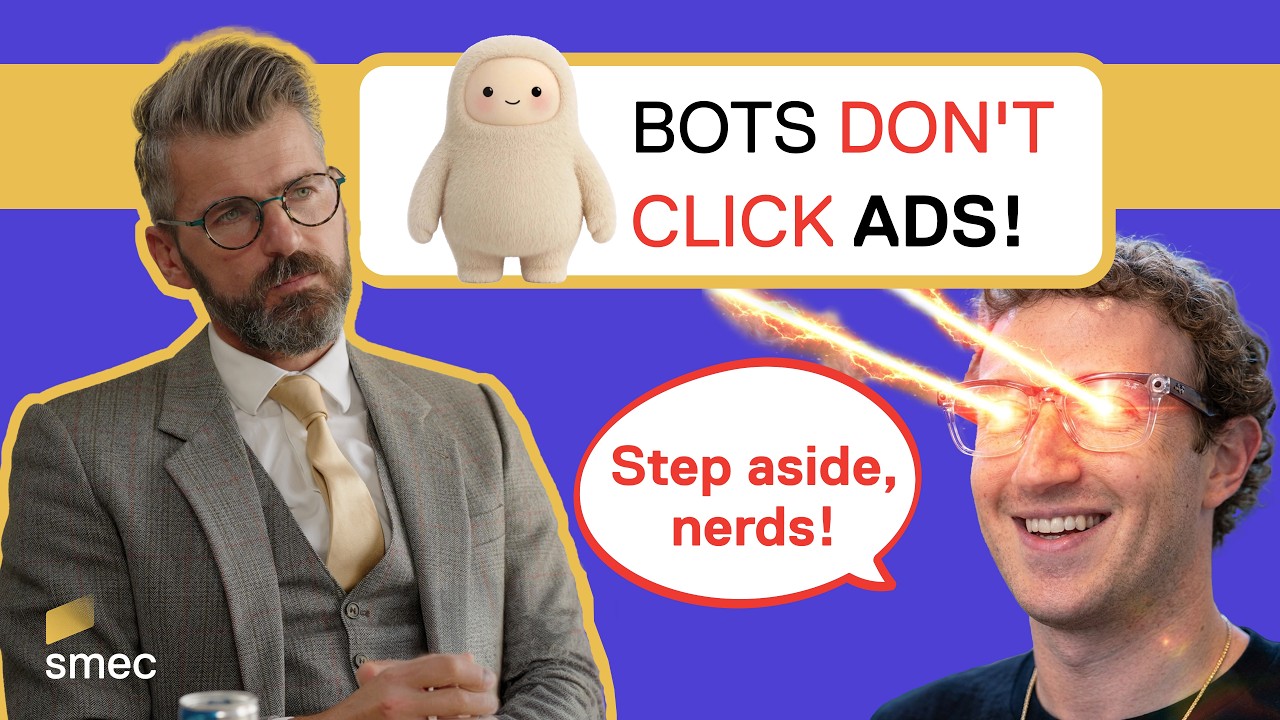
Hosts Mike Ryan and Chris dive into the alarming trend of increasing CPCs (Cost Per Click), which are soaring at rates of up to 30% in key categories. Chris calls these increases a “f*cking pain in the ass” and a potential “business destroyer,” especially for businesses with paper-thin margins. They debate whether Google is responsible or if it’s purely a market-level crisis, and why Google must find a solution to prevent mid-sized players from running out of money.
The second major theme is the AI search disruption. The hosts discuss the pervasive uncertainty among retailers—from small shops to enterprise clients—about the future of search behavior and the need for a stronger Data Density strategy. They reveal the huge structural change that the average search query in AI mode is 2.5x longer than in standard search. Finally, they discuss the evolving role of the PPC manager, emphasizing the need for system thinking and an openness to human-machine collaboration to thrive.
Episode Highlight
AI Search Queries Grow 2.5x Longer
A fundamental shift is occurring in online retail as AI search queries become significantly more descriptive and complex than traditional Google searches. Chris shares a striking statistic from Google: the average search query in AI mode is now 2.5 times longer than a standard query. This change forces ecommerce leaders to focus on “data density”—a strategy of providing rich, structured information to satisfy a non-deterministic AI brain. Adapting to this new search behavior is essential for businesses to maintain visibility in an increasingly automated landscape.
- Christian ScharmüllerBut one stat that stood out is that the average search query in AI mode is 2.5 times longer than the standard Google search query.
Episode Transcript
(00:00:08) Mike: All right, welcome to Growing Ecommerce. I’m your host, Mike Ryan.
(00:00:19) Chris: And I’m Chris.
(00:00:21) Mike: Our running jokes here. We’re so funny, and people love us, Chris.
(00:00:22) Chris: I hope so. I hope so.
(00:00:24) Mike: I missed our last studio date because I wasn’t feeling well. Chris almost jumped in for a monologue, but he just couldn’t get past the haunting specter of having to do the intro by himself.
(00:00:38) Chris: The intro and outro was the challenge. I had some topics on my mind, I just didn’t feel ready for this one.
(00:00:48) Mike: Listen, it’s job security for me. I know that you can’t get rid of me because you can’t do the podcast intro without me. All right. We’ve got a couple of ideas in mind here today. Let’s see how far we get. We want to talk about some hot topics that have been coming up in our talks with clients lately. We’re into what we call a QBR season, doing a lot of business reviews and looking at the past year and the year ahead with our clients. So I want to talk about some of the themes coming up there. We’ll see how long that takes, but we may go into some other stuff too.
(00:01:27) Chris: The first one has potential to be enough for the whole episode. Let’s find out.
(00:01:35) Mike: Why don’t you kick us off, Chris? What’s good? What are you hearing lately?
(00:01:46) Chris: Smarter Ecommerce is one of the bigger performance marketing agencies and service providers in Europe. We’re working with mid-sized to enterprise clients, mostly in online retail. As Mike said, Q3 is probably the most stressful quarter for us in terms of meeting our clients. We have our quality business reviews mostly in Q3, getting prepared for the high season in Q4. I had the chance to talk to a lot of high-level representatives of our clients to understand what’s on their mind. There are a couple of things which might be obvious, but it showed that there’s a lot of uncertainty going on. It doesn’t matter if you talk to a company spending 10 million on a monthly basis or a smaller client spending 50 grand; the uncertainty with regards to AI—what’s going on on the Google side, ChatGPT, Perplexity—is very much directed towards the question: if there are these shopping assistants popping up, what’s going on with the search behavior of our clients’ customers? What does that mean for an online retailer, especially regarding data structure? What do I have to provide to Google, Perplexity, and so forth in order to be served? This uncertainty around data and how it is served by this new wave of search behavior tied to AI disruption is a very dominant topic.
(00:03:50) Mike: For sure. Definitely how end consumers are changing the way they search, how Google is tackling that, and how businesses can tackle it. I agree. We’ve gone in this direction a bit before on the show, but things continue to change and firm up, or we realize how ambiguous other things are. I recently did a couple of FAQs with clients and published one online on our blog about ads and AI surfaces, just what we know and don’t know at this point. There are more things we don’t know than what we do know. Often Google’s answers here are very fluffy and need someone to decode them or cut through to the core message.
(00:04:42) Chris: That’s for sure. To all our listeners running online shops, it’s not really tied to size because even the big players with the big budgets and big teams don’t have a strategy in place. This uncertainty is dragging them down a bit in terms of risk. I’ve always tried to be optimistic and wrong rather than pessimistic and right. There are a lot of chances baked into this uncertainty. The players who are most advanced and willing to test in an agile way will make up a lot of ground. That’s what I try to bring across to our clients. Even Google doesn’t know precisely how ads in AI mode really perform, so this is certainly dominant.
(00:05:51) Mike: Definitely. It’s one of those moments of creative destruction where the way these channels have worked is going to be upended and replaced with something new. It’s a chance for us to adapt. As intelligent beings, we should be able to adapt and evolve, even if it’s a stress moment. One thing that pops up when you were talking about data is the emerging trend of “data density.” Google is telling us that when they serve ads adjacent to or inside AI surfaces, they aren’t just going to consider classic stuff like ad copy relevance to the landing page and the search query; they also need to consider relevance to the AI content itself. That is a huge wildcard because it’s non-deterministic and out of anyone’s hands what the AI is going to say. Organic search was always algorithmic, but now we’re getting a new kind of brain in the mix. To achieve data density, if someone is chatting with an AI bot, for it to surface results organically or for paid listings to serve, there needs to be a lot of specific information available. This touches all sides of your business: you need structured data, rich landing page content, detailed and accurate feed information, and business data for campaign steering, plus great creative and assets. It’s a perfect storm of requirements coming together.
(00:08:29) Chris: It is a perfect storm. One major question for 2026 is how to change current data strategies. I was in Dublin at Google for a couple of days, and the first insights I got on how AI mode changes search behavior were very vague. But one stat that stood out is that the average search query in AI mode is 2.5 times longer than the standard Google search query. Search will change completely, and that has to be reflected in your data strategy.
(00:09:37) Mike: Yeah.
(00:09:38) Chris: Another big topic is increasing CPCs. It’s a massive issue. I call them business destroyers. It’s potentially cutting the throats of businesses with paper-thin margins. CPC increases vary by industry, but on average, it’s absolutely crazy. This is directly impacting top and bottom lines. What’s your take on that, Mike?
(00:10:39) Mike: I tend not to be too alarmist because, in the past, CPC growth has often tracked closely with inflation. But lately, I’ve seen some cases that are alarming. Businesses that planned for 8% CPC inflation are seeing 30% inflation in key categories. This is not an aberration; entire groups are facing these forces. The only consolation is that competitors are facing it too, but some of what we’ve seen this year is outrageous.
(00:12:16) Chris: It’s really outrageous. It gets more important to apply the 1% rule and every leverage you have because it can make the difference compared to your competitor. I had a conversation with a high-level Google representative in Dublin about what increasing CPCs do to the German market. Google has to be careful here because many online retailers are running out of money or can’t invest in a channel that isn’t working for them anymore. Google has a deep interest in making the channel work because otherwise, clients will move their money somewhere else if Meta is working better. Mid-sized players are really questioning if Google is the right channel for them.
(00:14:00) Mike: That’s for sure, particularly if competing channels start competing on a cost basis. There are conspiratorial statements that Google increases CPCs on purpose to maximize profits. I don’t really believe that. We know about leaked emails about “shaking the cushions,” so I think they use yield optimization strategies, but they can’t just squeeze the life out. Google plays some games with CPC floors in low-competition auctions, but they aren’t responsible for a runaway 30% CPC. That’s happening at a market and auction level.
(00:15:40) Chris: Exactly. Google is trying to use AI to make the fit between the searcher and the offering even better. Every retailer could live with higher CPCs as long as the conversion rate behaves accordingly. Google is genuinely interested in making this work, not just for big enterprise players. They understand that alternatives will pop up, so there is pressure to make it work.
(00:16:56) Mike: Just to loop back to AI ads, I’m concerned that Google is making weird statements about click-through rates.
(00:17:11) Chris: They’re not important anymore, right?
(00:17:12) Mike: They tell you not to worry about click-through rate, but to worry about conversion rate. To me, that implicitly means click-through rates are lower when AI answers are adjacent. If organic traffic is lost to AI overviews, advertiser demand for paid traffic might trend up. If the click-through rate trends down, CPCs could be quite high. If value per click is proportionate, that’s okay, but we’re seeing 30% rising CPCs without value per click rising 30%.
(00:18:17) Chris: That’s the problem. To a certain degree, this is Google’s responsibility to make the ecosystem work. Every retailer has to understand that while Google controls some things, you can’t be lazy. Go for every leverage you have. Think about campaign structure and first-party data. There are a lot of chances in this situation. Mike, maybe we can talk about this in more detail in another episode.
(00:19:24) Mike: I can probably put together some higher-level CPC data.
(00:19:43) Chris: I’m pumped about it. If you were running an online shop right now, what skills does the perfect PPC manager need to be valuable now and in two years?
(00:20:18) Mike: That’s hard because things are changing so much. Two years ago, “old school” skills like search term mining or negative keywording seemed less relevant, but now those capabilities are back. It’s hard to know what will happen in two years. I look at general skills like analytical thinking and systems thinking. Analytical thinking isn’t just about numbers; it’s about systematically dissecting something and finding patterns. Systems thinking is taking a high-level view and connecting the dots across a bigger picture. You need people who can learn and adapt regardless of what happens. I think the idea that juniors are disadvantaged because of AI automation is a short-term view; younger people have more plasticity in their learning. You need a blend of experience, but you need people who aren’t fossilized.
(00:23:50) Chris: We are looking for talent all the time. I recently discussed what type of person we are looking for with our HR department. This classical skill thinking—just “Google Ads know-how”—is outdated. Plus one on everything you said. You need a person who is not afraid of getting in touch with AI and automation, understanding that it’s not replacing them but empowering them. If a person doesn’t buy into that principle, they won’t make it. You need that “geekiness” and openness to test new tools like n8n or OpenAI Studios.
(00:26:13) Mike: I agree. Interpersonal collaboration remains important, but we’re also talking about human-machine collaboration. It’s fundamentally different and takes patience. Sometimes it feels like dealing with an A-player, and sometimes you wonder how the machine can be so stupid.
(00:27:40) Mike: Yeah.
(00:27:41) Chris: You have to trust the process because sometimes they are like juniors. It’s a very important skill set, though it’s not easy to test for. The skills required for an online marketing manager have changed so much in five years.
(00:28:33) Chris: People who see this as a chance and have the geekiness to work with it will outperform the others. We have a couple of minutes left.
(00:29:09) Mike: I’ll drop a little teaser. I’ve been working a lot on AIMax and Demand Gen to understand Google’s new power pack. I’ve got a data set of about 300 AIMax campaigns that I’m crunching numbers on. I’m trying to dig into the economics of Demand Gen. I loved working on the State of PMax report, and we might be looking at a State of Demand Gen or State of AIMax report next year.
(00:30:21) Chris: I’m really curious about that data. When do you think that analysis will be ready for the podcast?
(00:30:47) Mike: Next episode I can share a couple of stats. I work on these things iteratively over a long period. Right now, we’re seeing AIMax adoption in about 13% to 15% of accounts. A few months ago, it was less than 1%. Google is getting adoption decently fast.
(00:31:44) Chris: That will be an interesting episode. We’re looking forward to that.
(00:31:47) Mike: Me too.
(00:31:50) Chris: Mike, let’s wrap it up.
(00:31:53) Chris: Let’s wrap it up.
(00:31:55) Mike: Thank you for listening to another episode of Growing Ecommerce. Growing Ecommerce is brought to you by Smarter Ecommerce, also known as smec. You can learn more at smarter-ecommerce.com. Please leave us a review and share the podcast with a friend. See you next time.

source on Google →