The online retail growth podcast with
Mike Ryan & Christian Scharmüller
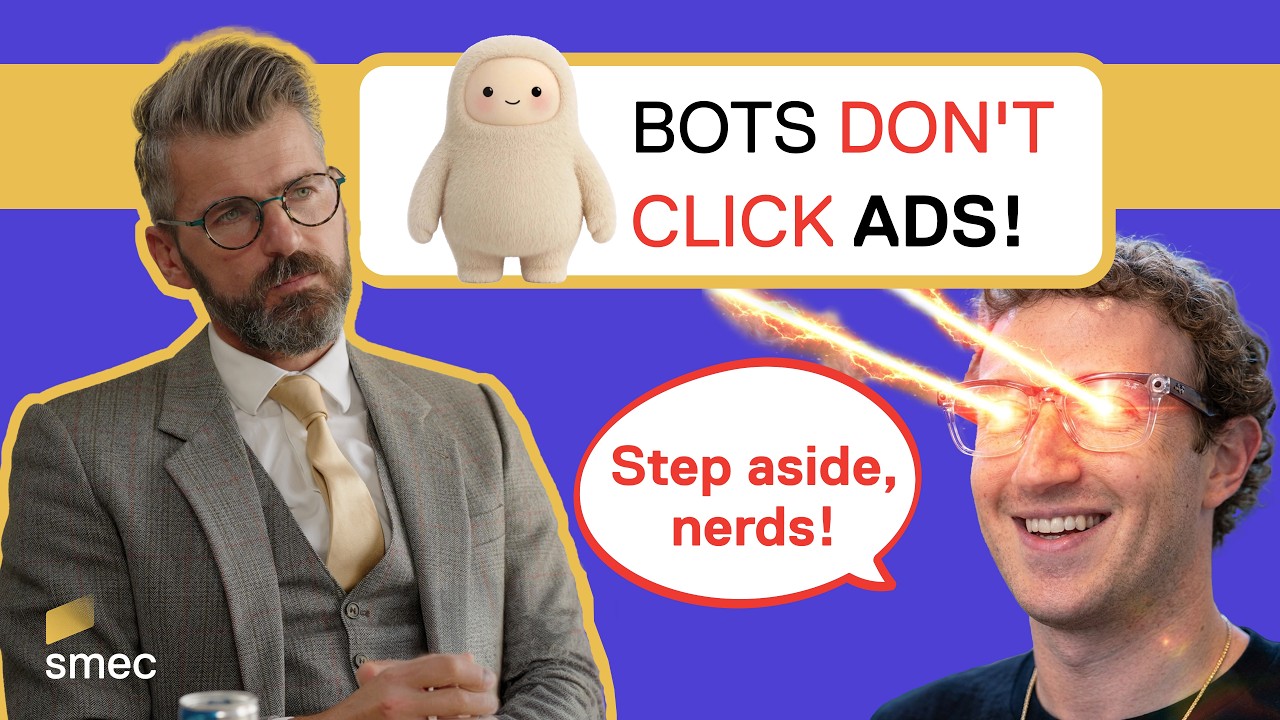
1 in 4 of Your Exact-Match Impressions Now Come From AI Max
Released:
Google’s AI Max is now serving 1 in 4 of your exact-match ad impressions — and it’s quietly reshaping Search and Performance Max campaigns. Chris and Mike deliver the AI Max deep-dive they promised last episode, breaking down exactly how that number gets generated and what it costs you in control. Picking up where Alphabet’s Q2 earnings call left off, this episode unpacks Google chief business officer Philipp Schindler’s claim that AI Max is “unlocking billions of net-new searches that weren’t really monetizable before.” The mechanics: when there isn’t enough auction competition for a search term, Google either skips serving an ad or falls back to ad-rank thresholds — AI Max exists to monetize that gap by expanding matching beyond your exact and phrase match keywords, using what’s effectively broad match under a new name (officially “search term matching”). The numbers back it up. Across AI Max campaigns, roughly 80% of the additional impressions come from exact match terms and 20% from phrase match — and once AI Max is activated in a campaign running mostly exact match, about 1 in 4 impressions against those exact-match keywords now originate from AI Max instead of the keywords you actually chose.
Chris and Mike weigh the real trade-off here: advertisers who deliberately chose exact match for control are being nudged toward broad-match-style reach, though the ad-group-level opt-out is a meaningful safety valve. Revenue uplift is real per in-platform attribution — but it’s driving volume, not necessarily matching Google’s claimed efficiency. The second half tackles a related head-scratcher: click-through rates on Shopping and Max campaign types have climbed roughly 17-20% year-over-year for over a year — the opposite of what the “zero-click,” AI-Overviews-kill-CTR narrative predicts. Chris and Mike test a mechanical hypothesis (impressions falling 10-12% YoY while clicks hold steady would produce this exact pattern) without claiming it’s confirmed, and discuss why ecommerce commercial queries may be more shielded from the zero-click trend than informational, publisher-facing searches — for now. If you manage Google Ads campaigns and want to understand what AI Max is actually doing to your account’s match types, this is the episode. Growing Ecommerce is brought to you by smec (Smarter Ecommerce). Learn more: https://www.smarter-ecommerce.com
Try smec’s free Market Observer benchmarking tool: https://smarter-ecommerce.com/en/smec-market-observer/
Catch last episode’s Q2 earnings breakdown for context: https://youtu.be/yaSBRm-pEFo
👥 Follow us on LinkedIn: https://www.linkedin.com/company/smarter-ecommerce-gmbh/
Mike Ryan: https://www.linkedin.com/in/mikeryanretail/ Christian Scharmüller: https://www.linkedin.com/in/christian-scharm%C3%BCller/
Episode Highlight
AI Max Expands Exact Match Impressions
Google’s AI Max for search is fundamentally altering traditional keyword strategies by automatically expanding exact match keywords into broader search variations. Data reveals that when activated, one in four impressions targeting exact match keywords are now driven by AI Max’s underlying broad match technology. This shift allows retailers to capture complex, long-tail search queries that rigid keyword lists miss, unlocking net-new transaction volume. For ecommerce leaders, understanding this behavior is critical to balancing the potential for incremental revenue growth against the risk of reduced campaign efficiency.
- Mike RyanI was inspired by Mr. Schindler’s statement after looking into this, and I found that sure enough, when AI Max for search is activated in a search campaign that has a lot of exact match keywords, one in four impressions against exact match keywords actually came from AI Max.
Episode Transcript
00:00:00
Chris: Welcome to another episode of Growing Ecommerce. Today we’ve got two topics for you. What is up with CTRs? We’ll find out.
Mike: Yes, that’s fun.
Chris: They’re going up, and it’s interesting.
Mike: Which, by the way, is good for Google.
Chris: It’s good for Google, yeah. Well, there’s a lot we don’t know.
Mike: Yeah, we don’t know.
Chris: And one in four exact match impressions are now expanded by AI Max.
00:00:29
Chris: Once AI Max is activated, we’ll talk about those. This relates to some of the stuff we talked about in earnings last week, so I think it’s very relevant.
Mike: Yes. By the way, hello, sir. Hey, Chris, did you just get off your yacht?
Chris: Yes, of course, man. I think it was the fitting outfit after our earnings call, you know what I mean?
00:00:49
Chris: Like, yeah, the Danube right over there. So, yes, of course, on my yacht. I’m here for a podcast, and then I leave again.
Mike: Yeah, definitely. Well, it’s summer anyway, so I hope to get on the water on my vacation coming up soon. Actually, I certainly will get on the water. But man, I think we are—when is your vacation?
00:01:09
Chris: Your vacation? August. Should we say three, two, one?
Mike: Yeah. Three, two, one… August 7th.
Chris: Yes, man. Wait, hold on. Three, two, one… August 26th.
Mike: Perfect. Really? I didn’t take it seriously. Awesome. We were both on vacation from August 7th through August 26th—two and a half weeks. Well-deserved, man. I’m talking about you—I didn’t deserve it, but you deserved it.
00:01:32
Mike: And we’re going to, by the way, prep some content as best we can to bridge the summer gap. There might be one week where we don’t have anything, but we’re trying to fix this. We’re trying to fix it. Yeah, but man, of course, I…
00:01:49
Mike: I don’t have a yacht. I will never own one. But at least I have a shirt, which might make some people think I have a yacht.
Chris: Exactly. Life, knowledge, yeah. I mean, why would you need to own a yacht if you can look like you own it? It doesn’t really matter, does it?
Mike: All right. Now, let’s start with search, or AI Max for search.
00:02:13
Chris: Speaking of people who own yachts, some Googlers, probably. Yeah. Mate, I had a question last time and you were about to answer it, but then actually, I wanted to discuss, Mike, my statement in the last earnings call session where we talked about the big Google and why I believe that the CapEx is justifiable because it flows into the core business.
00:02:48
Chris: And the core business is a flywheel, and it’s printing money and creating client value. And one reason why their search business is still doing so well is AI Max for search, one of, I would say, the three most important campaign types they’re investing in right now. And the statement was—I think you quoted one of the Google guys.
00:03:11
Mike: Yeah, exactly. So let me check here. I’ve got the quote. We mentioned this last time, but there was an analyst who called in on the earnings call and he asked basically, how is it even possible that Google can still grow this much? How is it even possible?
00:03:32
Mike: And their Chief Business Officer, Philipp Schindler, answered, “And then we have our AI-powered campaigns like AI Max that help advertisers actually adapt”—referring to AI search—“and find the opportunities beyond keywords.” Read into that what you will. “AI Max continues to unlock billions of net-new searches that weren’t really monetizable before.” Yeah, hell of a statement.
00:04:03
Chris: Yeah, hell of a statement. And my question was based on that statement. By the way, shout out to Mr. Schindler. I really follow this guy; he knows his shit. He’s a smart guy, an awesome dude. And besides that, they have an awesome product which seems to be doing well for them, which is AI Max for search. So, monetizing billions of net-new search terms—how does this work? What is AI Max doing here?
00:04:27
Mike: Yeah. So basically, the problem is that there were searches that no one was bidding on, or there were not enough people in some cases. So if there’s not enough competition in an auction, it’s possible that Google won’t be able to serve an ad there, or they’ll have to use fallbacks. Instead of having a real auction, they’ll have the so-called ad rank thresholds, which are basically minimum bids.
00:05:03
Mike: And now, he talked about moving and finding opportunities beyond keywords. One of the core features of AI Max is basically broad match. They call it “search term matching,” but underneath the hood, it’s basically broad match. So if you have a campaign that has a lot of exact match keywords in it, some phrase match keywords, and few or no broad match, that’s exactly who they want to reach. Because without broad match in there, they need that to do this kind of canvassing and to find these search terms. So when you have this activated, it will basically broad-matchify your exact match or your phrase match. When you look at the AI Max match type, 80% of those impressions come from exact match and 20% of them come from phrase match. It can’t expand on broad match because it’s already broad. That’s a big part of what it does. It also has this separate feature about landing page targeting and stuff like that.
00:06:55
Mike: I was inspired by Mr. Schindler’s statement after looking into this, and I found that sure enough, when AI Max for search is activated in a search campaign that has a lot of exact match keywords, one in four impressions against exact match keywords actually came from AI Max. That number has been climbing over time. So the adoption is rising, but also the activity inside of these campaigns is really scaling up now. This must be what Mr. Schindler referred to.
00:07:21
Chris: By the way, look, it makes perfect sense from a business perspective, right? Because I assume the AI is so good that the search term matching does its job, and then why not show an ad for a search term where the exact match is not a fit, but there is some relation there? So from a business perspective, it makes perfect sense. What I was wondering is, if I were a head of paid media or a super operational, technical guy, I have my search setup and I’m already using broad match for good reason, I probably will have my exact match keywords for good reason as well, right? What I’m referring to is—and I don’t even want to tap into the performance of AI Max because we had a chat about that, the outliers, we know the average, and I think the AI Max campaign type is going in the right direction—but I want an exact match type for a reason in some cases. Do you see a danger here, or a trade-off you just have to accept?
00:08:27
Mike: Yeah. I mean, Google’s target audience here is really people who haven’t used broad match yet. I think this is a bit of a dilemma for them because they’re probably not using broad match because they don’t want to, and I don’t know if you’ll somehow change their mind by offering them AI Max instead, which is forcing them to. It’s basically just broad match in disguise. I think that’s a problem because Google will say those people have the most opportunity, but they potentially have some risk, too, because it’s a big change to the campaign if it’s fully exact matched out. While there’s opportunity, there’s also risk. Whereas people who over the years have purposely, strategically, and intentionally transitioned to broad match—the funny thing is that they are the ones who are adopting this first because they’re early adopters. But there’s a little risk there because, exactly as you said, if they’ve chosen their broad match keywords, they might still have some exact match for a reason. But the nice thing about this is that you can opt out at the ad group level. There is a control there. By default, it will apply to your entire campaign, but if you have exact match keywords where you say, “No, this is exact match for a reason,” you can protect that.
00:10:04
Chris: From that perspective, you could argue that AI Max is precisely doing what it claims to do, which is driving incrementality. And of course, incremental volume is coming through search terms you are maybe not covering right now. And I would argue if I can control it, Google actually shouldn’t hold back.
00:10:36
Mike: No, I think it’s—again, the performance claims, we don’t want to… but we saw that a revenue uplift is real, at least according to in-platform attribution. Knowing the limitations of that, you should also check in your back-end sales numbers. But it is driving more volume and that’s what it’s supposed to do. It’s not as efficient, which is my beef with Google, is that they claim it will be at the very same efficiency level, but that’s not true. No, but it does it. You know, I think from Google’s standpoint, of course, they want to monetize this. And there is something real happening here. Like, is AI search overhyped? I don’t know, maybe a little bit, but a lot of people are indeed searching differently, longer, more specific queries than they used to. And it’s pretty factual that your keywords might miss that stuff.
00:11:52
Chris: Yes. So especially with these exact match things, you can’t exact match these things. It’s not possible. Well, I mean, Mr. Schindler is spot on here. And again, I love it from a pure business perspective. They are investing in these campaign types, they’re implementing them, and they impact not just the everyday life of the consumer and the online marketer, but also their business. For sure, man, hats off to them.
Mike: Yeah. I mean, they’re trying to… like, people will debate whether or not AI-powered search results are better, but I personally like them a lot.
00:12:16
Chris: Yeah, for sure. And I can understand that they’re problematic too. But as a user, I do like them and it feels seamless. I mean, let’s face it, it’s not like it’s disrupting my search experience.
Mike: Not at all. No. You can always scroll past. You can still click on things. But no, man, they’re doing great. It is what it is.
Chris: And again, I think they learned their lessons because the possibility to opt out on the ad group level is just a powerful one. Yeah, there’s actually no argument not to use AI Max. I mean, there are controls in place, and if you don’t like it, you don’t know what’s going to make you use it. But I think compared to how PMax shipped—and PMax was a forced migration of a very popular, for better or worse, campaign type—this is much more finished. It doesn’t feel half-baked. It feels like they learned their lessons, they shipped a more mature product, and it was transparent from the start.
Mike: I’ll give them credit for that. That’s how I was able to analyze the performance, because it’s transparent.
00:13:26
Chris: Transparent, no? All good here, I think. Not too big of a controversial take on this, right?
Mike: No, I mean, I think some people will be super aggravated to see that one in four exact match impressions are expanded. But yeah, if you do something about it… Yeah, this is the direction of travel, so I would not fight it personally.
Chris: So let’s talk about the other topic. Yes, CTRs. So, that click-through rate.
Mike: Yeah, the click-through rate. All right.
00:13:57
Mike: So, we have this free tool called smec Market Observer where you can see benchmark data based on our advertiser panel. You can see the click-through rate for Shopping and Search, conversion rates, all kinds of stuff. It’s handy to look at.
Chris: I would literally recommend everyone to use that. It helps you so much in benchmarking your numbers and arguing upward or downward trends, whether you’re at an operational level or management level. It’s a massive help. I really love it; it’s a great tool.
Mike: Definitely. We built it way back in the pandemic and it’s still around, and it’s still free to use. You never know when this changes, so I would sign up for it.
Chris: Yeah, exactly.
Mike: So, we see in these numbers a trend which doesn’t make too much sense. Well, it’s interesting. I mean, we’ve been seeing for a while now…
00:14:50
Mike: …substantially higher click-through rates year-over-year.
Chris: Yeah.
Mike: And for PMax, it’s been pretty consistently on the order of 20% year-over-year. It’s been like that for over a year now. I never dug into it that much, but I’ve been wondering what would happen there. Then it’s funny because our friends at Optmyzr reached out to me for a report they’re working on. They had some e-commerce data for Google Ads and wanted me to give a quote to put in the report. By far, the number that stood out the most was click-through rate, and it was up 17% year-over-year, which is very consistent with what we see. I think they’re quite international but very US-based, whereas we’re more European-based. So I was like, “Wow, this is really weird. What’s going on here?” We’re seeing this super consistent result. So I started digging into it a bit more out of curiosity. I don’t have the definitive answer here as to why it’s like that, but the funny thing is that most people are very concerned right now that click-through rates will drop. They’re concerned that ads next to AI information will not get clicked as much, just the way that organic listings don’t get clicked as much—the whole zero-click thing we’ve talked about many times before. Early data from OpenAI looks like the click-through rate is bad. Google, I think, implicitly has a click-through rate problem with ads inside of AI Overviews, which is why we see them investing in new ad formats. Why would they do that if the ads were working?
00:16:38
Chris: Of course, they need to boost the click-through rate. But then we’re seeing that in Shopping and PMax campaigns, click-through rates are going up. That’s where it doesn’t make too much sense because, again, I hold us accountable to what we have been saying: this is one of the risks Google has to mitigate in order to keep the growth trajectory where it is right now. They need to keep the click-through rates at the current levels unless they can massively increase their impressions. That is the one major thing you have to look at. We both said there is a chance, especially on these surfaces, that zero-click events will grow because you have all the information right there and you don’t need to click anymore. Well, as far as I see it, the opposite is happening. Let’s face it, a 20% year-over-year increase in the click-through rate on average is not a minor thing.
Mike: Yeah. I mean, what I will say is that click-through rates operate at a range of, say, 1.6% to 2%. So in percentage points, it’s a small number like half a percent or something, but the relative growth is massive. This matters a lot because clicks are a high-volume metric.
Chris: Yes.
Mike: And so a small change in that percentage has a big impact on the overall volume.
Chris: It’s basically the strongest indicator for the share of wallet for Google. For sure, it’s the click, which is the monetizing artifact they want. So click-through rate going up in this new wave Google is riding on is a massive statement. You know what’s so funny? I follow a lot of investors, and there are so many bad analysts out there you can’t even imagine. I don’t know if the click-through rate has been discussed at the earnings call—I don’t think so, we can look it up—but if I were there, this would be my first question: “Guys, what’s going on here?” This would be for me one of the biggest bullish signs that the growth trajectory is cemented if you can keep this up. It’s funny, right?
Mike: No, I think the question has come up before, probably a year ago or something. But in my opinion, it’s something analysts should keep pushing every quarter. I don’t know what the overall click-through rates of Google are, but it’s super interesting and doesn’t make too much sense to me.
Chris: Yeah. What is the hypothesis? Do you have one?
Mike: I have a few questions and at least one hypothesis. The click-through rate is the ratio of clicks to impressions, so impressions are the denominator.
Chris: Yes.
Mike: What I noticed is that while clicks have varied a bit—sometimes slightly down, sometimes a bit up—impressions have been notably down, like 10% to 12% quarter after quarter, year-over-year. So impressions for some reason are down, which is also weird.
Chris: Interesting, because that contradicts a bit of what we were talking about earlier with Philipp Schindler. I don’t know quite what to make of it all.
Mike: So that would imply that there’s a shrinking denominator.
Chris: Okay, so that’s basically a purely mathematical hypothesis. The impressions are down, clicks stay roughly the same, and that’s the point. It’s mechanical.
Mike: Mechanical, yes. Exactly. But why could impressions be down? Another thing that I think could help account for some of this…
00:21:14
Mike: People are often talking about the click-through rate to the web on organic listings. Someone has an informational query, an AI Overview is served, and no one clicks through to any of the publishers or content creators. They’re talking about click-through rate in that sense. But for e-commerce, this isn’t always the case. It’s often an A/B thing where Google—and I think that will change over time—is sometimes showing product listing ads and sometimes showing an AI Overview depending on the query and whatever reasons they have. It could be that a portion of the sample is being removed and an alternative experience is being served there. This would be a hypothesis from my side. I think in the longer term, we know this is already happening in the US, ads in AI Overviews are starting to scale up and that will come to Europe as well. So I think they will move away from this either/or experience. It’s not a complete answer, but it’s what I’m thinking about.
Chris: Going out on a limb here, what I would stand by is the flywheel we are constantly talking about: the seamless integration of these new AI search products. I think long-term, impressions will go up because the Google product is just superior to any other search product out there. I stand by that. The question is how Google will play it, but I still think they are moving down the road of the zero-click event in some way, shape, or form. Universal cart, all the things that got shipped where clicking on an ad to go to a website will become less important. So I think for this long-term trend, I would still believe impressions will go up and clicks will go down, leading to a lower click-through rate, which I would be most concerned about.
Mike: Okay. What does that mean for the business model for Google? Because less clicks mean less money as of today.
Chris: Yes, yeah. So it’s super interesting, man. We have to keep an eye on that for sure. I’m really interested here.
Mike: We will. And I’m just waiting for the day that Google adds more transparency because, as we were just talking about, AI Max was kind of born transparent, but right now this AI surfaces part…
Chris: Yes, is the new black box. When are the AI surfaces insights coming?
Mike: Well, we talked about it, but only us, right? Yeah, that is a different data set in the end. Unfortunately, I found out they’re not including paid data in there.
Chris: Okay.
Mike: It’s just the organic stuff.
Chris: Okay, yeah. But at least I get references to validate my data quality. Which attributes? Exactly, right. Exactly. First step.
Mike: Yes, let’s end on a positive note.
Chris: That’s right. Anything else feels very unnatural for us.
Mike: Okay. Can you say something negative, Chris?
Chris: Yes. I don’t have a yacht.
Mike: You don’t have a yacht?
Chris: No.
Mike: That’s negative.
Chris: Yeah, well, it depends. I mean, I think it’s negative. You know what life would be? We also said when we hit 100 episodes, we’re going on a boat. So, yeah, maybe.
Mike: Maybe. Yeah, no, not maybe. You said it.
Chris: Yeah, okay. Well, you’re going to have to… I don’t know if that’s from the smec marketing budget or similar.
Mike: Similar. Check it. I will, I will.
Chris: All right. Thanks, Chris.
Mike: Sir.
Chris: Thanks everyone for listening. This has been another episode of Growing Ecommerce, brought to you, as always, by smec, also known as Smarter Ecommerce. You can learn more by visiting smarter-ecommerce.com, and we really appreciate it if you leave us a shout-out, a comment, or a review and rating. You know what to do. Thanks, we’ll see you next time.
source on Google →