The online retail growth podcast with
Mike Ryan & Christian Scharmüller
Exact Match in Google AI Mode: What It Means for Your Ads
Released:
Google AI Mode ads now show on nearly 30% of US commercial queries, and Google is testing exact and phrase match there. Here’s what it means for your account.
In this episode of Growing Ecommerce, Mike Ryan and Chris Scharmueller unpack two stories that complicate Google’s AI search narrative. A new study found text ads on almost a third of commercial queries in AI Mode, and 70% of those showed multiple advertisers. But Google shares no performance data, and advertisers can’t opt in or out. Is 30% a sign of scale, or a sign that most of AI Mode still isn’t making money for Google?
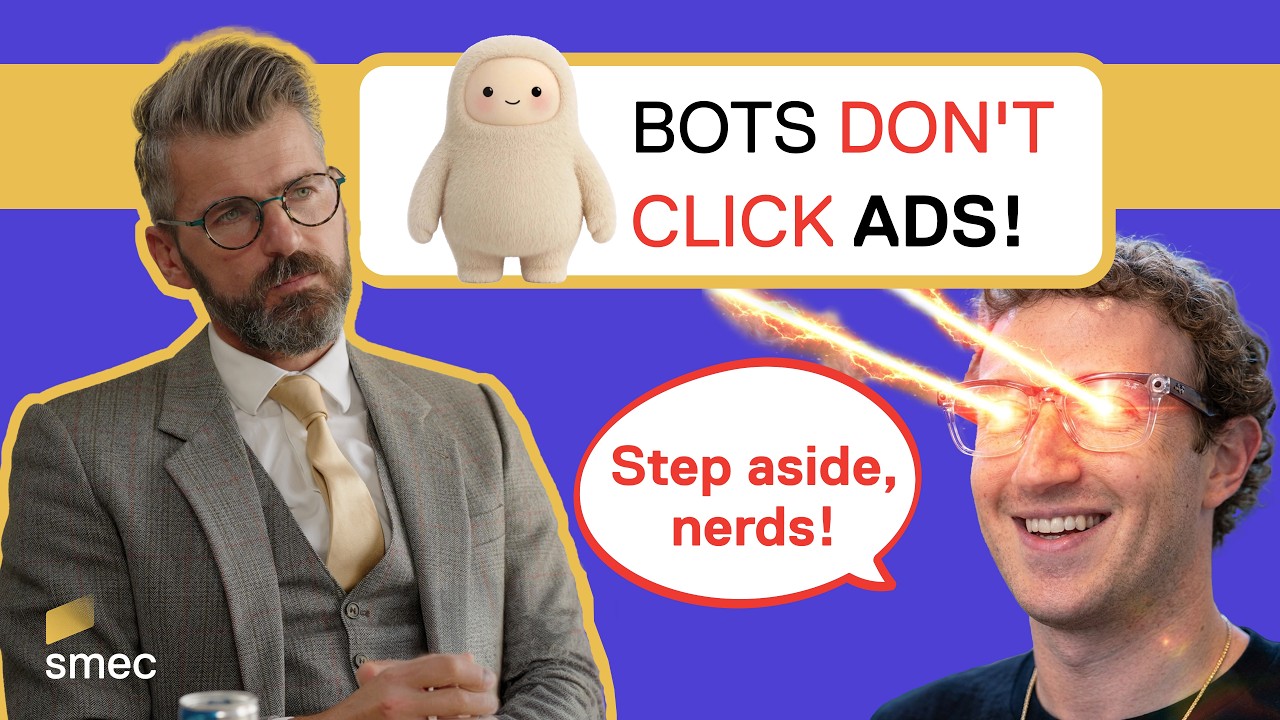
Then comes the surprise. For a year, Google said broad match or AI Max was the only way into AI Mode, and it has now confirmed a test serving exact and phrase match keywords there. Mike and Chris ask what that says about how well AI Mode ads really perform. They also cover why exact match still wins across thousands of ad accounts, where smart bidding exploration fits in, and why conversational queries may sit further up the funnel than Google admits.
If you manage Google Ads for an ecommerce brand and you’re deciding how far to follow Google’s AI Max push, this one’s for you.
Timestamps 00:00 - Intro 00:47 - AI Mode text ads now show on ~30% of commercial queries 03:55 - The AI Mode black box: why Google isn’t sharing performance 10:36 - No opt-in, no opt-out: what advertisers can’t control 11:50 - Mid-funnel intent and the conversational click problem 17:02 - Ads vs. citations, and the high-CPC skew 20:47 - Google tests exact and phrase match in AI Mode 23:09 - Keywords aren’t dead: query length, AI Max and the funnel 28:31 - Exact vs. broad vs. AI Max, and smart bidding exploration 31:24 - What advertisers need from Google next
Key Takeaways
AI Mode text ads show on ~30% of US commercial queries. Europe is effectively zero so far. 70% of AI Mode ad placements show multiple advertisers, but brands rarely appear both cited and advertised. Ads skew toward higher-CPC keywords. Advertisers can’t control whether they serve in AI Mode or see how those ads perform. Google’s exact and phrase match test cuts against its line that keywords can’t work in AI search. Across smec-managed accounts, exact match still beats broad match, which beats AI Max, on efficiency. Your product data feed drives both organic and paid visibility in AI surfaces.
Episode Highlight
Exact Match Ads Arrive in AI Mode Google is officially testing exact and phrase match ad serving within AI Mode, walking back previous assertions that broad match or AI Max were strictly required for visibility on GenAI surfaces. This shift validates that concise, high-intent keywords remain indispensable for lower-funnel performance and maintaining high return on ad spend. For ecommerce leaders, it provides a crucial performance valve, enabling brands to capture high-converting search intent directly without relying solely on exploratory AI targeting.
- Mike Ryan“You can serve in AI Mode with exact match.”
Episode Transcript
00:00:00 - 00:00:20
Mike: Welcome to another episode of Growing Ecommerce. I’m one of your hosts, Mike Ryan, and with me is Chris—
Chris: Enjoying a Red Bull again, by the way. Did I get the call? Are we sponsored? No, just kidding. One day, but I will keep grinding.
Mike: Well, the funny thing is, we have a coworker whose wife actually works at Red Bull podcasts.
00:00:20 - 00:00:47
Chris: By the way, I worked for them before I went into e-commerce!
Mike: Yeah, I know.
Chris: Yeah, for nine months in brand management—great company, great product. Of course, the former brand manager says that. But I shouldn’t have said that.
Mike: All right, what’s on the agenda today? Nearly a third of commercial queries in AI Mode are triggering a text ad.
00:00:47 - 00:01:12
Mike: And speaking of search ads in AI Mode—you’re going to want to sit down for this one, Chris.
Chris: What is it?
Mike: You can serve in AI Mode with exact match.
Chris: No way.
Mike: Yeah, seriously. You don’t need broad match or AI Max.
Chris: Ladies and gents! Of course, I’ve heard about that before, but it’s still shocking to me.
00:01:12 - 00:01:37
Mike: Yeah, for a lot of reasons, but we will unpack that today. We’ll get there.
Chris: My biggest question is why? Why, why?
Mike: I wrote in the show notes: “Why?” with a question mark. Okay, let’s start with the obvious one: a third. So basically, in Europe, there are no ads running whatsoever on these new GenAI surfaces within the Google system that we know of.
00:01:37 - 00:02:06
Mike: Maybe there’s tiny testing going on, but it’s basically zero.
Chris: Yeah.
Mike: And then in the US, as always, they are first, and 30% of queries show a text ad. I just want to be precise: we’re talking about text ads, no Shopping ads.
Chris: Yeah.
Mike: I saw this study on Search Engine Land, coming from a company called SE Ranking, which I assume stands for Search Engine Ranking.
00:02:06 - 00:02:29
Chris: Sounds to me like an SEO company. So they just had a look at text ads.
Mike: Yeah, because they were looking at a lot of verticals here, not only e-commerce. They looked at 20 verticals for this, and what they found was that this varies. In some verticals, like pets, it’s almost three-quarters…
00:02:29 - 00:03:04
Chris: Okay.
Mike: …that are serving text ads. And around 70% of the time across the whole sample, there are going to be multiple advertisers shown. So 30% is a substantial number.
Chris: Yes, I would say it’s a sign that things are really scaling here.
Mike: Yes.
Chris: But look, bear with me. It’s substantial, but when I saw this number, I was like, that means 70% are not monetized currently.
00:03:05 - 00:03:25
Mike: Yeah, or maybe exclusively by Shopping ads. We’d have to know more.
Chris: Exactly. This is why this study is lacking a big part of the picture. But let’s assume the share with Shopping ads is not substantially higher.
Mike: Yeah.
Chris: Then I would say, look, 30%—yes, I don’t know the ramp-up, I don’t know the trend.
00:03:25 - 00:03:55
Chris: Maybe it’s growing exponentially, but at the end of the day, 70% are not monetized currently.
Mike: Yes.
Chris: Long way to go.
Mike: Yeah, well, plenty of headroom, plenty of headroom. Because let me face it: the ultimate goal will be 100%. Every percentage less than 100% is a missed opportunity.
Chris: Yeah. Do we know anything about performance?
00:03:55 - 00:04:22
Mike: No, that was not part of the study. And to me, boy, where to begin here? Because is 30% high or low relative to expectations? You have to remember, it was 2023 when ads in SGE—Search Generative Experience, which became known as AI Overviews—were first discussed. People expected we were going to see that soon, and as late as the second half of 2025, like this time last year, these were vanishingly rare. So I assume there is a ramp going on. What do you think?
00:04:22 - 00:04:44
Chris: I mean, still, 30%… whether you see this as high or low is an opinion. But as a fact, 70% are not monetized right now, assuming that the Shopping share is not substantially higher. What do you think is the reason why it’s only 30%? Do you think there’s a lot of testing still going on? Do you think the results are not super convincing? What do you think?
00:04:44 - 00:05:05
Mike: I think probably both of those things are true. You were asking if we have any visibility into performance, and the answer is no, not at all. We’ll see how long that situation can persist. It becomes increasingly awkward because ChatGPT ads are the alternative here. Say what you will about performance, you can see it. Google just spent all this effort shoveling themselves out of the black box position, and here they are, back in a black box position.
Chris: Yeah.
00:05:05 - 00:05:24
Chris: Yes. And what’s worrying me a bit… why are they so secretive about this thing? I think the performance sucks.
Mike: Yep.
Chris: But look, mate, let’s call it what it is: if the performance is bad, this would put massive strategic pressure on them.
Mike: Yes.
Chris: We talked about “the big suck” and the lack of adoption of their strategically high-priority campaign type, AI Max, right?
00:05:24 - 00:05:48
Chris: Can you imagine if, for whatever reason, ads are not running well on these GenAI surfaces?
Mike: Yeah, I think they just need to show us their ugly side and get in front of this. They have to educate advertisers.
00:05:48 - 00:06:20
Mike: I think they have to educate Wall Street, because this situation cannot persist where there’s no physical evidence that you’re getting impressions and no evidence of how it performs. I guess it performs poorly relative to classic search, but it probably performs great compared to YouTube or something, or maybe ChatGPT.
Chris: Yeah, it might perform comparably to ChatGPT.
00:06:20 - 00:06:42
Mike: Yeah, but they need to start managing and framing this. In their defense, as we’ve talked about in the past, they have a lot of innovative new ad formats, which is probably very important to making this not suck.
Chris: Yes.
Mike: But they can’t scale beyond 30% when performance is not good, and it might drive down campaigns when these newer formats that might work better are still being built. They’ve been in a luxury position for a long time and were able to move slowly because they would only be disrupting themselves. But now, visibility on ChatGPT is growing.
Chris: Yeah, that’s true.
00:06:42 - 00:07:10
Chris: I mean, we had this brief discussion, right? It’s kind of off-topic, but the question of scaling from the perspective of Google… is there scaling pressure?
00:07:10 - 00:07:49
Chris: Because let me face it: I think there is no real pressure coming from Wall Street. At least I haven’t read anything about Wall Street looking closely at the adoption rate or ad share on these AI surfaces.
Mike: Yeah, because the money is made right now in the classic search product, right?
00:07:49 - 00:08:14
Chris: It’s not like there’s incremental revenue on the table.
Mike: Yeah. The top-level picture looks good enough. I do remember Barclays asked a question about this a while back, so it has come up, but it’s not an urgent topic that keeps getting pushed earnings after earnings.
Chris: Exactly. And like you said, there hasn’t been that much pressure coming from these new players. You made the case, as far as I understood, that the pressure will grow now because ChatGPT is there.
Mike: Yeah.
00:08:14 - 00:08:36
Chris: Let’s assume it’s performing in ranges where advertisers see it as a valuable alternative to Google. Then the picture will change. But we haven’t seen a lot about ChatGPT yet, right? We just don’t know: is the performance there? Will it be comparable to Google performance? That’s why I think Google is still in a comfortable situation. That’s my take on it.
00:08:36 - 00:09:03
Mike: I agree. I think they’re way ahead on formats, on targeting, on so many things. We know that they’re taking relevance very seriously here, so they are managing this. There’s probably going to be a point where they say, “Okay, the pressure is high enough, and we’ve brought performance to a point where conviction level is where we can build a narrative,” and they’ll start giving visibility at that time. But just a couple of other things: 30% of Google queries is probably still bigger than all of ChatGPT combined by far. So it’s still by far the biggest.
Chris: Of course it is.
00:09:03 - 00:09:27
Chris: Yeah, it’s substantial, don’t get me wrong. One question before we highlight some other insights from this study—maybe a stupid question—but as an online retailer, I can’t even control if I’m shown. Let’s say I’m running AI Max for search. Can I control if and what search queries I want to serve on these AI surfaces versus the classic search product? I can’t control this, right?
Mike: That’s correct. Google has full control over that.
Chris: Okay. This increases my conviction in my thesis: the conviction level is not high enough that ads are performing in a way where advertisers are happy with the product overall.
00:09:27 - 00:10:05
Chris: You can neither opt in nor opt out, and you can’t know performance—which, by the way, is a great position for Google to be in, because they can test the shit out of it.
Mike: Yeah, they have a free hand. You can’t even complain.
Chris: Yeah, they have a free hand there.
Mike: One thing I wonder about is if performance is that different… my mind goes to the idea that these conversational queries are way more mid-funnel. Maybe they need to package that up with Demand Gen somehow, or find a new campaign type or a different vehicle.
00:10:05 - 00:10:36
Mike: And by the way, this is a perfect segue to the other topic we want to unpack today. What if the prototypical user on this GenAI surface in AI Mode is just not that far down the funnel in their purchasing journey? What if it’s mid-funnel or high-funnel search behavior going on there?
Chris: Then, of course, you can’t replicate the performance you’re used to with standard Shopping campaigns, where it’s way further down the funnel. Google has a long way to go in being transparent with advertisers about what to expect.
00:10:36 - 00:11:12
Chris: Right. What type of channel it is for you, whether it’s incremental or not… there’s a long way to go. That’s why maybe it’s not even surprising that it’s only 30%.
Mike: All things considered, I think 30% is high—that’s where I stand. Taking that into account, though, it’s a fair point.
00:11:12 - 00:11:50
Mike: Regarding your question about intent, it’s so complicated as a product because, in principle, you can have these mid-funnel queries and then the person drops out and goes to a website, or does another Google search—it’s this whole “messy middle” thing.
00:11:50 - 00:12:28
Mike: In principle, they can keep chatting with the AI and go through that qualification process. So you can have a single chat where the first turns were very generic, but upcoming turns get high intent. It is hard to manage as an ad product.
Chris: It’s extremely hard to manage. We talked about that feature a couple of episodes ago: maybe you start mid-funnel, and then you get assisted by the bot while already on the website.
00:12:28 - 00:12:51
Chris: Think about the scenario of the old days: I had a mid-funnel search query, I clicked an ad, went to a website. I wasn’t really happy there, maybe didn’t find the product, went back, did another search query, clicked another ad.
Mike: Yes.
Chris: From a monetization perspective for Google, if I only click one ad and then get assisted all the way to the final buying decision, a couple of clicks will probably be missing.
00:12:51 - 00:13:15
Chris: So it’s a highly complex thing. Fair point, Mike. Maybe that’s why it’s at 30%—maybe performance is great, but Google is like, “Hold on, guys, we see way fewer clicks. What can we do about it?”
Mike: Yeah, I believe the click-through rate is probably way lower because it is a zero-click context.
00:13:15 - 00:13:40
Chris: Sure. Or there’s turn-based behavior. I don’t envy the people working on designing this right now. But seeing Google move at this pace again reminds you: OpenAI will face the same challenges.
Mike: They’re going to face the same challenges.
Chris: And talking about the pace Google is putting up… the complexity of these new campaign types and flavors we talked about… maybe this was even too fast for Google.
00:13:40 - 00:14:16
Mike: Yeah, it could be. Creating an ad system running on Google’s scale is a beast.
Chris: Like I said, I see massive challenges for ChatGPT. Google is also doing this agentic stream in parallel, and maybe it’s smart that ChatGPT walked back from e-commerce to focus on ads first. But one thing for sure, Mike: I would never doubt Google. I think they have a plan and a strategy.
00:14:16 - 00:14:45
Chris: On the one hand, they offer transparent channels, and at the same time, where it makes sense for them, they operate super black boxes. Honestly, no one is complaining about it.
Mike: No, not really.
Chris: At least for now. I think that will change, but for now they can test the shit out of it, and everyone is like, “Okay, I’m fine with it.”
00:14:45 - 00:15:08
Chris: Anyway, maybe two or three points from this study before we jump to the next topic. 70% of placements showed multiple advertisers.
Mike: That’s right.
Chris: I think that’s fair, and I actually think it’s part of having a good ad offering.
Mike: Yes, and that number will probably increase. Because that’s what Google is about: showing alternatives.
Chris: The next one…
Mike: Rare. It was very rare, unfortunately—I don’t have a precise number—where an advertiser was shown both organically and in an ad.
00:15:08 - 00:15:40
Mike: Exactly. And that’s pretty painful because there’s no clear SERP dominance happening. Ideally, you would want to be recommended organically and advertised. That would be the ultimate domination.
Chris: Yes, exactly.
Mike: It’s uncommon that you get cited and have an ad impression. I don’t know if there’s a system behind that or if it’s just the way it is, but it’s also a great story for ads: if you’re not going to be cited organically, you’d be invisible, so the ad ensures you’re visible anyway.
00:15:40 - 00:16:20
Chris: Engine optimization to be shown organically on these new surfaces uses the same source as paid search: the data feed. If you control your data feed the way you should, unless it’s a systemic decision by Google preventing both, you have chances to dominate the SERP.
Mike: Well, the core thesis is that many of the actions you take to improve your ads also improve organic visibility, which is promising for retailers.
Chris: Yeah, but of course it’s a black box right now.
Mike: And there’s a clear orientation toward high CPCs. In this study, they mapped queries against keywords, checking keyword difficulty and CPC, and found Google shows ads on a higher percentage of more expensive clicks.
00:16:20 - 00:16:41
Chris: Fair point. You were mentioning before the show that this could be a skimming strategy, starting from a nucleus of high CPCs and expanding outward.
Mike: Yeah, or maybe they’re testing promising keywords first, and it just happens that the most promising keywords have higher CPCs. We don’t know, but that’s a finding of the study.
00:16:41 - 00:17:02
Chris: Now I want to hear your take on the next item, Mike, because this might have huge implications. Listen carefully, ladies and gentlemen: Google is testing exact and phrase match ads in AI Mode. When we talked about it, I couldn’t believe it. Is this confirmed by Google?
Mike: It’s confirmed. Friend of the show Anthony Higman spotted this. If you know Anthony, he wouldn’t touch AI Max with a 20-foot pole. He saw some of his ads showing up in AI Mode, looked at his ad groups, and wondered how that was possible. Then Ginny Marvin from Google confirmed it.
00:17:02 - 00:17:25
Mike: Why this is a big deal, in case you’re scratching your head: Google has stated pretty much from day one that you need to use broad match or ideally AI Max to be visible in AI Mode and inside AI Overviews. They said that’s the exclusive requirement if you want to come along for the ride.
Chris: It’s been a big motivator for sure. People were afraid of missing that visibility, missing the train, getting left behind, whereas otherwise they wouldn’t adopt it.
Mike: Yes.
00:17:25 - 00:17:46
Mike: Google’s argument was that standard keywords fall flat here. There were statements from Google at Google Marketing Live about the “keywordless future.” They got very bold, saying standard keywords don’t work anymore and that conversational queries require broad targeting and new technology. You and I pushed back on this podcast—or maybe in a private chat, I can never tell—thinking that conversational queries might be having a moment, but shorter, transactional keywords are not going away. This seems like validation of that.
Chris: Yes, it seems like a validation.
00:17:46 - 00:18:25
Chris: Let’s unpack this. Early on, I had a conversation with a high-level Google exec when AI Mode launched, and they found very quickly that the average search length in AI Mode is substantially longer than in classic search. We were talking about 2.5x or 3x.
Mike: Yeah, I’m hearing 3x now.
Chris: For those types of longer search queries, I agree that classic keywords don’t work as well.
00:18:25 - 00:18:41
Chris: But it highly depends on where you are in the funnel. When I use AI Mode, it’s a great product, I love it. But when I precisely know what I’m looking for, I’m a keyword guy.
Mike: Keywords are very efficient shortcuts because they match a query directly to what you’re looking for.
Chris: Exactly. So the pendulum may literally be swinging back, because I see no other reason why they would test exact match in AI Mode now.
00:18:41 - 00:19:11
Chris: Let’s face it: the Power Pack was the new sheriff in town, right? AI Max for Search, Demand Gen, and PMax was framed as the future of campaign types that Google was doubling down on. I haven’t heard about that in a long time.
Mike: No. And every year at GML, they simplify or change the messaging. The year before it was the Power Pair, then the Power Pack, and this year they literally had a blank white slide with big black letters saying “AI Max”.
00:19:11 - 00:19:28
Chris: Maybe it’s a Power Duo now! But the message behind the Power Pack was: if you want to be future-proof for GenAI surfaces, you have to use AI Max for Search or PMax, built on keywordless technology.
Mike: Yeah.
Chris: That’s why this is so big. It signals that classic keywords are here to stay. We’ve talked about “Dead Man Walking” in our conversations—referring to Standard Shopping—and guess what? That man is still walking around as strong as ever!
00:19:28 - 00:19:56
Mike: That’s right. These things prove surprisingly resilient, partly due to advertiser stance and the massive spend volume behind them. Exact match keywords still work, even in AI Mode, for a subset of inventory. Google’s message is that if you want to appear for conversational queries and new ad formats, your best bet is AI Max, but for direct, high-intent keywords, exact match serves those. There’s an indescribably large amount of money bound up in exact match keywords.
Chris: Yeah, or maybe exact match just works really well.
00:19:56 - 00:20:21
Chris: That’s the point I wanted to make: the exact match keyword technology Google created performs so well down the funnel. Maybe conversational, keywordless technologies just aren’t working as well from a pure performance standpoint.
Mike: Exactly, because keywords work so well when someone is down the funnel.
Chris: Might just be the case.
00:20:21 - 00:20:47
Mike: I can open up any random ad account among our thousands of ad accounts, and I will always see the same pattern: exact match is the highest performing, broad match is less efficient, and AI Max is the least efficient. That’s expected because AI Max uses looser, expansionary targeting where there are hits and misses. Have we done an episode on smart bidding exploration before? I think so.
00:20:47 - 00:21:12
Mike: Just quickly, because one of the keys to this whole riddle is smart bidding exploration. The idea is that you give Google permission to miss your ROAS target in order to seek incremental revenue and query diversity. Right now, Google does not have the modeling maturity or accuracy on these long conversational queries yet. They’ll get there, but right now, while there’s “more intent than ever,” it’s not all upside.
00:21:12 - 00:21:39
Mike: It’s hard to manage that uncertainty when asking advertisers for permission to miss ROAS targets on queries that might also have lower click-through rates. Bringing in exact match provides that high-ROAS “steak and potatoes” to balance campaign performance while they scale exploratory conversational queries.
00:21:39 - 00:22:07
Mike: Maybe it’s also about bringing spend along. The carrot of AI Mode alone might not be enough to force advertisers who love exact match over to AI Max in 2026. Google cannot just leave exact match behind.
Chris: They want to drive AI Mode adoption and ad share within AI Mode.
00:22:07 - 00:22:27
Chris: But everything boils down to one thing for advertisers: is this performing? If advertisers see a massive drop in performance in AI Mode versus classic search ads, it creates havoc in the market. Testing exact match in AI Mode is the ultimate mitigation of that risk—like a pressure valve.
00:22:27 - 00:22:51
Mike: There’s a mismatch between “there’s more intent than ever in AI Mode” and “by the way, performance sucks.”
Chris: They have to be careful with their go-to-market communication, because the average advertiser still doesn’t know what to expect from AI Mode and the ads running there—whether it’s a substitute or incremental.
Mike: We’ll work closely with them and challenge them when needed. Again, I stopped doubting Google.
00:22:51 - 00:23:09
Chris: You never doubted them, but you challenged them!
Mike: I challenged them repeatedly over the years. I doubted them a lot, but Google will figure this out.
Chris: Indeed, sir. It was a pleasure as always.
Mike: Me too, mate. Thank you very much for your time. This has been another episode of Growing Ecommerce, brought to you, as always, by Smarter Ecommerce, also known as smec.
Chris: See you next time. Bye!
source on Google →