The online retail growth podcast with
Mike Ryan & Christian Scharmüller
Google's $155 Billion Backlog: The Real Cost of Advertising
Released:
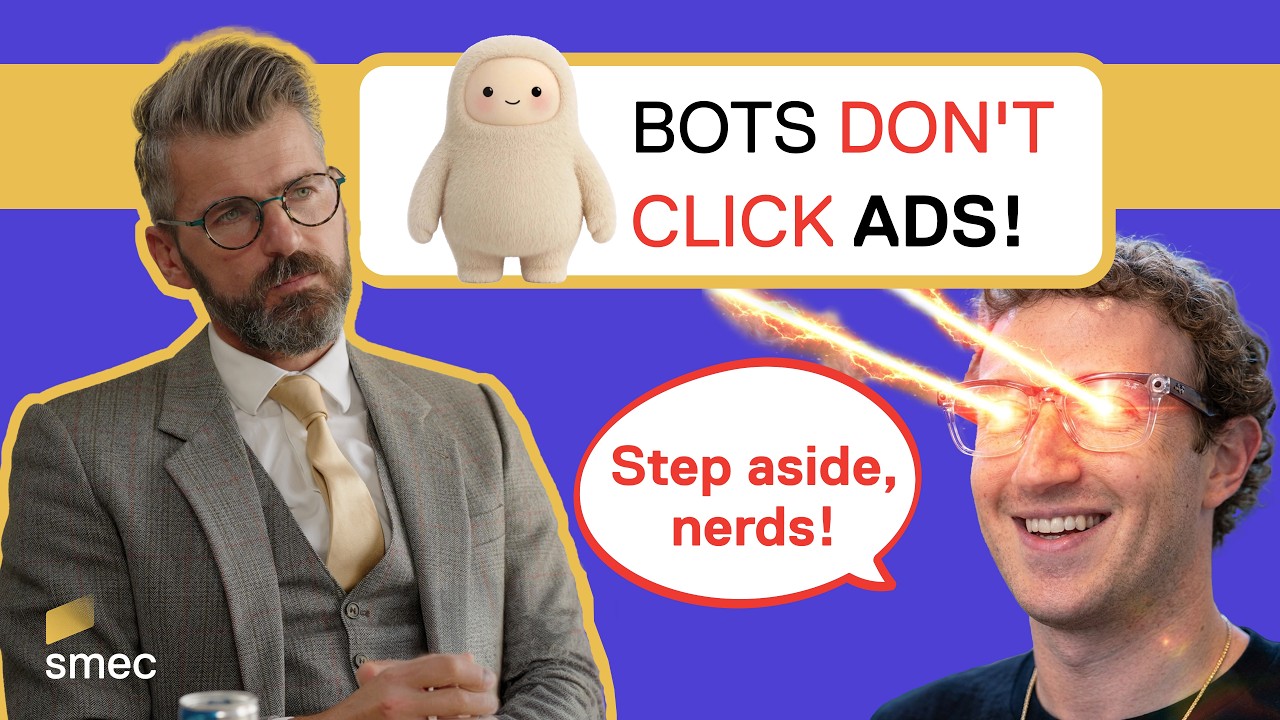
Q3 earnings are in, and the consolidation is real. Hosts Mike Ryan and Chris dive into the gravity-defying numbers, confirming that Google’s core ad revenue is up a strong 12.6% year-over-year (YoY), and their massive Cloud backlog sits at $155 billion USD.
Chris states that Google is not the “bee-headed chicken” but remains the dominant “American eagle”. The focus then shifts to Amazon, which has truly become a services business (Cloud and Ads), with its retail component no longer the core driver of its wealth.
But the big story isn’t the growth—it’s the crisis. Mike and Chris reveal a dangerous surge in ad costs: CPCs in PMAX and Shopping are up an alarming 30% year-to-date (since week one of the year), with Shopping CPCs specifically soaring by 36% YoY. Chris warns that this kind of inflation is a “real threat” to Google’s business model because it is “forcing especially small and middle businesses out” of the auction.
They discuss whether a competitor like OpenAI could challenge Google by offering “massively discounted CPCs” to eat into market share. Finally, Mike introduces the free smec Market Observer tool that helps online retailers benchmark their CPCs and check competition levels from giants like Amazon and Temu.
Link to the smec Market Observer mentioned in the episode: https://smarter-ecommerce.com/en/smec-market-observer/
This tool is built for PPC managers optimizing Google Ads campaigns, marketing managers justifying ad budgets to leadership, agency professionals benchmarking client performance, and ecommerce/retail executives making strategic decisions based on competitive intelligence.
Episode Highlight
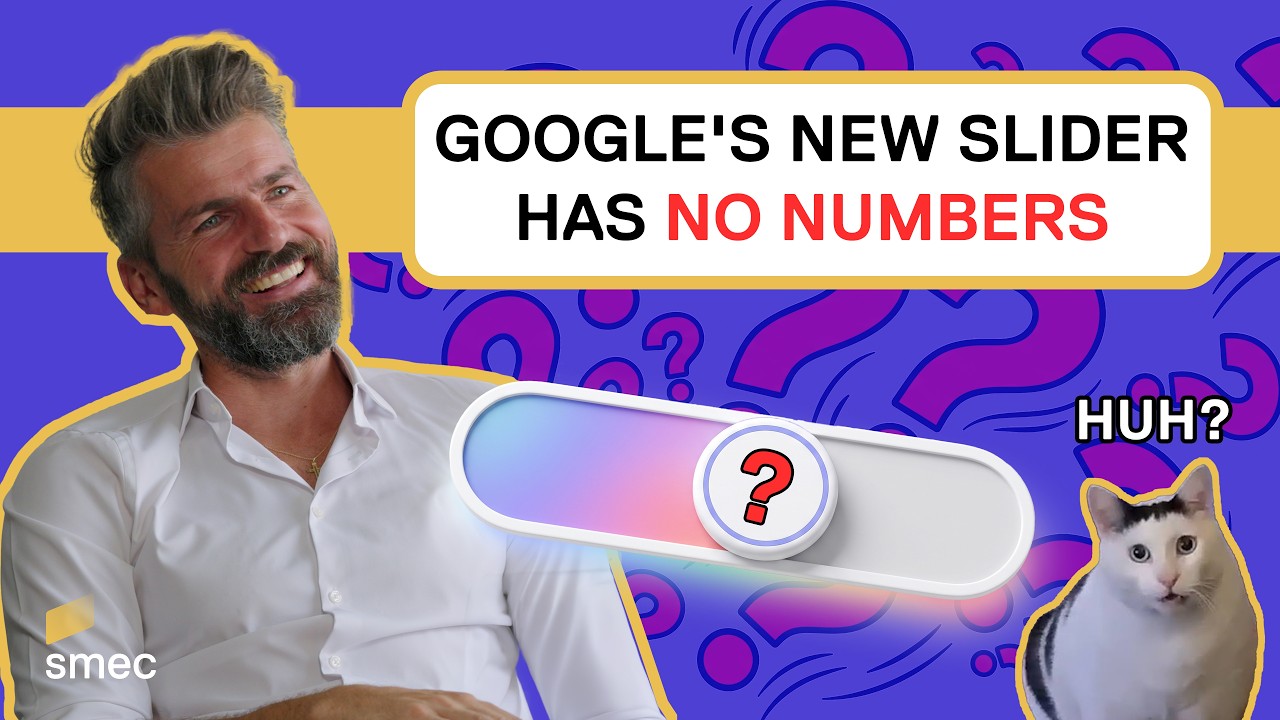
Google’s Polarizing Search Box Redesign
Google recently swapped its iconic search bar for an AI-centric search box, a move that coincides with a dramatic rise in app rankings for privacy-focused rival DuckDuckGo. This shift suggests that many consumers might be overwhelmed by the rapid push toward conversational AI, creating a potential rift between tech innovation and user preference. For e-commerce brands, this underscores the need to monitor how search behavior evolves as queries get longer and more visual while maintaining focus on core performance.
- This is a clear indication that a significant share of Google users are, for whatever reason, not happy with this new box.
— Mike
Episode Transcript
Mike 00:00:02:12
I’m just thinking. All right, let’s go. Welcome to another episode of Growing Ecommerce. I’m one of your hosts, Mike, and with me, as always, is Chris.
Chris 00:00:28:04
Hey, Chris. I’m showing another Red Bull. Maybe this is my starting ritual, but we had a good one last time. Well, we’re not talking about product placement today. We’re going to be talking about whether or not Google went a bridge too far—a box too far.
Mike 00:00:41:10
You’ll find out what that means in a second. Also, new data from eMarketer calls into question what’s going on with OpenAI ads as a category, but also gives us some insight into where this category stands with Google today. It’s very interesting.
Chris 00:01:06:12
Yes, I love these two topics. I think they’re very much adjacent to what we talked about in the episode before. Mike, let’s jump right into it. Where are we starting: with Google or eMarketer?
Mike 00:01:06:14
I’ll start with Google. This is based on data from Sensor Tower. They look at different App Store rankings, and something interesting happened. I’m looking at category rankings for DuckDuckGo. In case anyone listening doesn’t know DuckDuckGo, it is a Bing search wrapper. It’s an alternate search provider positioned around privacy and not using any AI in their products unless you want that tracking.
Chris 00:01:57:14
On the tracking side, the advertising side, and also on these AI search features.
Mike 00:01:57:14
So DuckDuckGo is having a pretty good couple of months. For example, these numbers vary depending on which exact category you’re looking at, but in both the iOS App Store and the Android App Store, they went to the moon. In top three applications, they went from around position 400 to being in the top 100. By another measure, they went from being around position 175 to being around position 40. These are really big, sustained jumps. And no matter how you look at it, this all happened around May 20th or 21st of 2026.
Chris 00:02:29:13
Interesting. Really good. My assumption would be that DuckDuckGo released a massively impacting feature. They must have improved their product, right?
Mike 00:03:00:20
What happened? They did nothing. Don’t be too harsh on them, but there was no major feature release on the DuckDuckGo side. They’ve really stepped forward with positioning their product, but it’s not related to their product. It’s related to what happened to a competitor product—specifically the small one, Google Search.
Chris 00:03:42:15
What did they do on May 20th and May 21st? Remind me, was there anything happening around then?
Mike 00:03:42:16
Oh, that’s right. There was Google I/O and Google Marketing Live. At Google I/O, they announced the biggest change ever, in my opinion, to Google Search as a product. They’re rolling it out now. It’s no longer going to be a search bar; it’s going to be a search box. That was my joke at the start—did Google go a box too far?
Chris 00:04:26:12
Now we go full circle. Ladies and gents, this is how smart the intro was. This is a high-production podcast. All jokes aside, it sounds ridiculous, right? From a bar to a box. But if you look into it, the box is literally a big change to how you search and how you should search. What is this implying in terms of how Google wants you to search? The box is substantially different from the beloved bar we got used to.
Mike 00:05:25:07
Exactly. Google’s been saying that search queries are getting two or three times longer already on these analytics. First, they shared that it was 2.5x. Now their main search product is going into a box. I’m not a UI/UX expert, but it’s pretty obvious that if you have a bar versus a box, you’re going to type more. There will be some priming effect going on for sure.
Chris 00:05:44:03
The reason people are reacting to this is that this is the interface we’ve all become familiar with from ChatGPT and Google AI mode. It is basically an AI chat interface at this point. You can upload images and other things. This is also a major change.
Mike 00:06:09:02
Think about it, Chris. We’re talking about how Google plans to report search terms and match keywords if queries are getting so long. But what if there’s an image attached? “I want shoes like this,” and you upload an image you took. Or I upload my beat-up bicycles and tell Google I want one that is twice as big. What’s the reference point? There are massive implications because Google is doubling down on their vision that everything will be conversational and Gemini-powered. They have massive confidence in the product landscape to deal with these conversational search queries. The question, though, is: is the market adopting it? Is the market ready? Clearly not everyone is, and DuckDuckGo is just one indication from the consumer side.
Chris 00:07:34:22
What about the online retailer? The operational teams? There are so many things going on. I stated in the last episode that maybe we were hard on Google because they seemed to have this innovation dilemma—very slow and hesitant. Right now, maybe the pace is too high.
Mike 00:08:06:07
It certainly could be. This is a clear indication that a significant share of Google users are, for whatever reason, not happy with this new box. We’ll see what happens to DuckDuckGo’s market share. They need to keep this up for years to really take market share, but it’s a clear sign that for some consumers, this is too much. For retailers, the pace of change is exhausting.
Chris 00:08:56:14
There’s that famous Bill Gates quote that things don’t change as much as you expect in the short term, but more than you expect in the long term. I feel that every day because I feel like everything is changing, but I also feel like everything’s staying the same a bit too. It’s really weird.
Mike 00:09:18:22
Talking about this weirdness, let’s circle back to Marketing Live. We are a specialized company—Google, Microsoft, Meta. We focus on everything they release. But even for us, it’s sometimes a lot to understand the implications and how these new technologies interfere with everything else. I think the pace is too much. I’m not kidding. Even for Google, it’s a lot.
Chris 00:10:37:15
Maybe this is a bit off-track, but you mentioned it’s too much even for Google. We talked about PMax for shopping and all the massive capabilities it has now. The more I think about it, the more I think shopping becomes so powerful again that some retailers might ask: “Why should I even do PMax?”
Mike 00:11:01:23
That’s certainly not in the interest of Google, as PMax is the main campaign type for them. They’ve invested a lot of money in building and marketing it. I’ve asked Googlers directly about this. PMax for shopping—or standard shopping—is classic shopping that everyone knows and loves, with great controls. But PMax can also create feed-based DSAs, cover text ads, the whole search network, and deliver these new AI formats. It can do everything PMax can do for the search network with arguably better controls and reporting.
Chris 00:12:20:12
Not everyone has been satisfied with PMax from the start because of how it’s structured. You’ve got other campaign types like Demand Gen, which does everything PMax can do for video and display, but with better controls and reporting. No one I ever talked to liked the idea of search and video/display together besides Google. If you can have the best of both worlds, why wouldn’t you? It’s an indication that the pace Google is running at might be too fast even for them because the strategic misalignments are obvious. I’m not sure if they foresaw it.
Mike 00:13:30:19
I’m not sure either. From a technological perspective, I think we made the right decision to double down on both campaign types: standard shopping and PMax. We rarely talk about our product here, but we anticipated that shopping was going to have a comeback a while ago. Steering it holistically with a powerful platform was the right move.
Chris 00:14:14:01
Going back to the initial thought, there is a strong indication that consumers aren’t happy about the change from bar to box. But it’s more than that. Google is moving so fast that retailers and experts are struggling. I don’t even see the pressure on Google right now. ChatGPT is not the fastest innovator; they’re building fast, but they’re not innovating in the same way. It’s surprising that Google is going all-in so quickly.
Mike 00:15:47:23
Let’s talk about the eMarketer data. I want to transition because we’re talking about how much things are changing. We know that classic search is going to go through a decline, and these new AI services and ads are going to become ascendant. Depending on how fast that happens, it’s either disruptive or manageable. This new eMarketer data gives us a first status quo and an outlook. I’m not a huge fan of eMarketer data—it can be clickbaity and they extrapolate too far—but it’s worth a conversation.
Chris 00:17:05:05
They are quite bold with their predictions. They don’t hold back.
Mike 00:17:27:08
They have a stacked bar chart going from 2026 through 2030. It shows three categories of AI advertising spend: AI search adjacent (ads above/below an AI overview), AI conversational search (ads inside AI mode or Copilot), and ads inside AI chatbots like ChatGPT. For 2026, they estimate all AI advertising in the US will sum up to 32 billion. For context, Google’s total search spend in the US will be upwards of 100 billion. So we’re talking about a third, which is a lot, but not overwhelming. 80% of that, according to eMarketer, is AI search adjacent.
Chris 00:19:13:07
That’s not surprising because AI overviews trigger on many searches and ads often trigger with them. I think that picture hasn’t changed for e-commerce yet. But 2030… why is 2030 such a big deal?
Mike 00:20:00:04
It’s a new decade and a long way to look forward considering how fast things change. 2030 is the year OpenAI wants to cross 100 billion with their ads business, which would make them as big globally as Google is now.
Chris 00:20:22:11
Maybe they’d be 50 billion in the US, so half as big as Google. We assume most of that revenue would be chatbot-driven. According to eMarketer, the total addressable market in 2030 for ads inside chatbots is only about 6 billion. This suggests Sam Altman’s 100 billion goal might be unrealistic, but it also shows AI ads are a real thing, even if not an overnight bubble.
Mike 00:21:50:14
The number they peg for all AI advertising in 2030 is 68 billion. If Google is already at 100 billion now, that 68 billion might be 50% of the market by then. It’s fascinating. ChatGPT thinks things will play out dramatically in their favor. I promise you this chart will be wrong in one way or another. I think AI ads will be bigger than 68 billion by then, and the shares will be different.
Chris 00:23:28:16
We’re not alone in thinking 100 billion is ridiculous. It puts things into context. The bigger takeaway for a CMO or CDO is: these surfaces are important and will drive revenue, but don’t forget the bread and butter. Everything’s changing, but everything’s staying the same. There’s a huge mandate in organizations to grab onto this, but you have to pick your battles and prioritize.
Mike 00:25:42:14
Avoid the FOMO. We see it with clients daily; they don’t want to miss the train. But you’re not missing it. Be prepared, but it’s not changing the nature of your business yet. E-commerce is not the same as publishers who lost organic visibility. Google has a massive commitment to driving ad revenue on their owned properties.
Chris 00:26:39:18
It’s more about being prepared than overreacting. Every retailer has limited resources and talent. You have to make trade-off decisions. To double down on something that won’t be as relevant as you think is a big issue for a manager. Be efficient, but don’t forget your core campaigns within the Google and Microsoft stack.
Mike 00:27:29:11
I would say let’s leave it at that. It is what it is.
Chris 00:27:50:19
Looking forward to the next episode. Very good handshake, Mike. It’s getting better. We’ll have to play tennis in the next few weeks before I’m back again. Thanks everyone for listening. This has been another episode of Growing Ecommerce, brought to you by Smarter Ecommerce. You can learn more at [link removed]. Please give us a shout-out on social media or leave a review. Thanks, and we’ll see you next time.

source on Google →