The online retail growth podcast with
Mike Ryan & Christian Scharmüller
Google's AI Now Picks Which Product You Sell | Plus: ChatGPT Shopping Ads Arrive Too
Released:
Google’s new AI-powered Shopping ads can now decide which of your products wins the click — and it’s optimizing for the user, not for your margin, your brand, or your strategy. This Gemini-built format writes its own product descriptions and may re-rank which product gets shown, beyond your bid.
Mike Ryan and Chris dig into what that means for retailers who suddenly have less control over what gets pushed. Plus: ChatGPT is finally bringing Product Listing Ads (PLAs) to its results — a solid first step, or a Bing-style copycat play?
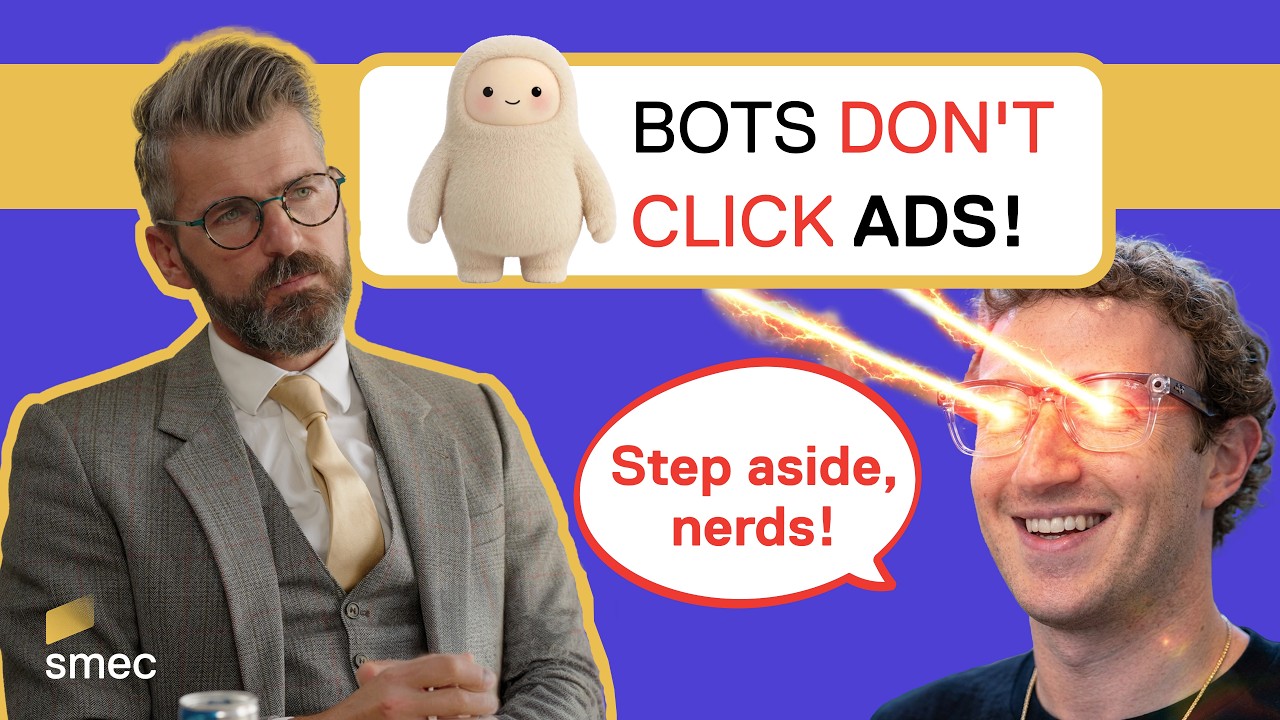
The real story: “more relevant to the user” is not the same as “best for the retailer.” As automated channels get more aggressive at matching products to searches, advertisers risk quietly losing control of which products actually get sold.
In this episode:
→ What Google’s AI-powered Shopping ads actually are — a new format inside AI Max for Shopping, not an umbrella term
→ “Intelligent product identification”: how Gemini may re-rank which product is shown, beyond the bid
→ The retailer’s blind spot — Google optimizes for click-through rate; you optimize for the business
→ The coffee-machine problem: when the highest-converting product isn’t the one you need to sell
→ Why the best Google Ads outcome isn’t always the best business outcome
→ ChatGPT’s PLAs: a solid, feed-based first step — or a Bing-style copycat play?
→ What OpenAI’s $100B ad ambition means for what comes next
The throughline: AI executes, but only you know what your business needs to achieve. The retailers who win are the ones who keep translating business goals — margin, brand priority, profitability — into the channel, instead of letting the platform decide.
📌 Growing Ecommerce is brought to you by smec (Smarter Ecommerce). We help ecommerce brands move from platform-driven to business-driven PPC — combining AI-powered software with human expertise to optimize Google Shopping and Performance Max toward real business goals.
Episode Highlight
AI Powered Ads Shift Retailer Control
Google’s new AI-powered shopping ads introduce Gemini-driven product identification, fundamentally changing how ads are ranked and displayed by prioritizing automated relevance. While this shift aims to maximize click-through rates, it potentially strips ecommerce leaders of their ability to strategically push specific products, such as those with higher margins or house brands. This evolution moves the channel toward a model where AI-driven intent matching can override manual bidding strategies and specific business-level priorities.
- Christian ScharmüllerIf this new AI-powered layer decides Coffee Machine B is a better fit, Google will probably push that one, even if you as a retailer want Coffee Machine A to be pushed.
Episode Transcript
00:00:00:03 - 00:00:24:01
Mike: Welcome to another episode of Growing Ecommerce. I’m one of your hosts, Mike Ryan, and with me, as always, is Chris—enjoying a Red Bull. We talked about that, right? It’s an Austrian product. We’re not sponsored, not linked or proud. But speaking of sponsored products—how do you like that transition? That segue, mate—we will be talking about sponsored products.
00:00:24:01 - 00:00:55:04
Mike: We’ll be talking about a major oversight from our GML recap episode a while back: AI-powered shopping ads. It is official; Product Listing Ads are coming to ChatGPT. Let’s dig into it. ChatGPT is on quite a roll. They are shipping every week, and they have moved right on from CPA or CPM to CPC to CPA.
00:00:55:06 - 00:01:21:04
Mike: Small steps for mankind, or the other way around. Let’s start with AI-powered shopping ads. That is what they are called. I think there is a lot to unpack because we have been very positive about Google lately.
00:01:21:07 - 00:01:40:18
Chris: They are listening to the market and they are also on quite a roll. But I think with AI-powered shopping ads, not everything is gold there—at least that is the way I see it. It’s shaking things up. Mike, do you want to start with a short explanation of what this is?
00:01:40:18 - 00:02:05:06
Mike: Sure. I actually misunderstood this or kind of overlooked it in the past because we talked a while back about new AI-native ad formats like conversational discovery ads and highlighted answers, and how these things are built from your feed using AI Max for shopping.
00:02:05:08 - 00:02:29:06
Mike: Now, I thought that “AI-powered shopping ads” was an umbrella term for these, but it’s not. It is another format which I think is a format within AI Max for shopping. It is a format that will appear on Google Search. That is huge. What is this format about?
00:02:29:08 - 00:02:53:13
Mike: You can think of it like the other native formats they are working on. It’s much more text-heavy because it is being built with the help of large language models. And Lord knows, those things like to spit out lots of words. We can put an example of this on screen for viewers.
00:02:53:15 - 00:03:08:17
Mike: Instead of the standard block of product listing ads, which includes an image, a title, a price, and maybe reviews, this looks different.
00:03:08:19 - 00:03:29:01
Mike: It is going to have a text block accompanying it that was written by AI, and that text is based on your feed and conversational attributes. All this context is going to be used to build these new ad units.
00:03:29:03 - 00:03:50:11
Chris: I always love to paraphrase you in “ELI5” mode because it helps me and the listeners. Basically, we are talking about a shopping ad where there is a picture, but the fundamental difference to a classic shopping ad is that the text itself is 100% customized.
00:03:50:11 - 00:04:11:02
Chris: It is hyper-specific. For people who are not viewing, I can read an example here. Give me one second.
00:04:14:09 - 00:04:40:11
Mike: “Slim, fast-start machine using virtual capsules with rich flavor extraction and customizable brew concentrations—e.g., for iced coffee—heats up in three seconds and makes six cup sizes.” We are talking about a coffee machine, specifically the Nespresso Vertuo Pop. No product placement intended.
00:04:40:13 - 00:05:04:00
Chris: So you have the picture and you have a substantially longer customized text.
00:05:04:00 - 00:05:24:06
Mike: Exactly. In this case, they are showing a picture, a very short product title, a price, the brand, the star review, the number of ratings, and a pin drop for the location. There are still a few classic shopping things in there, but then there is all this text instead of just a title.
00:05:24:07 - 00:05:55:05
Chris: So the feature of text customization is fully used there. The picture is taken directly from the feed; it is not customized as far as we know. You might use Product Studio to create that image, but it draws on a feed image. This itself is a substantial change, but I think there is more to it. The classic shopping ad was one of the most successful ad formats ever.
00:05:55:06 - 00:06:18:14
Mike: Hats off to Google; it brought them a lot of money. With classic shopping ads, the fundamental technology was Google mapping the search term to the best-fitting product based on the data feed provided.
00:06:18:15 - 00:06:45:23
Chris: That was the model. The ad rank, which decided which product was shown, was massively based on the bid. Now, with these AI-powered shopping ads, we believe there is a fundamental change to that methodology regarding which product is shown.
00:06:45:24 - 00:07:15:04
Mike: Exactly. I am close-reading Google’s documentation here. They talk about three features: intelligent product identification, expert feature summaries, and immediate decision confidence—the “warm and fuzzy feeling” that the consumer should feel after reading the summary.
00:07:15:05 - 00:07:46:10
Chris: The feeling that I have to click that ad because it is perfectly fitting.
00:07:46:10 - 00:08:18:21
Mike: Let’s go back to intelligent product identification. Google says this replaces standard product results with a Gemini-powered shopping experience that highlights the most relevant products for your search. Elsewhere, Google writes that Gemini will pull up your most relevant products. Something is cooking there. I might be wrong—I have been wrong before.
00:08:18:23 - 00:08:46:21
Chris: What Google is aiming at is maximizing click-through rates because that generates money for them. If the old classic shopping ads would map Product A, but the new Gemini-powered methodology decides Product B is the perfect fit, Google will probably have more confidence in Product B.
00:08:46:22 - 00:09:29:01
Mike: How does Google then decide which product will be shown? It certainly will not be the case that both products are shown. It’s a great question. Google is in a situation where AI is writing super relevant answers. If they use the standard matching they have always done, their ads are going to be less relevant than the context they are in.
00:09:29:01 - 00:09:50:19
Mike: The bid has always been important, and they have been matching products and search terms using some form of AI. It’s not like AI was invented with large language models.
00:09:50:20 - 00:10:20:22
Mike: But now they are bringing in Gemini to do that part. I don’t know what kind of tradeoffs they might make or how they are going to weight this. Is this replacing one leg of a three-legged table, or are they adding a layer on top?
00:10:20:22 - 00:11:05:07
Chris: Might there be the possibility that the ad rank itself gets a relevancy layer on top that is weighted more than anything else? If Google believes this AI-powered shopping ad result creates a higher click-through rate than the classic result, they will want to push that outcome.
00:11:05:07 - 00:11:27:01
Mike: They are a marketplace with advertisers and consumer demand. That click-through rate is their match rate. For us, we care about the conversion rate. Google Shopping has always been a pull channel because someone is expressing intent.
00:11:27:01 - 00:11:46:18
Mike: You can’t push a product for intent that is not there, but within that context, you could be more aggressive on bidding for Product A than Product B. This feels like it is increasing the “pull” nature of the channel massively.
00:11:46:18 - 00:12:03:04
Mike: I don’t know how they are going to implement this. I bet they will still weight bids a decent amount, but this is definitely a big change.
00:12:03:04 - 00:12:21:22
Chris: Why this matters is—let’s stick with the coffee machines. Assume you run an online shop and you have Coffee Machine A and Coffee Machine B. Coffee Machine A is more important to you because of a higher margin.
00:12:21:23 - 00:12:52:01
Chris: Right now, you have steering mechanisms to push Coffee Machine A by being more aggressive with the ROAS or breaking it out into a dedicated campaign.
00:12:52:02 - 00:13:29:07
Chris: If this new AI-powered layer decides Coffee Machine B is a better fit, Google will probably push that one, even if you as a retailer want Coffee Machine A to be pushed. This is where I think retailers should be concerned.
00:13:29:08 - 00:13:53:10
Mike: I hear you. That is a good point. I can’t fault Google’s approach to working on relevance, but Google Ads are not strategic. They are thinking on a per-auction basis and not longer than a month’s budget. It is the truth.
00:13:53:11 - 00:14:14:20
Mike: They are brilliant at what they do, but they are not strategic. Google is good at taking care of the user and what is relevant to them, but there is something that is relevant to you, and no one is going to take care of that besides you.
00:14:59:08 - 00:15:32:06
Chris: Ten or twelve years ago, I gave one of my first talks about the quality score and the rank system. I argued why Google was smashing it by creating a “win-win-win” situation—the golden triangle.
00:15:32:07 - 00:15:58:07
Chris: The quality score drove relevant results for the consumer, the online shop was forced to bring relevancy to the SERP, and the retailer still had massive leverage to control what was shown.
00:15:58:11 - 00:16:19:02
Chris: In this case, I feel the online retailer is left out to a certain degree. I assume a Google rep would say that a higher click-through rate leads to a higher conversion rate.
00:16:19:03 - 00:16:34:12
Mike: I bet these will perform. But is the highest conversion rate always what the retailer is aiming at?
00:16:34:13 - 00:16:59:08
Chris: Exactly. Imagine you have two products that are feature-comparable, but one is a vendor brand like Nike and one is your own brand. You want to push your brand.
00:16:59:09 - 00:17:21:13
Chris: The best Google Ads outcome is not always the best outcome for your business. Maybe you want to accept a lower conversion rate to achieve a goal Google doesn’t know about. That is a real risk, and it feels like the retailer is losing control.
00:17:21:14 - 00:17:49:07
Mike: I am also wondering about reports. It’s writing these paragraphs of text—can I see that, please? What is actually in there? There will be these AI briefs you can write. I think that will be a moving target.
00:17:49:08 - 00:18:12:07
Chris: Maybe you could tell the AI brief, “Please push my brand.” We will see. Do we know anything about the rollout plan?
00:18:12:08 - 00:18:32:08
Mike: It is rolling out in the second half of the year, starting in the US. Of course, it is a big market.
00:18:32:14 - 00:18:55:17
Chris: One day they will roll out something cool somewhere else first. Do you think there is a chance for Austria?
00:18:55:18 - 00:19:22:04
Mike: Snowball’s chance in hell. But after the US, they will have a lot of data and will roll it out internationally. If it pushes click-through rate, they will drive adoption.
00:19:22:04 - 00:19:38:14
Chris: It sounds so good on the surface, but if you dig into it, there are things to be concerned about. Everything involves tradeoffs.
00:19:38:16 - 00:20:08:11
Mike: All right. Another big news item: PLAs are coming to ChatGPT. We just said PLAs are going away on Google, but they are finally arriving at ChatGPT.
00:20:08:12 - 00:20:28:01
Chris: Shout out to ChatGPT; they just don’t care what Google is doing. I think it was on the roadmap and they couldn’t change it. It is a necessary first step. PLAs worked; they are one of the huge success stories.
00:20:28:02 - 00:20:49:04
Mike: If we take a lesson from Google building new formats, it seems they might not be up to the task in these new environments, so OpenAI is going to have to move on that too.
00:20:49:05 - 00:21:15:23
Chris: It’s based on the data feed as we know it. It’s pretty bread and butter.
00:21:16:04 - 00:21:38:16
Mike: The mockups I’ve seen look like simple PLAs from some years back. But OpenAI’s feed spec is pretty detailed, and Google is even emulating some of it. I think they will be able to build better and more detailed ads over time.
00:21:38:17 - 00:21:56:24
Chris: Are they going to create conversational discovery ads next? If they are just following Google’s features, there is a perception that it’s like what happened to Bing from Microsoft. That’s where the magic is missing.
00:21:57:00 - 00:22:15:05
Mike: For Bing, it makes sense to copy what is working to get market share. But OpenAI has a different ambition level. Are they really just a copycat of Google?
00:22:15:05 - 00:22:34:15
Chris: The promise was that they didn’t want to do what everyone else was doing. Everyone assumed ads in AI would feel different. Google is walking that path now.
00:22:34:16 - 00:22:55:24
Mike: We talked about the innovator’s dilemma a while back. I think Google has to be careful now that they are not overwhelming the marketplace.
00:22:55:24 - 00:23:27:06
Chris: On the ChatGPT side, it is more straightforward. But it’s a lot more expensive to build an AI-powered shopping ad than just a programmatic, feed-based ad. They have more financial pressure than Google.
00:23:27:11 - 00:24:02:18
Mike: OpenAI announced that ChatGPT feeds will only serve PLAs for now and will not create any organic placements. This is consistent with them putting their e-commerce efforts on pause.
00:24:02:19 - 00:24:22:21
Chris: They are waking it up again and using it for PLAs. I bet their ads will do okay.
00:24:22:21 - 00:24:56:22
Mike: They have to show some income streams before an IPO, so going with the low-hanging fruit of a PLA campaign is a smart strategy. Their ambition is to cross 100 billion in the ads business within the next four years.
00:24:56:23 - 00:25:25:05
Chris: Classic PLAs are not going to cut it. We don’t want to be critical, but the pace of rollout and innovation seems lacking.
00:25:25:06 - 00:25:47:09
Mike: If I were an investor, I’d ask why we are remaking Google Shopping ads from ten years ago.
00:25:47:09 - 00:26:10:18
Chris: Maybe it is part of a bigger plan. To wrap it up, standard shopping campaigns got a big hit on Google’s side because of new AI-powered shopping ads.
00:26:10:19 - 00:26:33:11
Mike: Retailers are potentially losing control because AI is more involved in matching and ad ranking. On the other side, ChatGPT is doubling down on classic standard shopping.
00:26:33:12 - 00:26:55:00
Chris: There you have it. I am proud of my segue at the start.
00:26:55:01 - 00:27:15:23
Mike: It’s been a pleasure. Before I let you go, I want to say we are in the presence of a real podcasting hero. Chris had shoulder surgery and he’s here toughening it out. He even went in for the handshake.
00:27:16:00 - 00:27:39:14
Chris: Shaking your hand was the toughest part, not because I don’t like you, but the shoulder is hurting. I hope I delivered somehow.
00:27:39:15 - 00:28:06:15
Mike: We applaud your dedication. Thanks to everyone for watching. This has been another episode of Growing Ecommerce, brought to you by Smarter Ecommerce, also known as smec. To learn more, visit us at smarter-ecommerce.com. We appreciate a shout-out on social media or a review.
00:28:06:20 - 00:28:28:16
Chris: Thank you for finishing the episode with us. See you next time. Bye-bye.

source on Google →