The online retail growth podcast with
Mike Ryan & Christian Scharmüller
Meta Overtakes Google in Ad Spend & What It Means for Ecommerce │GML 2026 Recap
Released:
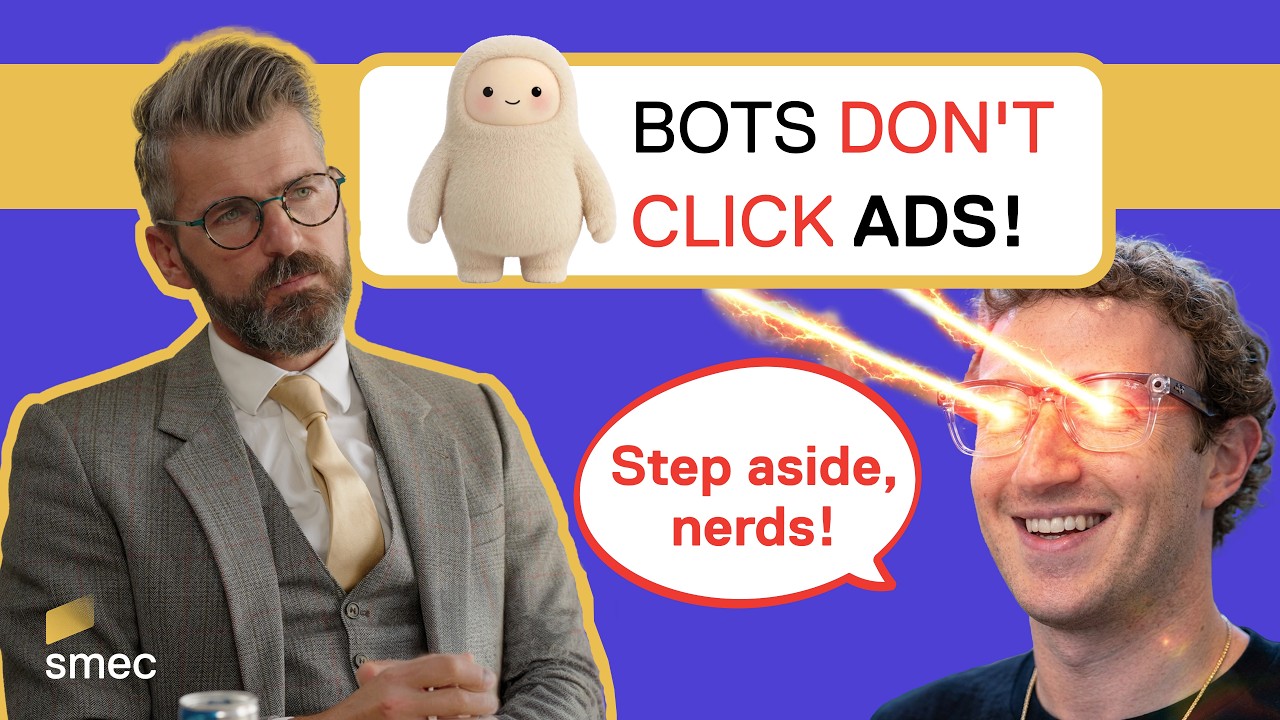
Meta has overtaken Google in ad budgets - and for ecommerce advertisers, that changes everything.
It means Google is on the offensive. It means the pressure to split your budget between platforms is about to intensify. And it means that if you’re not set up correctly on Google’s AI surfaces right now, you’re already losing ground to competitors who are.
In this episode of Growing Ecommerce, Mike Ryan (smec’s Head of Ecommerce Insights) and Chris share firsthand takeaways from GML 2026 — both the San Francisco and Dublin events — with unfiltered takes on what actually matters for your campaigns.
What we cover:
→ Google vs. Meta: The “War of the Titans” and why Google’s messaging to advertisers is getting aggressive
→ AI Max for Shopping: Why standard shopping campaigns may have limited eligibility in AI surfaces
→ New AI-native ad formats: Conversational discovery ads, feed-based text ads, and why the line between shopping and search is collapsing
→ Ask Advisor: A great idea — but oversold to an irresponsible degree (Mike’s take)
→ Universal Cart: Multi-retailer, cross-platform checkout — and Google’s Amazon moment
→ What the shift to agentic commerce means for how you monetize clicks
Cut through the hype. Know what to act on.
Episode Highlight
Google Responds to Meta Budget Lead
For the first time in a decade, Meta has surpassed Google in total ad spend under management, forcing the search giant into a bold and defensive posture. During the Google Marketing Live keynote, the company shifted from its usual approach to launch an aggressive critique of paid social, specifically labeling results from competing platforms as “vanity metrics.” This strategic pivot signals a more intense competitive landscape where Google is fighting to prove its incremental value over social media channels. Ecommerce leaders must now navigate this “War of the Titans” as both platforms aggressively compete for their advertising dollars.
- Christian ScharmüllerWhat struck me the most is that for the first time in a very long time, Google does not have the biggest ads budget under management anymore.
Episode Transcript
Mike [00:00:00]
Welcome to another episode of Growing Ecommerce. We’ve got an exciting one for you. We are doing our GML recap. For video listeners, yes, that’s my GML Google badge you see. It actually has my name on it. It’s real.
Chris [00:00:12]
You can and should be proud of it. It’s hard to come by, especially for Europeans, Mike. I feel highly discriminated! We only go to the Dublin Google office which, with all respect, is lovely. But San Francisco is a different game.
Mike [00:00:22]
The Dublin office is beautiful and they own like half the city, it feels like. But if you go to Mountain View, it’s a city in and of itself.
Chris [00:00:43]
Let’s jump right into it. GML recap, from both sides of the world—the Dublin version and the US version—was one of the most substantial GMLs for a very long time in terms of updates, statements, and boldness.
Mike [00:01:08]
There was a lot going on. I agree. I felt it was bigger than the last two GMLs. What jumped out to you? Where should we dig in?
Chris [00:01:28]
There’s so much to talk about. I think we should certainly pick one or two topics for the next episode to unpack them a bit more. You know me, I love all the product insights and updates because they truly matter to us and our clients. But for me, it’s always about understanding where Google is heading on a high strategic level. What struck me the most is that for the first time in a very long time, Google does not have the biggest ads budget under management anymore. They got overtaken by Meta. I think this highly motivates them and it stings. This was one of my takeaways talking to people: it’s about execution time for Google. There’s a real competitor right now. This came from a positive place when you talked to them, but it was an underlying feeling.
Mike [00:02:32]
It jumped out to me too on the other side of the ocean, maybe even more. You expect OpenAI to be the subtext, and of course, they talked about AI, search agents, and all that stuff. But what I really wasn’t expecting was how often they talked about paid social and how pushy and aggressive they were about the topic.
Chris [00:03:14]
Google has their plans and they execute on a very unique level. That’s why they are, for me, the best company in the world right now. But they haven’t talked too much about their competition in the past. That has changed now. They talked very specifically about paid social and how many retailers are overspending there. They used the word “vanity metrics” in their keynote. They were highlighting Meta and Facebook as channels where money is going which they believe is not as goal-cohesive or revenue-driving as the clicks on the Google ecosystem. This is very unprecedented for me.
Mike [00:04:18]
It struck me definitely. A couple of things are at work here. They were talking about TikTok, Reels, and YouTube Shorts. You’ve got three arguably identical products: short-form video. It’s about who has the better hold on creators or the better algorithm. In the end, this translates into attention that can be monetized. Their claim is that they have more and better attention. Before we jump into detailed product updates, what was your major takeaway?
Chris [00:05:09]
Looking at how Google approaches this now, it stings a bit.
Chris [00:05:09]
It must hurt them on Wall Street and in their position to advertisers. This will be a long-lasting and substantial dynamic. As a partner for our clients, and talking to online shops and DTC players, Google will go at it. You have to be in a good position to understand and unpack the aggressive messaging because Google will up their game. I bet Meta won’t hold back either. As crazy as it sounds, despite all the product updates, this was a major takeaway during my stay in Dublin.
Mike [00:06:02]
The other thing they’re really struggling with is the conventional wisdom that paid social is for demand generation and Google is more for demand capture. They’re completely reversing this message. They said note for note that paid social platforms are selling you sales and clicks that were actually generated by Google and YouTube. They are flipping the script. It’s probably a bit of both, and it stretches credibility to say that’s strictly what’s happening. Google is getting better at demand generation, and AI in search is taking search into more of a Discovery Channel. I buy into that. Maybe that statement could be true in the future, but from today’s perspective, it’s a stretch.
Chris [00:07:24]
For online players, if you have a limited budget, you have to make crucial decisions on which platforms to invest in. It’s about Meta and Google; they are the dominant players. This dynamic will be fun to be part of, and I think we will have the right answers for our clients. Besides the “War of the Titans,” what was your major takeaway on the product level?
Mike [00:08:13]
To keep it at the highest level: AI search is changing everything. Commerce is changing, and current marketing technology is not enough. Their statement is that Google has the best AI consumer experiences and the best AI marketing tech. They want to emphasize this. We’ve been talking about the “death of the keyword” for 15 years in this industry.
Chris [00:09:06]
Forever! Since soon after the keyword was born, it started going nowhere.
Mike [00:09:21]
I’ve got a quote from Philipp Schindler, their Chief Business Officer: “You can’t think in terms of simple keywords, and you definitely can’t manually choose them. Just let the best AI do it for you.” Then 15 minutes later, the VP of Ads and Commerce said you can’t choose keywords anymore. They were hammering home their message. You literally can choose keywords, but they’re saying that will not be sufficient for the way people are searching. That’s why they’re pushing PMax technology.
Mike [00:09:55]
This framing struck me: they were talking a lot about maxing the value of the Google ecosystem. They suggest many people are not using the ecosystem the right way—meaning they are still using manual keyword research and haven’t adopted AI Max. Their go-to-market message now is that they have the best MarTech and AI technology in place, and it’s up to you to use it to the fullest. PMax is a dominant piece here. They were very bold about it. Did they say the word “Power Pack” in Dublin?
Chris [00:11:00]
That’s the fun thing. We talk about it, but the word hasn’t been dropped by them. I was referring to it and people sometimes looked at me funny. They are reframing it every year. At one point on a massive screen, there were just two phrases: AI Max and PMax.
Chris [00:11:43]
Well, they talk about Demand Gen as its own thing.
Mike [00:11:43]
Their point was that these are your ways in. You need to do AI Max or PMax to be visible. Your standard shopping campaign won’t do that; you have to activate AI Max.
Chris [00:12:07]
One thing which might open paths for standard shopping is “AI Max for Shopping.” But you’re right, the core statement was that driving presence in these AI surfaces will be about PMax and AI Max.
Mike [00:12:27]
They talked plenty about Demand Gen, but they didn’t talk about all three together. I think they’re positioning Demand Gen against Meta and TikTok, and positioning AI Max and PMax against what’s going on in AI. While we’re at it, “Ask Advisor” was a big thing—the idea of an assistant to help you run your ads. What is your take on that?
Chris [00:13:14]
I hate it. I’ll be open. Are you allowed to say that with that badge on?
Mike [00:13:37]
I know I might not be invited back next year! Chris, that one stung because I like the idea of it, but there’s a problem. Last year they launched Ads Advisor and Analytics Advisor as conversational chatbots to help optimize accounts. Now they are rolling out Advisor to the full family, including Merchant Center. “Ask Advisor” ties it all together on the backend so you have a persistent chat history across platforms. That’s a cool idea. It’s just about where the product is today and how they talk about it. They use phrases like “execution is commoditized.” Maybe it will be, but that statement is not ready yet because I’ve tried Advisor and it gets way more wrong than right. It’s failing at simple tasks and giving wrong information. This is concerning when they market it as a “magic wand” because small businesses might rely on it without critical thinking. It’s a great idea, but they are not there yet. It was oversold to an irresponsible degree.
Chris [00:15:45]
That’s a fair statement. Please Google, don’t cancel us! The idea is great and could make you a “superhero” running ads, but it will take time.
Mike [00:16:34]
My biggest issue is the low level of consistency. If you prompt the same thing twice, you get different results. When we’re talking about executing Google Ads, the heart of many businesses, that’s an issue. Also, circling back to the Meta vs. Google dynamic: who are you listening to? They showed a prompt asking how to plan a budget across platforms. If you ask a Google assistant how to plan your budget, there will be a certain tendency. The same will happen on Meta. Advanced retailers will know the name of the game here. The idea was bold and it was a great sales show, but these things take time.
Chris [00:18:20]
It was a major takeaway. What else pops to mind?
Mike [00:18:20]
I want to talk about AI shopping formats because this closes the loop on AI Max for Shopping. It explains why a standard shopping campaign by itself will have limited eligibility in an AI service. One core feature is text customization. We thought that meant rewriting titles to be hyper-relevant, which it does, but with new formats like “Conversational Discovery Ads” and “Featured Answers,” it’s about writing a whole AI response anchored to your feed data.
Chris [00:19:36]
That’s where format editing and text customization play a role. They can also choose whether to serve a shopping ad or a text ad. The difference between the two is collapsing.
Mike [00:20:00]
Text ads can now draw on feed data, including images. Shopping ads can now have a lot of text. These are the first native AI formats. OpenAI has made progress—they’re on a GPT-4o basis now—but their ads look like text ads from ten years ago. Google now has native formats that look like they belong there. It’s crucial for the experience in AI surfaces.
Chris [00:21:24]
Google is working hard on relevance and formatting for a satisfying user experience so ads get clicked. It should be a win-win-win: the consumer wins with AI mode, the retailer gets a relevant click, and Google wins as the marketplace. Unless they change their revenue model to commission-based, they still need clicks.
Mike [00:22:35]
Universal Cart is another thing. I had a feeling of déjà vu because Google had a product called that years ago, but this is exciting. As part of their overhaul of ecommerce, you can add multiple products from multiple brands or retailers to one cart from different places like Gmail or YouTube.
Chris [00:23:40]
It’s great for impulse categories and fast fashion. When you’re ready to pull the trigger, is this “Buy on Google”?
Mike [00:24:28]
It will work with payment systems like Google Pay, but they will support other processors for conversion rates and antitrust reasons. They’re working on “A2P”—Agent-to-Payment or Agent-to-Agent payments. This is a concrete step toward the “Buy on Google” direction.
Chris [00:25:43]
Is this embedded in UCP (Unified Commerce Platform)?
Mike [00:25:43]
UCP will be the infrastructure. It will be embedded in Google’s interfaces. You might see a shopping cart icon with a number on it follow you from YouTube to Gmail. This shows how big Google is on seamless integration to achieve an end-to-end feature landscape. The challenge is monetization for these “zero click” events since so much revenue is still based on clicks.
Chris [00:27:01]
They’ll solve it. This will diversify revenue. It offers them the possibility to do things Amazon has done—different ways of being featured or promoted. Google will find new ways beyond the traditional click.
Mike [00:28:15]
Everything is “Cloud” now, including UCP. I think this will take some pressure off ads, and ads will also pick up more. Bottom line for me: GML was close to a home run. It was strong and substantial. They were not joking around. I like their boldness in admitting Meta is a competitor for budget but showing they have a plan. No sugarcoating.
Chris [00:29:46]
They’ve been saying some of these things in Demand Gen pitches for years, but now they’ve rolled it out in a big way. Shout out to the Google team—Carla, Olga, and everyone. I’ve never felt so genuinely listened to as a partner. Google realizes that big, good agency partners are crucial for them to win that budget back. How did you feel over there?
Mike [00:31:05]
I was one of the very few Europeans there since they have their own European events. It was an honor to be invited. I need to up my selfie-stick game for true influencer status! But jokes aside, I met with Googlers for off-the-record sessions with the product team. They are definitely listening. The night before GML, I was at a bar and a Googler whispered to me, “Do you see that guy? He created PMax. He’s a legend.”
Chris [00:33:03]
The creator of PMax was there?
Mike [00:33:03]
Yes, him and his team. He also worked on smart bidding and is working on AI Max now. We had a nice chat. I gave him some hot takes and he listened. PMax has come a long way. It’s amazing that in such a big company, there are still single people who make a huge difference and have an outsized impact.
Chris [00:34:19]
It was a fair recap. We weren’t too bullish; we were critical. Ask Advisor is a bit raw—put it back in the oven—but other stuff looks great. I love the new shopping formats and “AI Max for Shopping” really clicks for me now.
Mike [00:34:47]
It was a pleasure.
Chris [00:35:14]
Likewise. Thanks everyone for listening and watching. This has been another episode of Growing Ecommerce, brought to you by Smarter Ecommerce. Visit smarter-ecommerce.com to learn more. If you give us a shout-out or a review, it really helps. Thanks, we’ll see you next time.
Mike [00:35:14]
Bye-bye.
source on Google →