The online retail growth podcast with
Mike Ryan & Christian Scharmüller
New co-host, same chaos: Amazon Haul, Nike's DTC regrets, Perplexity AI Shopping, and more
Released:
Big changes on Growing Ecommerce! Chris Scharmueller joins Mike Ryan for a fresh, unscripted take on the latest in online retail. In this episode:
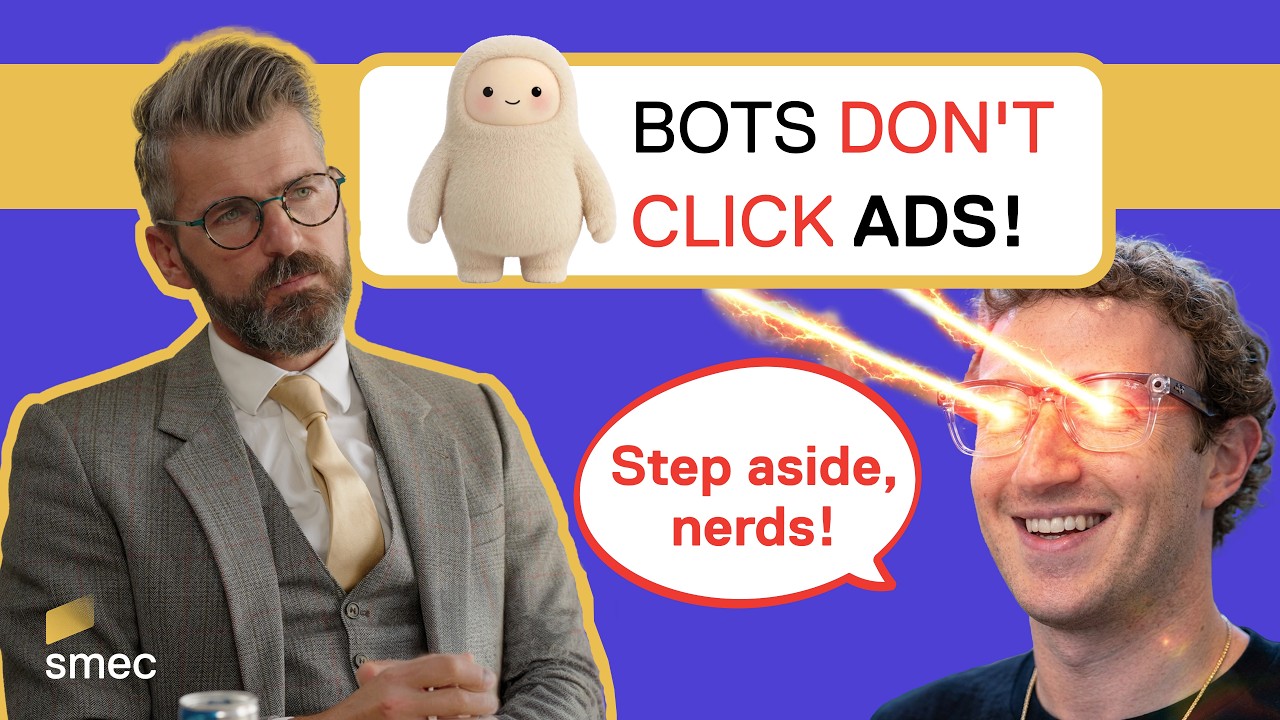
- Amazon vs. Temu: What Amazon’s “Haul” launch says about their playbook and profit risks
- Perplexity AI: Can it challenge Google by fusing search and shopping?
- Nike’s DTC misstep: When cutting out retail partners backfires
- Marketing strategy: Are you spending where influence occurs?
All that and more, plus a hot take or two. Hit play.
Episode Highlight
The Failure of Nike’s DTC Pivot
Nike’s aggressive shift toward direct-to-consumer sales initially seemed like a brilliant move to cut out middlemen and control the brand experience, but it ultimately led to a 50% drop in stock value and massive inventory issues. By severing ties with retailers like Foot Locker, Nike inadvertently opened the door for competitors to take over their shelf space while they struggled to manage billions in stock without a retail network. This discussion highlights that DTC should complement rather than replace a wholesale strategy, as retailers provide essential services like logistics and stock clearance that brands often underestimate. For ecommerce leaders, this serves as a cautionary tale about the dangers of over-indexing on a single channel at the expense of established distribution partnerships.
- Christian ScharmüllerDTC should be embedded into a retail strategy, not replace it.
Episode Transcript
00:00:05 Mike:
Welcome to Growing Ecommerce!
00:00:08 Chris:
Hey, Mike. I’m your host—or one of them.
00:00:11 Mike:
Mike Ryan of Smarter Ecommerce, also known as smec. With me today is a big change to this podcast: our new co-host, Christian Scharmüller. Chris.
00:00:22 Chris:
It’s an honor, man. It’s really an honor.
00:00:26 Mike:
I want to introduce you and talk a little bit about why we made this change. First, let me just say something about Chris. Chris is a very handsome guy, as you can see, and he’s a nice dresser too. No one will ever accuse me of being fashionable. When I first met you eight years ago—and you’re not my direct supervisor anymore—you became my favorite American. I know more than one, so that’s important. When I first met you, I thought you were this very flashy dresser and maybe a bit shallow. But that was actually me being shallow because I was judging a book by its cover. Knowing you over the past eight years, you’re so deep and such a smart guy. I’m really glad to have you as my co-host on the podcast.
00:01:27 Chris:
This is unscripted, ladies and gents. Thanks a lot, Mike. Eight years is a long time; we did a lot of stuff together. This is not completely new to me, so I hope I can live up to your expectations. Talking about expectations, what are your expectations regarding this new setup?
00:01:45 Mike:
Well, let’s rewind to why this change is happening. Anyone who has listened to the podcast regularly will know that the volume has been dropping away. Basically, I was losing steam on the podcast. There was also a lot of administrative stuff for organizing interviews that was not my strong suit. On one hand, my favorite hour of the week is when I get to talk to someone interesting and get paid to do it by Smarter Ecommerce. On the other hand, it was just a grind after a while. Now, I want a format that’s more dynamic and engaging. Those are really my goals: content that is a little bit faster-paced and more entertaining.
00:02:34 Chris:
Awesome. The cool thing is, I can’t remember how many conversations we had about e-commerce topics or broader topics whenever we went for lunch or coffee chats. Now we can do this in an official framework. I’m really pumped about that and just looking forward to it. My expectation is that we do it as unscripted as possible so that we can really surprise each other. We might even be a bit controversial at times; I would love to do that as well.
00:03:09 Mike:
Awesome. Just a word about what else is changing. We want to introduce faster pacing to the show and more formats. We’re still playing around with what those formats are, but they could include things like “Sherlock and Watson” dissections or “Steel Man/Straw Man” arguments. We’re going to learn that together. If you as an audience have feedback for us on what you like or don’t like, now is the time to speak up. Let us know. Onto today’s episode: we are going to cover a bunch of topics, including Amazon Haul, Perplexity Shopping, and a look at Nike’s DTC efforts. Let’s jump right into it.
00:03:52 Chris:
Let’s go. Mike, what is your take on Amazon Haul and the strategy of Amazon?
00:04:00 Mike:
Let’s talk about what Amazon Haul is. It’s a new business line for Amazon. It’s technically out of beta now in the US and you can access it in the Amazon app. The idea is that it is basically their answer to Temu. You can buy things very cheaply, it takes a little bit longer to get there, and it’s related to the de minimis taxation loophole. I personally think that Amazon blinked here. I don’t know if the strategy makes sense long-term.
00:04:46 Chris:
When I dig into this stuff, the one thing that immediately came to mind is the whole tariff strategy in the U.S. The major thing is that they want to import cheap products. They sacrifice the speed of delivery because the price trumps slow delivery. The whole thing is based on the idea that they can import products very cheaply directly from China. Duty-free imports are allowed for products below 800 U.S. dollars. What if this changes? What does it do to the business model? I assume they are losing money with every transaction.
00:05:49 Mike:
That situation is already under a lot of pressure from the administration. Amazon has to subsidize this. They’ve already turned on ads in Amazon Haul to bring in some revenue and try to offset it, but we don’t know how much they’re subsidizing. There were reports that Temu was losing $30 per order back in the day. Amazon has subsidized other business lines for years; it’s not a new thing to them.
00:06:55 Chris:
They have been losing tons of money with Amazon Prime, and it paid off long-term. But is this a long-term strategy? This duty question is massively impacting the strategy from a revenue perspective. How much are they willing to lose, and for how long? Is it about defending market shares or increasing the addressable market?
00:07:23 Mike:
I wonder that too. How much should Amazon worry about the orders they’re losing? Are these orders actually coming from Amazon, or are they coming from dollar stores or other budget retailers? It’s not clear. I think Amazon sees this as a “foot in the door” strategy from Temu. While it might not be threatening at first, Temu can expand and change their business model. They’re already onboarding local sellers and building up local inventory to avoid the taxation loophole. They anticipated that this would happen.
00:08:18 Chris:
So they are buying market share by being extremely cheap. The next step could be having their own warehouses in the US so the fulfillment is done by Temu, and then they can go upmarket and sell at higher prices. This would be a massive threat to Amazon.
00:08:41 Mike:
eMarketer just published numbers showing Temu has about a 2.3% market share. That is small compared to Amazon, but they achieved that within a couple of years, mostly by buying it with ads.
00:09:18 Chris:
It is fascinating how Temu was able to educate the US buyer. People always want the best price possible and are accepting two or three-week delivery times. Last quarter, Amazon had 40 million customers who used Prime for one-day free shipping. This was the core value proposition of Amazon, and now they are setting up a new entity which is completely diluting this unique selling proposition.
00:10:11 Mike:
People like fast shipping, but it’s not always necessary. A lot of times I’m ordering something and I don’t actually care that much when it arrives. It depends on the use case. If a product is 40% or 50% cheaper, people will wait.
00:11:59 Chris:
I am absolutely with you there. I would love to get some calculations because with Amazon Haul, you sometimes get up to 90% discounts. That just can’t be sustainable even if you have a war chest of billions.
00:12:39 Mike:
Amazon is a lot more selective right now. The order volume on Haul is a lot smaller than the main platform. They’re losing on these orders, but it’s not a huge volume yet. Temu’s strategy of buying market share makes perfect sense as an aggressive market expansion.
00:13:21 Chris:
If Amazon is able to transform this low-price seeking client into a loyal, classic Amazon customer, then this bet could be a big win. But that is a big “if.”
00:15:02 Mike:
It depends on what Amazon wants to achieve. If it doesn’t work, the reason will be long-term profitability or regulation changes from the administration. Let’s move on from Amazon Haul to another challenger story: Perplexity Shopping. What if Perplexity Shopping takes off?
00:15:31 Chris:
First of all, if someone had asked me ten years ago who the one company you would never bet against was, Google would be at the top of that list. But now, we could argue that Google for the first time ever has real competition and a threat to their search business model. Perplexity stands for a new wave of competition—search platforms that are way more aggressive about integrating AI. Google has somehow become a slow company.
00:16:37 Mike:
I agree. For people who are very online, they’ve heard of Perplexity, even if the mass market doesn’t know it yet. It’s the innovator’s dilemma. Google has everything to lose here, and Perplexity has everything to win. Perplexity is integrating with shop systems like Shopify and payment systems like Stripe. They’re building up merchant centers so people can submit structured product data. This is going to allow checkouts while chatting. It functions way more effectively. Google has all of these assets too—merchant centers, demand, and payments—but they won’t move first on something like this because it’s too threatening to their existing model.
00:18:53 Chris:
The smartest people on the planet work for Google and they will find ways, but they’re still very uncertain about how to integrate this new search behavior and AI modeling into their business model, which is paid search. Perplexity has the advantage because they have nothing to lose. Google is also facing a brand reputation issue with young people who are “searching it up” on TikTok or using AI native tools. Real pressure on Google will lead to more innovation, which is a good thing.
00:19:54 Mike:
Google can weather this storm because they have everything they need to squash it if it emerges in a meaningful way. People talk about ChatGPT taking market share, but are they taking the right market share? If people go to ChatGPT for info queries but not commercial queries, it doesn’t matter. Google has to defend that core commercial query volume. I saw an anecdote that older folks love ChatGPT because it is so easy to work with. There is a part of the market where there’s more friction in Google Search than in Perplexity or other things.
00:23:41 Chris:
Google has a massive advantage in new markets like India where internet adoption is increasing. They have a foot in the door with Google Maps. Perplexity and others will eat into market share in core markets, but the overall growth story for Google is still intact. They have a program called “Next Billion Users” where they’ve built lightweight versions of their apps for local infrastructure in developing markets. Google and Meta are even building undersea internet cables. They want these markets to come online.
00:24:18 Mike:
Chris, you wrote something lately about Nike’s direct-to-consumer strategy. A few short years ago, Nike was on top of the world. Now, everyone is writing about how stupid their strategy is. Why don’t you dissect that?
00:25:31 Chris:
I have always been a “three stripes” guy, but I’ve followed Nike closely. Nike was the “Google of sports” until 2022; they were blowing everyone out of the water. Since 2022, the stock has dropped by more than 50%, which is unheard of. The major reason was their extremely aggressive direct-to-consumer strategy. Everyone loved the strategy until it failed.
00:28:00 Mike:
They wanted to cut out the middleman, cutting ties with Amazon, Macy’s, and Foot Locker to save margin and control the brand experience. They created apps, expanded flagship stores, and connected digital with offline. The Nike app knows everything about you—preferences, sizes, and interests. You can enter a store and use QR-based selling with individualized content. But then the pandemic ended and people became more price-sensitive and eager to return to physical stores.
00:30:11 Chris:
Nike was off the shelves of big retailers like Foot Locker, and those shelves were filled with new brands. Now Nike has to crawl back to Foot Locker and reignite partnerships with wholesalers. It’s an uphill battle. They even dumped Roger Federer when he wanted a lifetime contract. For that reason alone, they should suffer!
00:31:13 Mike:
My takeaway is that they underestimated the value of the retailer. They thought retailers were just a cost factor to be cut out, but retailers specialize in logistics, stock clearance, and returns.
00:32:11 Chris:
To cut out the middleman is shortsighted. In 2024, Nike’s inventory level reached 9 billion dollars. You can’t clear that much inventory without a retail network. DTC should be embedded into a retail strategy, not replace it.
00:33:14 Mike:
Time flies, Chris. It’s an honor to have you as my Watson.
00:33:28 Chris:
It feels natural. I will be Watson and you will be Sherlock. I have a question about inference versus budget. Rand Fishkin presented a chart at a conference about where influence happens versus where people spend money.
00:34:42 Mike:
That was the least readable chart I’ve ever seen—a donut chart surrounding a pie chart with 14 different segments. Rand compares where influence happens (industry blogs, social feeds, YouTube) versus where budget is allocated, and the number one source of spend is paid search. His point is that people don’t invest enough in influence channels, but it’s apples to oranges. Google Search is a demand capture channel, not an influence channel. Building brand affinity makes sense, but people are too focused on performance marketing because it is measurable.
00:38:07 Chris:
What can you derive from this? Should people shift money to demand-creating channels?
00:38:16 Mike:
If you just throw worms into the water but don’t have a fishing rod, you’re not going to catch any fish. You pay to capture the demand because it works. We’re out of time, Chris. It was an awesome first episode.
00:38:36 Chris:
Thanks, Mike. It was a pleasure. If you want to learn more about Smarter Ecommerce, you can visit us at smarter-ecommerce.com.
00:38:50 Mike:
Thanks, Chris. Thank you.

source on Google →