Subscribe to join thousands of other ecommerce experts
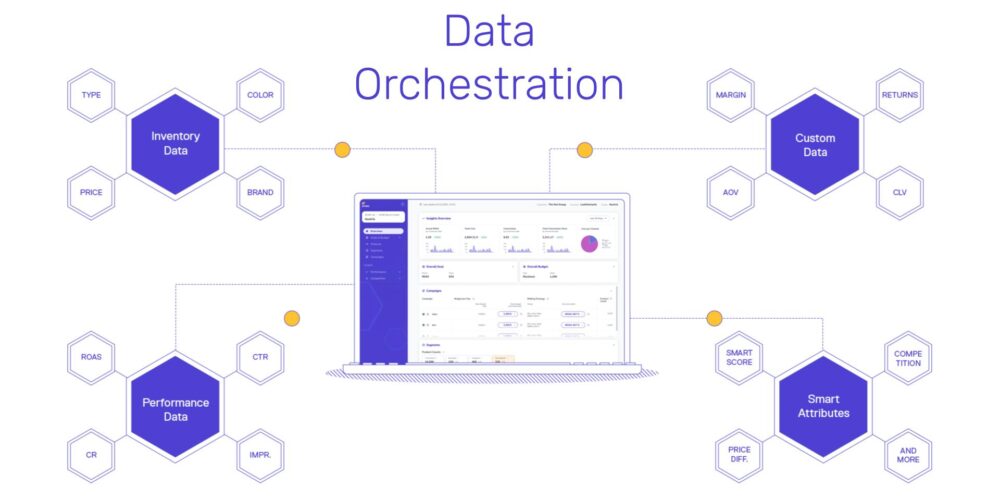
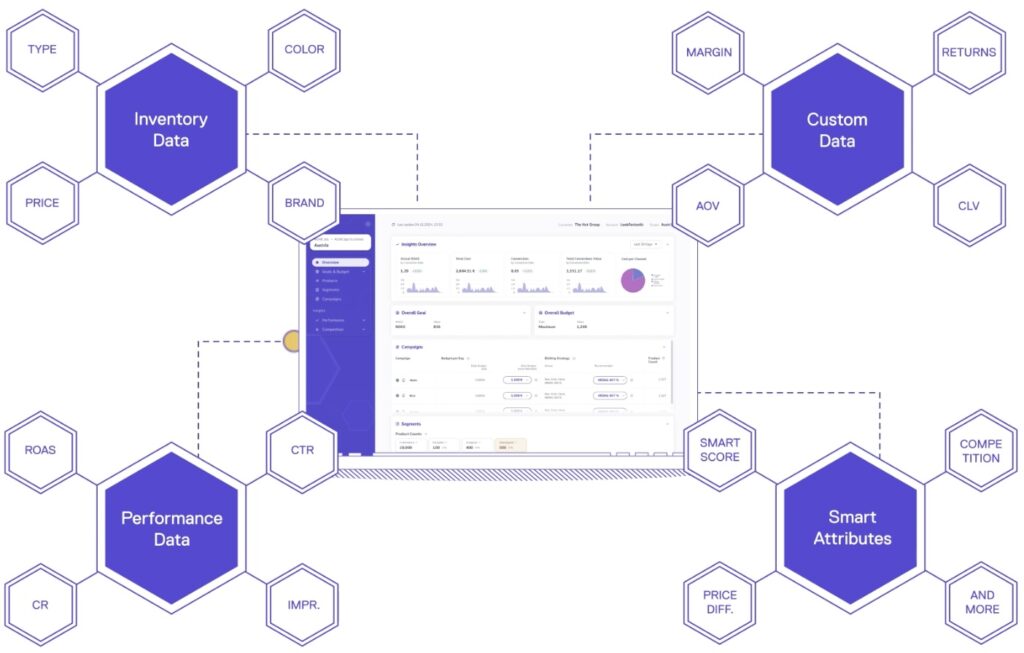
The smec platform integrates performance data (e.g. Google Ads data), inventory data (e.g. Google Merchant Center feed) , and custom first-party business data (e.g. profit margins) to steer campaigns toward specific business goals. By connecting these diverse data streams, the smec Campaign Orchestrator transforms fragmented metrics into a unified strategic signal that guides AI-driven bidding algorithms of ad platforms.
Table of Contents
Activating First-Party Data to Guide the AI Ad Platform
In the current era of automated bidding and Performance Max, the primary way for retailers to differentiate is through the quality of data they feed into the algorithm. While Google Ads is highly efficient at finding patterns, it only optimizes for the data it can see. By integrating first-party business data through smec, you provide the AI with the necessary context to prioritize high-value outcomes over generic conversions.
The platform ensures a baseline of transparency by automatically synchronizing with your primary advertising and analytics ecosystem:
- Google Ads Performance Data: Comprehensive syncing of historic metrics including conversions, cost, and impressions.
- Google Merchant Center (GMC) Feed: Full integration of product attributes, categories, and real-time price competitiveness.
- Google Analytics 4 (GA4): Cross-channel behavioral data to inform attribution and predictive modeling.
- Microsoft Advertising: Unified management of search and shopping data to simplify daily operations across the Microsoft ecosystem.
- Search Ads 360 (SA360): Integration of enterprise-level tracking and cross-engine performance data to refine predictive AI modeling.
Custom First-Party Business Data
The most significant competitive advantage comes from activating internal data that exists outside the ad platform. smec enables PPC Managers to move beyond ROAS and steer campaigns based on actual business health:
- Profit & Contribution Margins: Shifts optimization from revenue-based bidding to POAS (Profit on Ad Spend).
- Stock Levels & Inventory Status: Prevents wasted ad spend on low-stock items and prioritizes overstocked products to improve liquidity.
- Return Rates by Product: Informs the AI which products drive high revenue but low actual profit due to frequent returns.
- Customer Lifetime Value (CLV): Helps the algorithm focus on acquiring high-value long-term customers rather than one-time buyers.
- Warehouse & Fulfillment Priority: Steers spend toward products that are easier or more profitable to ship from specific locations.
- Any custom attribute you track: Your business is unique, which is why our platform is built to integrate any unique data you have to help you steer the AI.
Technical Setup and Data Orchestration
The technical integration process is managed by smec experts to ensure that online retailers can focus on strategy rather than data engineering. smec acts as a strategic control layer that translates your business logic into signals the ad platform can act on.
| Feature | Protocol |
|---|---|
| Technical Onboarding | The smec onboarding team handles the full technical setup; clients only need to provide access. |
| Dynamic Segments | Data can be used for multi-dimensional product segmentations |
| SmartScoreAI | Data can be used to customize the score |
| Automation | Products move dynamically between segments automatically as your internal data (like stock) changes and data syncs daily by default to ensure all product segments reflect live business reality. |
Moving Beyond Standard Logic: The smec Difference
While many tools simply pass data from point A to point B, smec serves as a strategic control layer. The value lies not just in the integration, but in the activation of that data through predictive AI and multidimensional segmentation.
Unlike generic automation providers that offer rigid setups, smec allows retailers to customize how their first-party data influences the bidding algorithm. We achieve this through two core mechanisms:
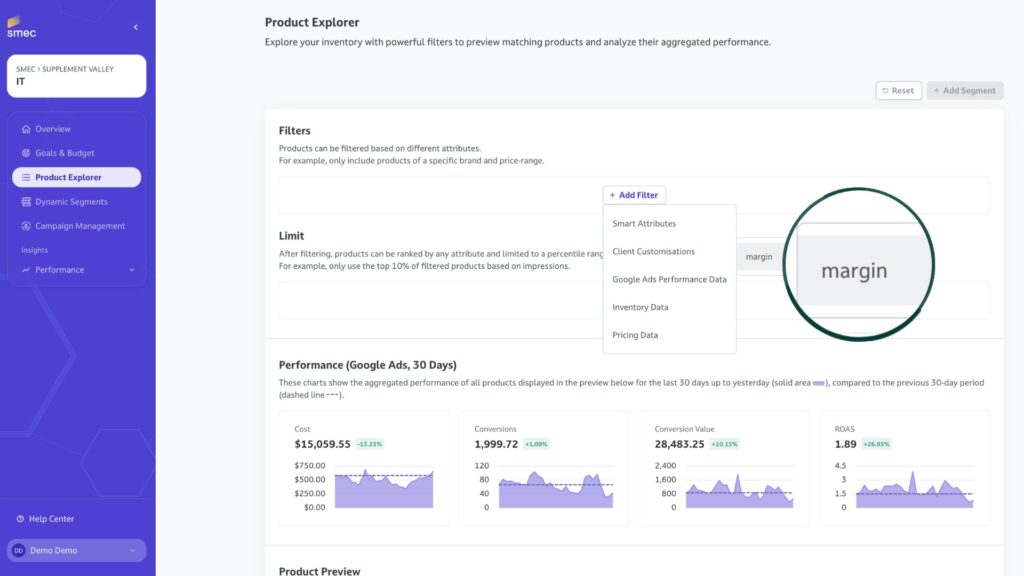
- SmartScore Customization: Our predictive AI assesses every product’s potential. By integrating your custom data (like margins or return rates), we adjust the SmartScore to ensure the AI prioritizes products that are truly valuable to your bottom line, not just those likely to generate a click.
- Dynamic Segments: We enable you to build goal-driven, multidimensional segments. This means a product can be treated differently based on a combination of factors—such as being “High Margin” AND “High Stock”—allowing for a level of steering precision that standard “black box” solutions cannot match.
Comparison: smec vs. Standard Providers
The following table highlights how smec’s flexible integration and activation differ from traditional automation tools:
| Feature | Standard Automation Tools | smec Campaign Orchestrator |
|---|---|---|
| Data Integration | Often limited to standard ad platform APIs. | Flexible integration of virtually any first-party business data. |
| AI Steering | “Black box” optimization based on revenue/ROAS. | Customization of SmartScore to align AI with proprietary business goals and Dynamic Segments to group products based on business importance. |
| Product Grouping | Static labels or simple performance buckets. | Dynamic Segments that react to multidimensional data changes (e.g., Stock + Margin). |
Moving From Tactical Execution to Strategic Orchestration
The role of the PPC Manager is evolving from manual keyword bidding to strategic data orchestration. As ad platforms become more automated, the AI requires better inputs to produce better outputs.
By integrating first-party data into the smec platform, you are no longer just a passenger in Google’s automation. Instead, you are providing the specific business intelligence required to ensure that every Euro of ad spend is aligned with your actual bottom line. This approach ensures that your most profitable or strategically important products receive the highest visibility, regardless of how the underlying platform algorithms shift.
smec provides the infrastructure to turn raw business data into actionable signals, allowing retailers to take back control of their automated campaigns and drive measurable ROI.