Subscribe to join thousands of other ecommerce experts
Google’s NRF 2026 announcement of the Universal Commerce Protocol (UCP) means advertisers must fix their data hygiene to survive the Agentic AI era. The core shift involves moving away from keyword stuffing toward structured data attributes (materials, stock levels) that AI can easily read. Success in 2026 will depend on prioritizing high-profit segments and ensuring your product feed is granular enough for future Gemini placements.
At NRF 2026, Google CEO Sundar Pichai announced that 2026 will be the ultimate AI takeover of your Google Ads.
More specifically: Agentic AI has been all the rage, coupled with a new standard protocol to get your ads picked up by Google’s algorithm that sounds suspiciously similar to what we have been preaching for years. Read on for a closer look.
Table of Contents
The Impact of the Universal Commerce Protocol (UCP) on Ads
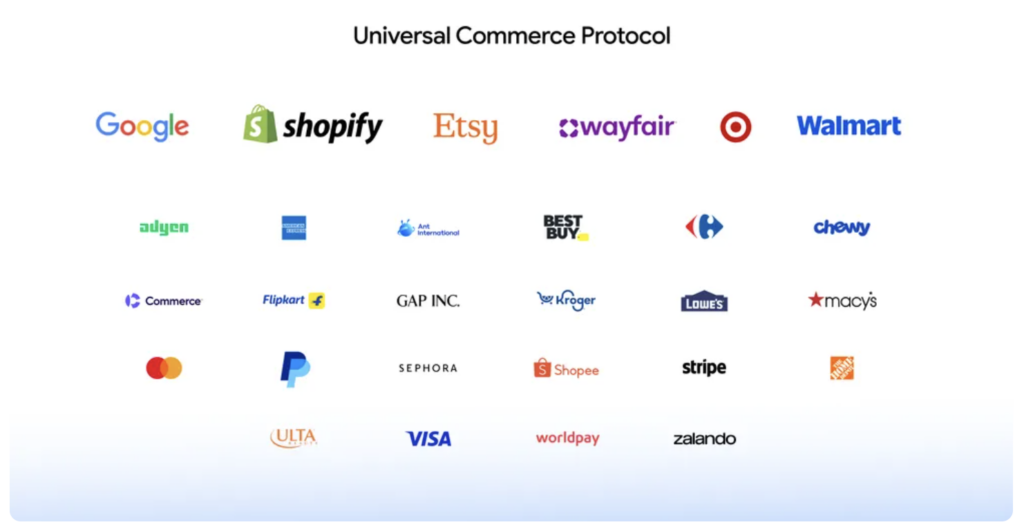
At this year’s NRF, Google officially introduced a new “open standard” developed in collaboration with major players like Shopify and Walmart. They call it the Universal Commerce Protocol (UCP).
The goal of this UCP is to ensure the entire internet speaks a standardized language so Google’s AI models can understand exactly what you are selling.
Right now, your storefront is most likely built for humans—beautiful images, emotional copy, and a great layout. But an AI model doesn’t care about your hero banner. It needs the raw facts: Stock levels, exact materials, return rates, sustainability.
Sounds familiar? It should!
While Google wraps this in futuristic branding, UCP is essentially a fancier way of preaching proper product feed hygiene.
The best practices we’ve been preaching for years – clean data, structured attributes – are exactly what this new standard demands. The game hasn’t changed, but the rules have become stricter.
In 2025, a messy feed meant inefficient spend. In 2026, a messy feed means you might not qualify for the auction.
To get a competitive head start on 2026, you don’t need to prepare for a sci-fi future. You just need to master these 3 Google Ads trends today:
Trend #1: Structured data attributes over keywords
In 2026, users no longer search the same way they did in 2024.
In a classic search environment, users ‘googled’“brown hiking boots.” In a conversational AI environment, however, that same user will type: “I need waterproof hiking boots for a 3-week trip to Iceland in March.”
The trend: If your product feed doesn’t explicitly contain the attributes a user actually searches for – like “waterproof,” and “thermal,” – your listing will fly under the radar.
- The AI doesn’t guess, it reads: It needs grounded first-party data to verify relevance.
- Stop keyword stuffing titles: The days of stuffing dozens of more or less relevant keywords into the product’s title are over. Modern AI is looking for structured attributes (Material, Occasion, Weather Rating), not a title packed with spammy synonyms.
The bottom line: An AI’s output is always only as good as the data you feed it. Garbage data in, garbage data out.
Trend #2: Segmentation for profitability vs. revenue
As algorithms get smarter, they also get lazier.
The “winner takes all” dynamic of a single “best answer” means the system will aggressively chase the easiest conversion to prove it works.
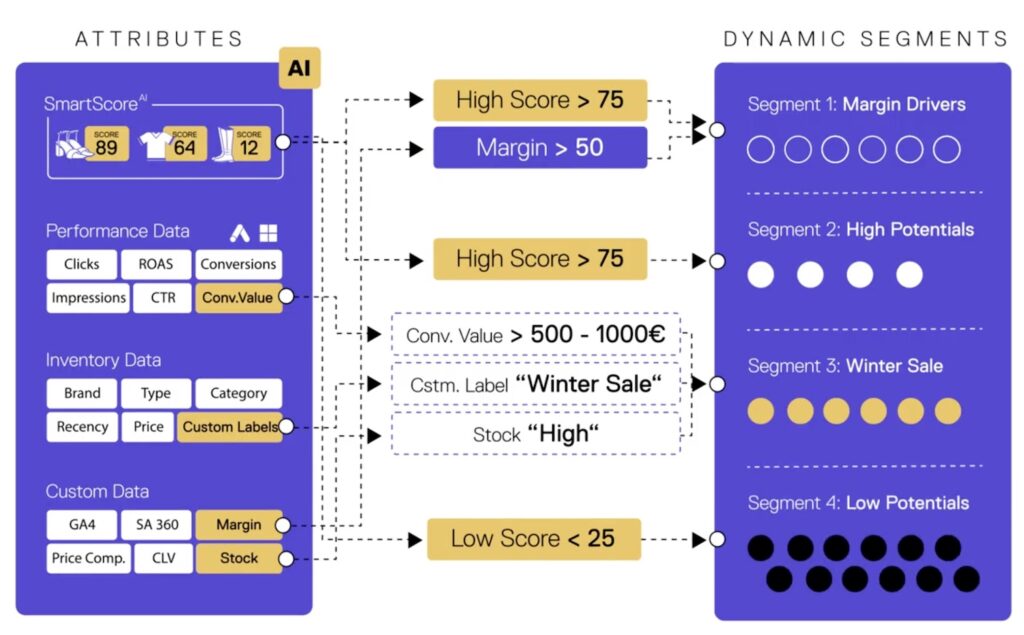
The Trend: If you feed the system standard revenue data, it will burn your budget on your “Zombies” – low-margin items that look good on a ROAS report but bleed your wallet.
- Don’t treat all revenue equally: The AI is profit-blind. It doesn’t know a low-margin item from a high-margin one unless you tell it.
- Steer via structure: Structure your product catalog by utilizing Dynamic Segments and assign Smart Scores to split your catalog into profitability buckets (e.g., ‘margin drivers’ for high margin, ‘low potentials’ for low margin).
The bottom line: You must ensure the system prioritizes the products that actually make you money, rather than just the ones that are easiest to sell.
Trend #3: Future-proofing product feeds for Gemini Ads
Admittedly, we are getting into speculation territory here.
Unlike AI Mode and AI Overviews, Google DeepMind CEO Demis Hassabis recently went on record stating there are no current plans to run Google Ads placements within Google’s chatbot interface directly.
However: Competitor pressure moves mountains. With OpenAI officially introducing ads into the free and budget tiers of ChatGPT, the likelihood of the world’s biggest paid ads conglomerate following suit seems sound.
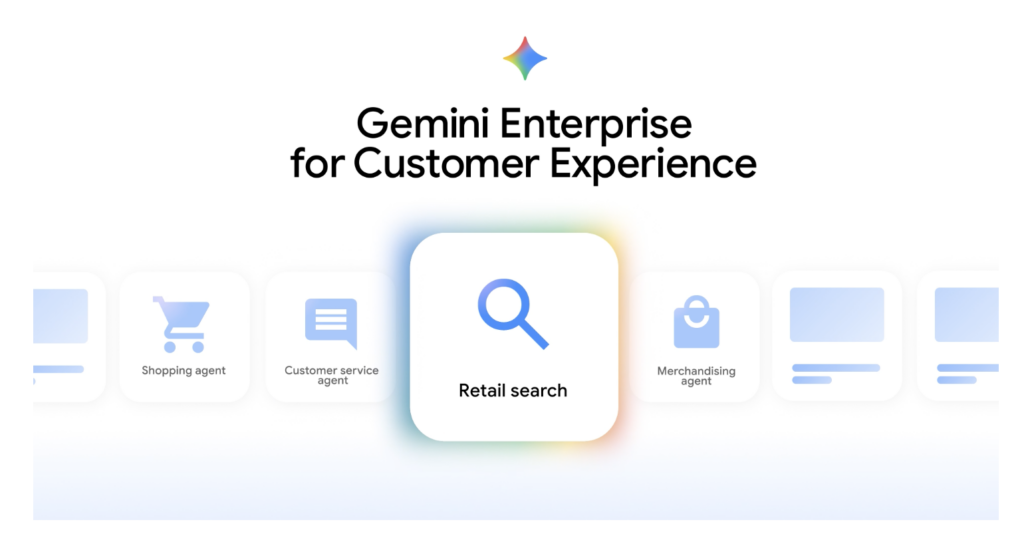
The trend: With the dizzying developments in AI shopping experiences, don’t be surprised if Google Ads officially make their way into Gemini sooner rather than later. Don’t wait for the press release. Prepare to win the auction before it even opens.
- Fill the “ghost” attributes: In the keyword era, you could skip fields like [pattern] or [occasion]. In the Gemini era, these are fatal errors. If the entity isn’t defined, the AI can’t see it.
- Explicit > implicit: Don’t leave it to the AI to guess. Hard-code your data points – [insulation: down], [style: formal]. The more granular your data, the more “hooks” the AI has to pull you into the answer.
The bottom line: Even if Gemini Ads don’t launch tomorrow, this level of data hygiene will immediately supercharge your current PMax and Shopping campaigns. You are essentially future-proofing your business while optimizing your present.
The future of Agentic AI in retail advertising
While Google is seemingly prepping for a future where chatbots will do your grocery shopping for you, we think you shouldn’t get too ahead of yourself just yet.
Google has been building this exact Ads environment ever since the rollout of PMax in 2022. These are not dramatically new shifts. They are the maturation of a strategy we have all been living with for years.
The methods to win – data density, segmentation, and profit focus – are tried and tested.
Whether your ad appears on a traditional SERP or inside a future AI conversation, the requirement is the same: You need to feed the machine the right signals.
If you need help mastering your Google Ads today to make them ready for whatever tomorrow brings: