Subscribe to join thousands of other ecommerce experts

AI has made the traditional PPC manager in 2026 obsolete. The shift from keyword-based search to AI-driven discovery has automated the tactical layer of campaign management. While the industry focuses on artificial intelligence replacing jobs, the role is actually undergoing a structural redesign. This article explores how the core function of a PPC Manager is shifting toward Strategic Orchestration. By unifying fragmented data (including profit margins, inventory levels, and customer lifetime value) and utilizing platforms like the smec Campaign Orchestrator, modern PPC Managers can guide AI-driven campaign types to deliver sustainable, profitable growth instead of merely chasing empty clicks.
AI is changing the traditional job of a PPC manager fundamentally in 2026. The mechanics of digital advertising have moved from manual lever-pulling to algorithmic mediation.
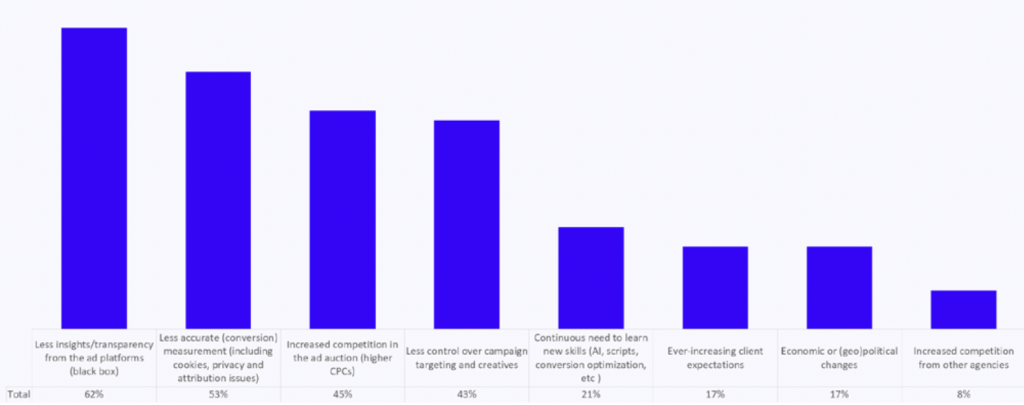
The recently released State of PPC Report 2026 reveals that 53% of advertisers find managing Google Ads harder today than it was two years ago. This difficulty arises because automated solutions like Google Performance Max (PMax) have removed the manual tactical controls that PPC Managers historically relied upon.
For over a decade, success in paid search was defined by a PPC Manager’s ability to execute mechanical tasks. Like managing bid strategies, harvesting keywords, and sculpting match types across siloed campaigns.
Today, these tasks are handled entirely by automation. While Google designed this to level the playing field for new advertisers, the shift has simultaneously cut down the “tall poppies”. Leaving seasoned PPC Managers frustrated by a system that optimizes for average results rather than incremental business growth.
In the modern ecommerce landscape, visibility is earned through the quality, accuracy, and depth of the business data signals fed into the AI. In this article, we’ll highlight how AI is transforming the PPC manager role into an orchestrater, rather than an ads operater

Table of Contents
What is Strategic Orchestration in PPC?
Strategic Orchestration is the modern approach to digital advertising where human PPC Managers shift from executing tactical adjustments to architecting the business data that guides platform AI.
The State of PPC Report notes that 43% of PPC Managers actively complain about a lack of granular control in Google Ads. To regain this control, many resort to manual workarounds. Currently, 37% of advertisers run Standard Shopping Hybrid campaigns, and 17% force “feed-only” builds to bypass the algorithm’s creative choices.
Relying on these temporary platform hacks isn’t enough. The modern PPC Manager proactively designs the data flow of an ecommerce business to train the algorithms natively. This approach relies on three core operational shifts:
- Data unification: Transforming fragmented systems (product catalogs, behavioral data, business logic) into a unified, structured, and semantically rich data set.
- Signal governance: Moving beyond simple top-line metrics like ROAS to prioritize high-value business outcomes, most notably POAS (Profit on Ad Spend).
- Algorithmic training: Feeding specific, business-critical parameters into the ad ecosystem so the algorithm learns what a truly valuable conversion looks like for the business.
How does Agentic Commerce change the role of the PPC Manager in 2026?
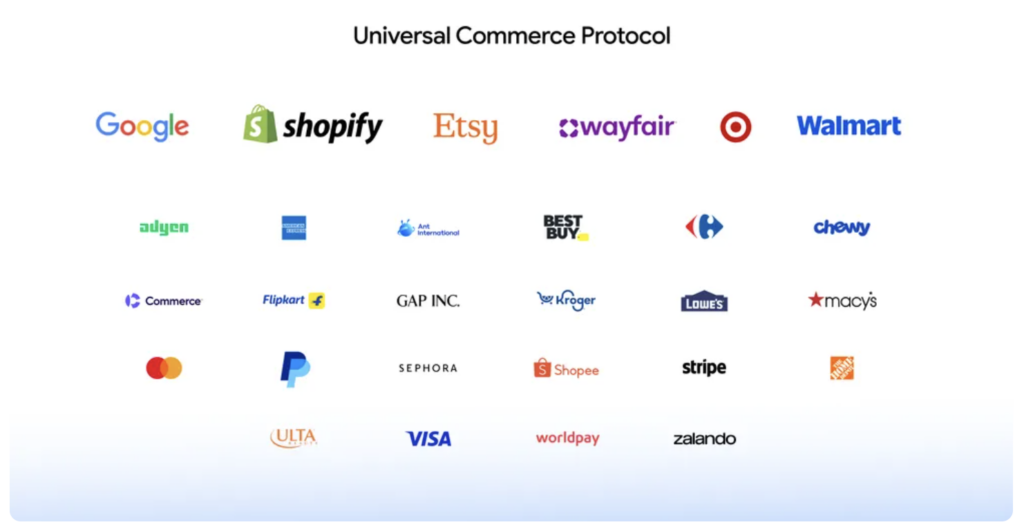
Agentic Commerce changes the role by shifting the primary objective from “winning the search click” to “securing the AI citation.” Consumers are increasingly using conversational, AI-powered interfaces (like Google Gemini, ChatGPT, and Perplexity) for research and discovery.
In this environment, an AI agent acts as the gatekeeper between the brand and the buyer. Summarizing information rather than just providing a list of blue links.
For the modern PPC Manager, this means paid and organic strategies are converging. To be recommended by an AI agent, a brand’s products must exist as clear, authoritative entities supported by rich structured data.
The PPC Manager ensures that the brand’s data infrastructure is robust enough for these agents to parse, trust, and ultimately recommend to the user. This requires collaboration across technical, SEO, and paid performance teams.
Why is PPC data infrastructure the new competitive differentiator?
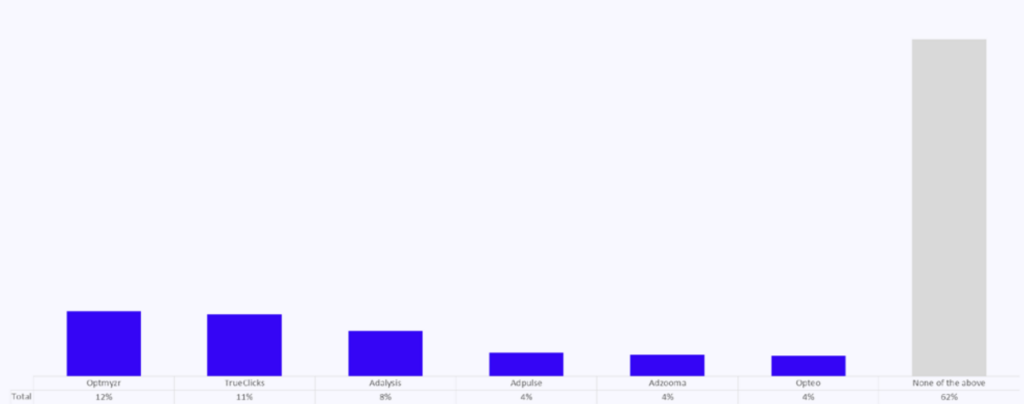
Data infrastructure is the new differentiator because ad platforms are no longer opaque black boxes. Instead, they are mirrors reflecting the sophistication of an advertiser’s internal data. A staggering 62% of PPC Managers rely entirely on the native Google Ads UI or Editor. Even more surprisingly, one-third of Shopping managers do not use any feed management solution at all.
Organizations that treat data as a static asset are failing. If you only use the free, baseline tools provided by the platform, you are feeding the AI the exact same generic signals as your competitors. You cannot outsmart the market without a specialized technological advantage.
Market leaders treat data as a dynamic signal. By integrating real-time attributes like stock levels, price competitiveness, and actual profit margins, brands overcome algorithmic data scarcity. This allows the ad platform’s AI to value products correctly. Pushing high-margin items or clearing seasonal overstock effectively.
What specific AI skills are required for the PPC Manager in 2026?
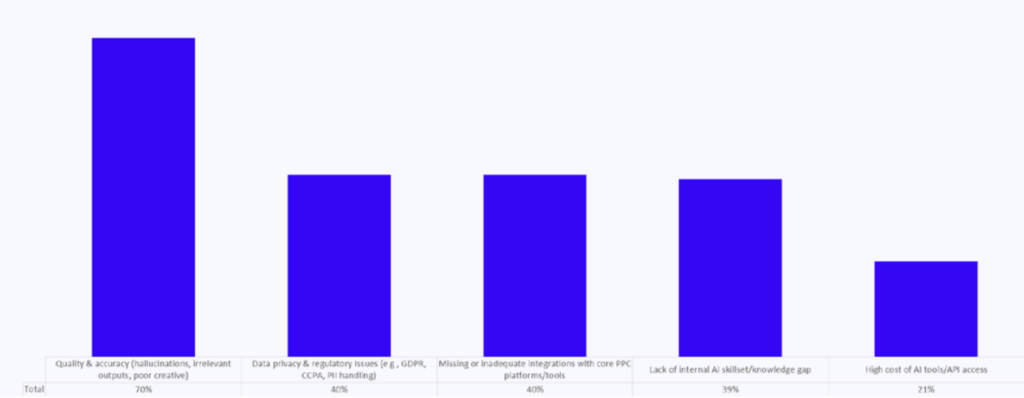
The skills required for a 2026 PPC Manager center on strategic logic, data engineering literacy, and AI governance rather than tactical platform interface knowledge. Despite the hype, PPC Managers report saving only 1 to 5 hours a week using AI. Largely because 70% struggle with quality and hallucination issues. The industry is currently facing a capability vacuum because most teams are still trained in legacy, execution-heavy methods.
Stop acting as editors for hallucinating chatbots. PPC Managers in 2026 must develop the following competencies:
- Strategic logic: The ability to translate complex business goals (for example, clearing seasonal overstock while maintaining a specific profit margin) into algorithmic parameters.
- Data engineering literacy: Understanding how to connect Merchant Center feeds, CRM data, and custom business logic into the broader advertising ecosystem.
- Governance and verification: Using third-party insights to verify if the platform AI is actually meeting business objectives or simply chasing easy, low-value conversions.
- Cross-functional collaboration: Breaking down silos to ensure pricing, inventory, and marketing teams are feeding the same “Single Source of Truth” into the ad platforms.
The “Evidence Sandwich”: Why the shift to Strategic Orchestration is mandatory
To validate the need for this shift, we must look at the convergence of market pressure and ad technology:
- The fact (Layer 1): The core challenge for most ecommerce businesses remains a battle for profitable growth. Fierce market concentration and rising internal costs continue to pressure margins. Simultaneously, Google reports that advertisers using Value-Based Bidding strategies see a 14% median increase in conversion value compared to target CPA.
- The insight (Layer 2): We believe this signals that human expertise remains critical. But its function has permanently changed. AI executes, but people must strategize. The algorithms are powerful, but they lack business context unless it is explicitly provided.
- The implication (Layer 3): Therefore, brands must adopt specialized technology platforms that provide strategic control layers. Allowing them to integrate cross-system data and extend transparency beyond native platform capabilities.
How can the smec Campaign Orchestrator enable this transition?
The smec Campaign Orchestrator is an AI-powered solution designed to provide the strategic control layers necessary to govern modern automated ad formats. It fixes the lack of control in campaigns like Performance Max by aligning ad spend with real business goals.
Through the smec platform, organizations can successfully execute Strategic Orchestration by:
- Leveraging Predictive AI: Using features like SmartScoreAI to assess the potential of every product in a catalog. This ensures that valuable products lacking historical data are pushed to the forefront, overcoming the platform’s bias toward established bestsellers.
- Creating Dynamic Segments: Clustering products based on their actual strategic importance to the business (such as profitability or inventory levels), ensuring campaigns are always in sync with live data.
- Gaining Actionable Insights: Accessing curated, in-depth reports that shed light inside the black box. This transparency helps teams govern the AI effectively and make smarter decisions based on actual competitive performance.
PPC managers in 2026 Do’s and don’ts
| DO | DON’T | WHY? | |
| Strategy | Architect business data signals | Set-it-and-forget-it optimization | AI models require high-quality data to learn business goals. |
| Data | Utilize unified, structured data | Rely on fragmented spreadsheets | Machine readability is the prerequisite for AI citation. |
| Tooling | Implement strategic control layers | Accept native autopilot blindly | Platforms require explicit guidance to meet profitability goals. |
| Objective | Optimize for Profitability | Focus on Revenue (ROAS) only | ROAS often masks unprofitable revenue. |
What’s at stake for PPC managers in 2026?
The gap between organizations relying on legacy tactical PPC execution and those embracing AI-driven data orchestration will become unprecedented. Organizations that continue to focus on manual platform tweaks will find their margins squeezed by rising acquisition costs. As well as declining visibility in Answer Engines.
Adopting Strategic Campaign Orchestration will help PPC managers dominate in this environment. The most effective organizations of 2026 need to go beyond the basics. Adopting advanced PPC software with strategically-capable PPC Managers who understand how to speak the language of the algorithm.