Subscribe to join thousands of other ecommerce experts
AI Max for Search is an optimization layer that applies Performance Max-style AI technology—specifically Search Term Matching and Asset Optimization—to standard Search campaigns. According to Google’s Ads Liaison Ginny Marvin, the primary driver behind this shift is the integration of the Gemini model, which allows Google to match ads based on inferred user intent rather than just keyword syntax. Below, we present the unedited, deep-dive answers from Ginny Marvin on how to navigate this shift.
The transition from keyword-centric campaign management to AI-driven intent matching is one of the most significant shifts in the history of Google Search.
In our recent webinar, Google Ads Liaison Ginny Marvin discussed Google’s take on AI Max and the broader changes coming to Search Ads. Not surprisingly, this session generated a flood of questions from the PPC community. More than could be answered live.
To ensure no stone was left unturned, Ginny volunteered to answer your biggest questions in this deep-dive Q&A. She covers everything from the mechanics of the Gemini model to the nuances of B2B lead generation in an AI-first landscape.
Table of Contents
[Watch now] A conversation with Google’s Ginny Marvin
To get the most out of this article, we highly recommend you watch Mike Ryan's conversation with Ginny Marvin first, then come back here to read the blog.

Why is Google Search shifting from keywords to intent?
The most critical update isn't a setting in Google Ads, but the engine under the hood. The integration of Gemini into the ads quality stack has fundamentally changed how queries are processed.
We’ve heard there are major technological changes happening inside Google Ads (affecting Demand Gen and AI Max). Can you explain what is changing under the hood?
Ginny Marvin: The biggest update is the use of Gemini across Google’s ads quality stack. This enables ongoing improvements to query understanding, which in turn lead to better query matching to serve more relevant, high-quality ads to users in each auction.
Gemini also powers our ability to better understand intent and serve relevant ads on longer, more complex searches. Demand Gen has evolved into an effective performance driver, following backend updates to the advertising system.
By leveraging a deeper understanding of user intent and their predicted propensity to act, the system matches people with the apps, products, and services they’re likely to be most interested in. We discussed this on [our podcast] Ads Decoded starting about here.
If long-tail keywords are blocked by low search volume, how do we keep up with consumer behavior?
Ginny Marvin: Instead of looking to target long tail keywords that aren’t searched very often, you want to use keywords to help tell Google about the types of queries you want your ads to match to.
As queries continue to get longer and more complex, a long-tail targeting strategy is less and less effective. With Gemini, the system is increasingly better at understanding users’ inferred intent, and keywords are just one of the signals it uses.
How does AI Max compete with PMax and Broad Match?
One of the biggest headaches for PPC managers is overlap. How does AI Max sit alongside Performance Max (PMax), Broad Match, and Dynamic Search Ads (DSA)?
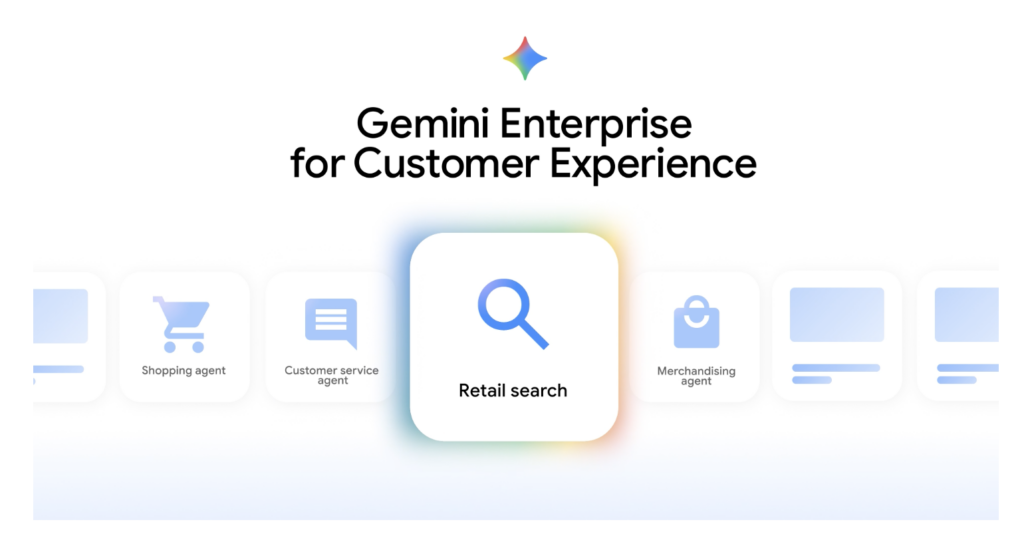
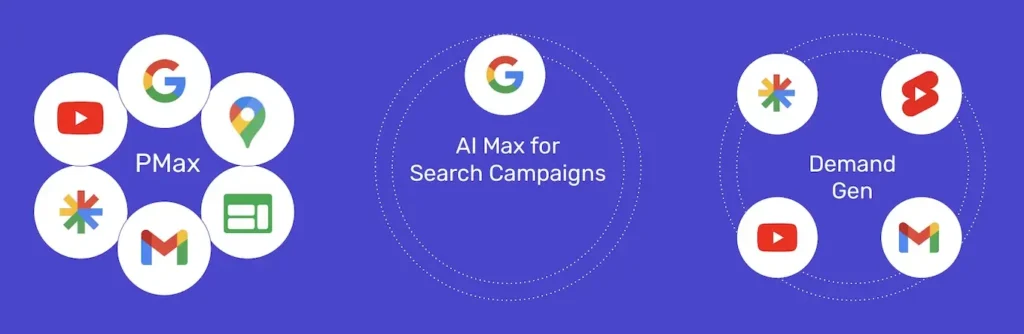
How does AI Max complement or compete with PMax, Broad Match, Phrase Match, and DSAs?
Ginny Marvin: It’s going to depend on your strategy, but we see many advertisers running both AI Max for Search and PMax campaigns to maximize their reach on both Search and across the rest of Google inventory.
In cases where ads from both PMax and Search campaigns can match to a query, the ad with the highest Ad Rank (e.g. the ad predicted to be most relevant and performant) will be selected for the auction.
If you’re already using a lot of broad match and DSA in your Search campaigns, you’ll likely see less of an uplift from AI Max than if you are predominantly using phrase and exact match. However, we still recommend testing AI Max.
The keywordless technology in AI Max looks at both landing page and your assets for matching your ads to relevant queries, whereas DSA only looks at landing page content.
If you want to prevent PMax and AI Max overlap on Search, there are a number of ways to do that. For example, we know many advertisers want to keep their branded Search traffic separate for budgeting and measurement purposes. That’s where you can use brand settings in PMax and AI Max for Search.
What is the interplay between AI Max, DSA, and PMax for Search?
Ginny Marvin: AI Max uses the same technology as PMax for Search, bringing those AI-powered capabilities to Search campaigns.
AI Max also has some additional granular controls such as ad group level brand and location settings as well as reporting. The dynamic matching capability in AI Max is similar to DSA, but in addition to looking at the landing page, it also looks at the other assets in your ad group.
Our long term goal is to move DSA into AI Max for Search campaigns, where we will aim to support the same use cases and have parity with PMax Search.
Will AI Max campaigns from different accounts within the same MCC compete against each other?
Ginny Marvin: Unless the accounts are linked as equivalent to prevent (contact Support for this), there is nothing to prevent accounts and MCC from competing against each other, regardless of campaign type.
Is splitting campaigns by Match Type outdated? If PMax is outperforming Search, will it find conversions better than a standard Search setup?
Ginny Marvin: Agree, it’s an outdated approach. Segmenting your traffic this way can reduce the overall efficiency of your Smart Bidding strategy, resulting in a higher marginal cost for some conversions. And if you’re using AI Max, it duplicates your targeting.
If you’re finding success with PMax, you can keep your focus there. To expand your reach on Search via PMax, use (relevant) search themes and final URL expansion.
We tested AI Max (including on a DSA campaign) but saw no results. Could this be due to exclusions or other factors?
Ginny Marvin: There are a number of factors that could affect the impact of enabling AI Max in a Search campaign.
Enabling it in a DSA campaign, for example, will upgrade the keywordless matching to be able to consider the assets in your ad group in addition to the landing page. But it is not getting any of the uplift potential from broadening your reach based on keyword matching.
To evaluate whether it’s working for you, shift from comparing individual match type performance in isolation to assessing whether the entire campaign is delivering a higher volume of conversions or conversion value, ultimately within your target campaign goals.
How do you optimize and control the AI?
If AI Max creates ads and matches queries dynamically, your website content is no longer just a destination—it's your targeting criteria. This makes Feed Management and Landing Page Optimization the new SEO.
What are the essential ingredients for success with AI Max?
Ginny Marvin: Great question! There really aren’t a lot of must-haves and any Search campaign can typically see an uplift from enabling AI Max.
You do want to start with a solid data strength and measurement foundation. Be sure you have comprehensive tagging and conversion tracking set up, that you’re capturing the conversions that are good signals of quality and matter to your business on a frequent and consistent basis, and that you can optimize for conversions with shorter conversion delays.
We recommend turning on search term matching and both text customization and Final URL expansion for asset optimization (final URL expansion requires text customization). Having all enabled allows the AI to fully understand your business, identify relevant customers, and maximize results. You can then use ad group level controls (search term matching, brand settings, URL inclusions, location settings) as needed for granular targeting refinements.
If your website and landing pages are not accurate or updated, you should not use text customization at this time. Additionally, if you have very creative compliance needs for your ad copy and need pinning respected, do not use final URL setting and/or URL inclusions.
Note: We do have a text guidelines pilot underway to give advertisers more creative controls, so stay tuned for that.
Should landing page content become the primary optimization lever? What else should ecommerce sites prioritize?
Ginny Marvin: Landing pages are an important optimization lever. When using AI Max, and text customization and Final URL expansion in particular, you want to be sure your website and landing pages are accurate and up-to-date.
Just as you want to ensure people visiting your website can quickly see how the content relates to their query path, your landing pages should give clear signals to the AI. Make sure your page titles read like relevant ad copy, that the page revolves around one theme that’s relevant. Also, ensure technical health and crawlability for Google to index your content effectively.
Use the Landing pages report to ensure URLs selected by Google align with your expectations so that you can optimize your website or set URL inclusions and exclusions as needed.
How should we optimize long-term if our existing matching data is messy?
Ginny Marvin: It sounds like your existing structure is making it hard to understand what’s working and what’s not.
If you have a legacy, granularly segmented campaign and ad group structure, looking at ways to consolidate can bring clarity and ensure you’re set up to optimize to your goals. That’s the first step: be sure your campaign structure is grounded in your business goals.
Second, look at areas where your matching data is “messy” and opportunities to streamline. For example, ad groups that have the same landing page, similar creative, and same conversion goal and/or bid targets can often be consolidated.
Splitting similar keywords by match type in different ad groups or campaigns, can also fragment your data – look to consolidate. And if you have the same keywords in multiple match types, you only need to keep the loosest match type because it will capture the traffic of the tighter match types.
Then, theming helps Google understand the meaning of the keywords in the ad group and the types of queries that should match there. More broadly, though, think of keywords as an intent layer to help you reach your goals.
How can niche advertisers (e.g., healthcare) leverage AI Max without blowing budgets on irrelevant queries?
Ginny Marvin: One of the nice things about AI Max is that you can experiment with search term matching at the ad group level (opt out in ad groups where you want to maintain match type behavior).
Search term matching also looks at your landing page, so be sure it is well optimized for the types of queries you want to match to. Take a closer look to ensure the keywords are well themed and your assets are relevant to the keywords and landing page.
Are there plans to include ‘theming’ of topics for URL expansion?
Ginny Marvin: I don’t believe there are additional plans, but you can use Page Feeds, which might give you the functionality and precision you’re looking for. More details here.
How should you test and monitor AI Max?
What is the optimal setup for testing AI Max? We saw Broad Match impressions drop and CPCs rise in early tests.
Ginny Marvin: We recommend consolidating your account structure by enabling AI Max in your existing Search campaigns. This leverages the existing keyword prioritization logic to mitigate cannibalization, improves reporting accuracy and maximizes AI performance.
Higher CPCs are usually an effect of entering new, more competitive auctions due to the expanded reach. Continue to evaluate performance based on your primary goal (CPA or ROAS). When set up correctly and given the 1-2 week ramp-up time, AI Max is expected to bring at least the same CPA/ROAS performance.
You’ll also find the option to create an A/B AI Max experiment in the Google Ads UI (Campaigns > Experiments).
With AI Max being intent-based, how should our monitoring mindset change from granular query data?
Ginny Marvin: The role of the keywords is evolving from hard target to signal of intent. As we see queries get longer and more complex, it’s no longer possible to target effectively with two to three word keywords. And more unique queries don’t meet the privacy threshold for reporting.
We’re continuing to look at ways to provide more insights into when your ads show on Search.
Focus less on the granular search terms and more thematically. Use Search Term Insights, for example.
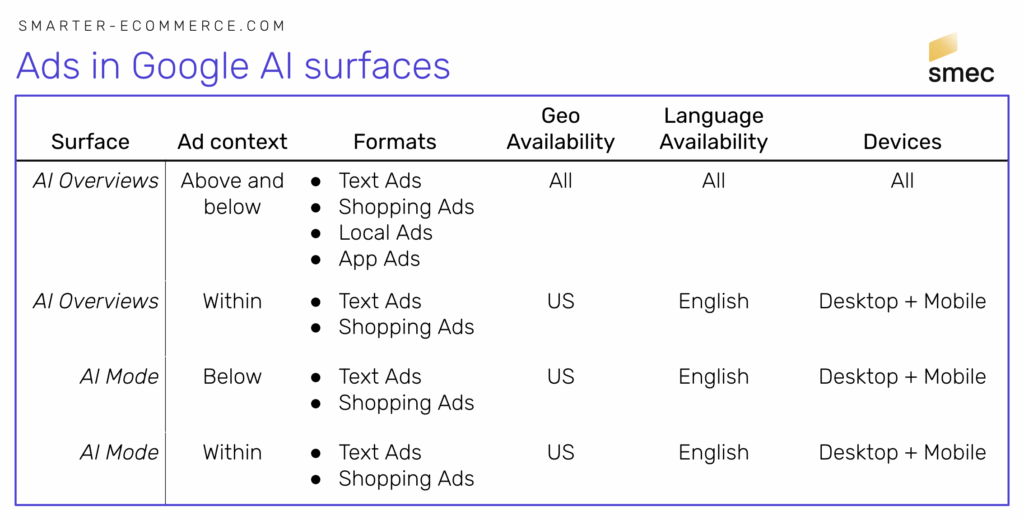
Do you need AI Max to appear in AI Overviews?
We know that AI Overviews are changing user behavior. The question is: Do you need AI Max to show up there?
Is AI Max required to show ads in AI Overviews, or will PMax and Broad Match suffice?
Ginny Marvin: Ads can be eligible to show in AI Overviews via PMax, Broad Match and AI Max for Search. Ads in AI Overviews are matched to our understanding of the user intent based on not just the user query but also the content of the AI Overview.
Will we see specific reporting for AI placements soon?
Ginny Marvin: We aren’t currently offering segmented reporting on when ads are shown within AI Overviews or AI Mode in Search. However, we’re actively considering different options for the future of reporting for these new experiences.
How do you fix measurement and reporting gaps?
There is a reporting discrepancy between the Keyword level and Search Terms level for AI Max. Which view should we trust?
Ginny Marvin: The Search Terms Report can show lower numbers for AI Max versus other reports in the UI when it’s filtered for match type = ‘AI Max’ as the filtering doesn’t consider ‘Other search terms’.
Use the Source or Match type column on the Search terms report to see queries that were able to be served on because of AI Max. And the Search terms and landing pages view helps you understand the relation between search term, headline and landing age.
Use the Keywords tab to understand the incremental conversion impact of AI Max on your Search strategy and for optimization (remove, add, or reorganize keywords).
In general, to evaluate whether AI Max is working for in your Search campaigns, shift from comparing individual match type performance in isolation to assessing whether the entire campaign is delivering a higher volume of conversions or conversion value, ultimately within your target campaign goals.
For B2B accounts with fewer qualified leads (offline conversions), how do we ensure AI Max optimizes for quality?
Ginny Marvin: AI Max doesn’t change or have any effect on your bidding strategy, and there is no data threshold needed to use it. Its aim is to help you find more conversions by expanding your reach and dynamically assembling the most effective ads.
Data strength guidance remains the same: the more high quality data you share, the better. And a shorter conversion delay is also highly recommended for AI Max campaigns because it enables the system to make faster, more accurate bidding adjustments, leading to improved campaign performance.
Where feasible, import the full conversion funnel. Set up Enhanced Conversions for Leads, a more comprehensive approach than offline conversion import that can improve measurement accuracy and improve bidding performance.
Use conversion based bidding if you want to drive qualified leads but cannot assign differentiated values to these conversions.
To use value-based bidding, be sure you can accurately assign values to your conversions and have at least 15 conversions within 30 days. You can use a portfolio bid strategy to pool conversion data across campaigns that have a shared goal/target (or consider consolidating campaigns with the same goal and target).
About Ginny Marvin
Ginny Marvin is the Google Ads Liaison, a role she took on in 2021 after a distinguished career as a journalist and analyst. Before joining Google, she served as Editor-in-Chief at Third Door Media (Search Engine Land, MarTech), where she was one of the industry’s most trusted voices on digital advertising.

In her current role, Ginny acts as the primary bridge between Google’s product teams and the advertiser community. She is responsible for clarifying complex updates, gathering feedback, and helping marketers navigate the evolving ads ecosystem.

Make the most out of AI Max
Ginny’s answers clarify that AI Max is a powerful tool for expansion, but it requires a fundamental shift in mindset.
- Consolidate, don’t fragment: Splitting campaigns by match type hurts algorithmic efficiency.
- Inputs are everything: Your landing pages and assets are now your targeting settings.
- Control is still possible: Use negative keywords and brand exclusions to stop the AI from drifting into unprofitable territory.
At smec, we believe that while automation is inevitable, profitability is a choice. Use AI Max to find the demand you’re missing, but keep your hands on the steering wheel regarding profitability and business value.
Need help auditing your account structure for the AI era?