Subscribe to join thousands of other ecommerce experts
Article updated 2026-03-23, 4:21 p.m.
AI Max for Google Search marks a fundamental shift away from strict keyword syntax and toward pure intent matching, bringing Performance Max capabilities directly into classic Search campaigns.

With Google confirming that AI Max will eventually replace Dynamic Search Ads (DSA), now is the time to start transitioning on your own terms. Instead of falling prey to FOMO, take a pragmatic approach by carefully testing AI Max within your existing Search campaigns under strict parameters.
Table of Contents
1 year later: How has AI Max impacted Google Search?
On May 23, 2024, Google’s VP of Product Management for Search Ads, Jason Fried, wrote a telling email to another exec. He said: “SearchMax or Pmax for search, I think it doesn’t matter too much.”
He was discussing an experimental new technology we now know as AI Max for Google Search.
This technology marks the biggest announcement for Google Search campaigns since broad match keywords. It completely reimagines how Google integrates AI into their products.
Previously, Google focused on forcing existing campaign types into the Performance Max Black Box. That aggressive strategy included Smart Shopping, Local, Display, and Dynamic Search campaigns.
However, advertisers pushed back hard. So, Google flipped the script for keyword-based Search campaigns. Instead of bringing Search to PMax, why not bring PMax to Search?
That’s exactly how they introduced three core AI features to classic Search.
These include Search Term Matching, Text Customization, and Final URL Expansion.
AI Max for Google Search represents a fundamental shift in Search advertising. It moves the industry away from keyword syntax and closer to pure intent matching.
However: Official documentation defines the features, but it absolutely doesn’t explain how they behave in a mature, complex account.
Table of contents:
- What are the core features of AI Max?
- How does AI Max interact with other campaign types?
- Will AI Max replace Dynamic Search Ads?
- How does AI Max handle Match Types and Sources?
- AI Max performance claims vs. reality
- AI Max for Google Search: A reality check
- The four biggest AI Max pitfalls
- What’s next for AI Max?
- Conclusion: What to make of AI Max?
- Get the PDF!
What are the core features of AI Max?
“Is AI Max just a repackaging of existing features?” Google Ads’ Product Liaison, Ginny Marvin, tackles this frequently-asked question in a recent article.
Her core answer is “Yes and…”. This is a tactful way of admitting a high degree of overlap between AI Max for Google Search and pre-existing features. But it also hints at a much bigger story.
Many advertisers feel they don’t need AI Max. They already use comparable legacy features like Broad Match and Dynamic Search Ads. Google’s case is that AI Max presents improved versions of those same features, and more.
Here’s an overview to help understand why “Yes and…” is actually a pretty fair answer:
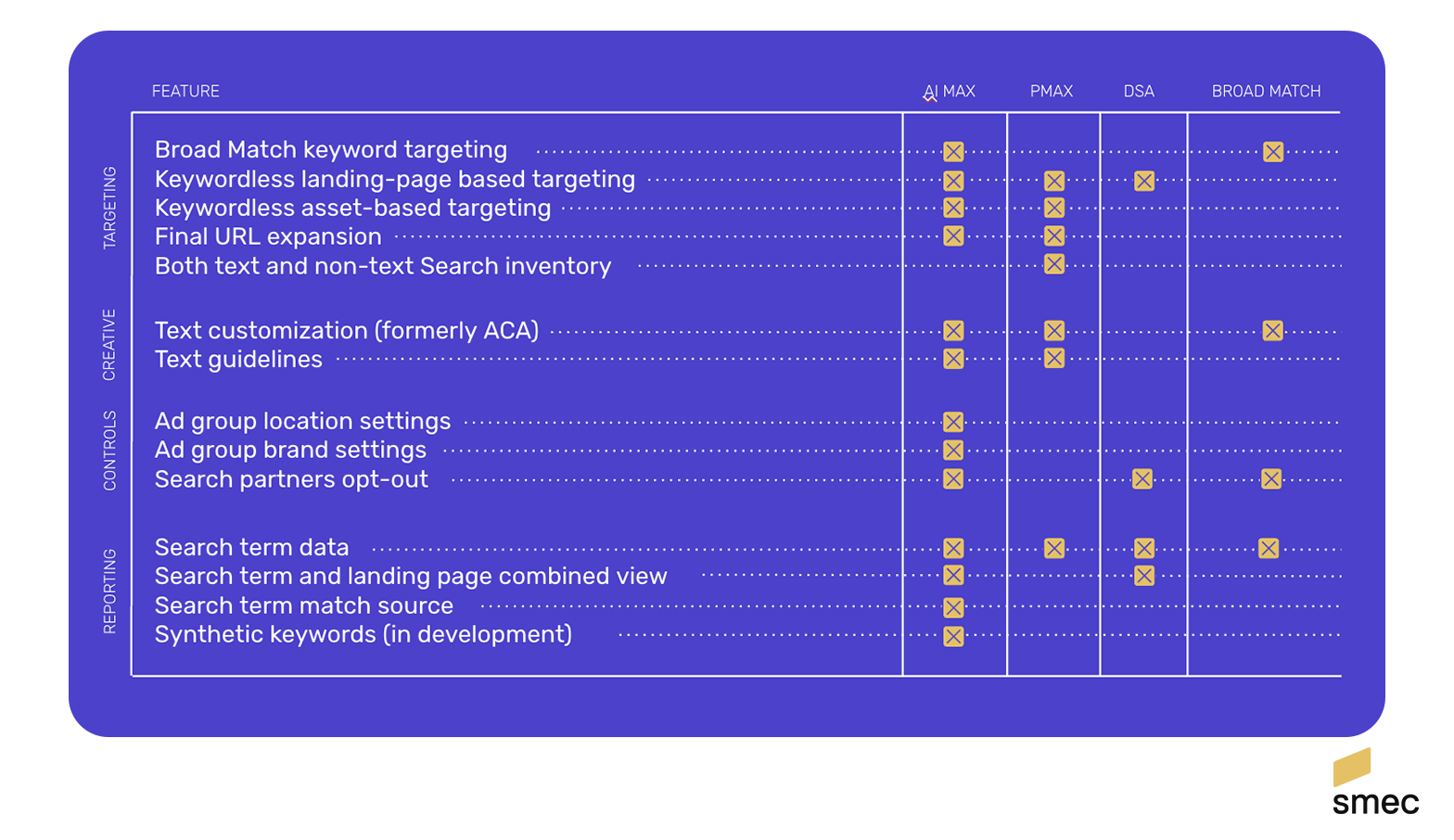
While Broad Match and DSA-like technologies are foundational to AI Max, the system is much more than the sum of those two parts. And yet the critical question remains. How does AI Max behave when similar ad products are already in the mix?
How does AI Max interact with other campaign types?
Google lays out a compelling array of features. Fortunately, AI Max for Google Search already provides a satisfying degree of reporting and control features. We certainly couldn’t say that about early PMax and Demand Gen rollouts.
Still, AI Max does not step into a vacuum. It clearly possesses additive features beyond DSA and PMax. However, this doesn’t change the fact that notable overlap exists.
Google claims there’s a strong case for advertisers who currently avoid other automation features. Ok, we believe that. But what about everyone else?
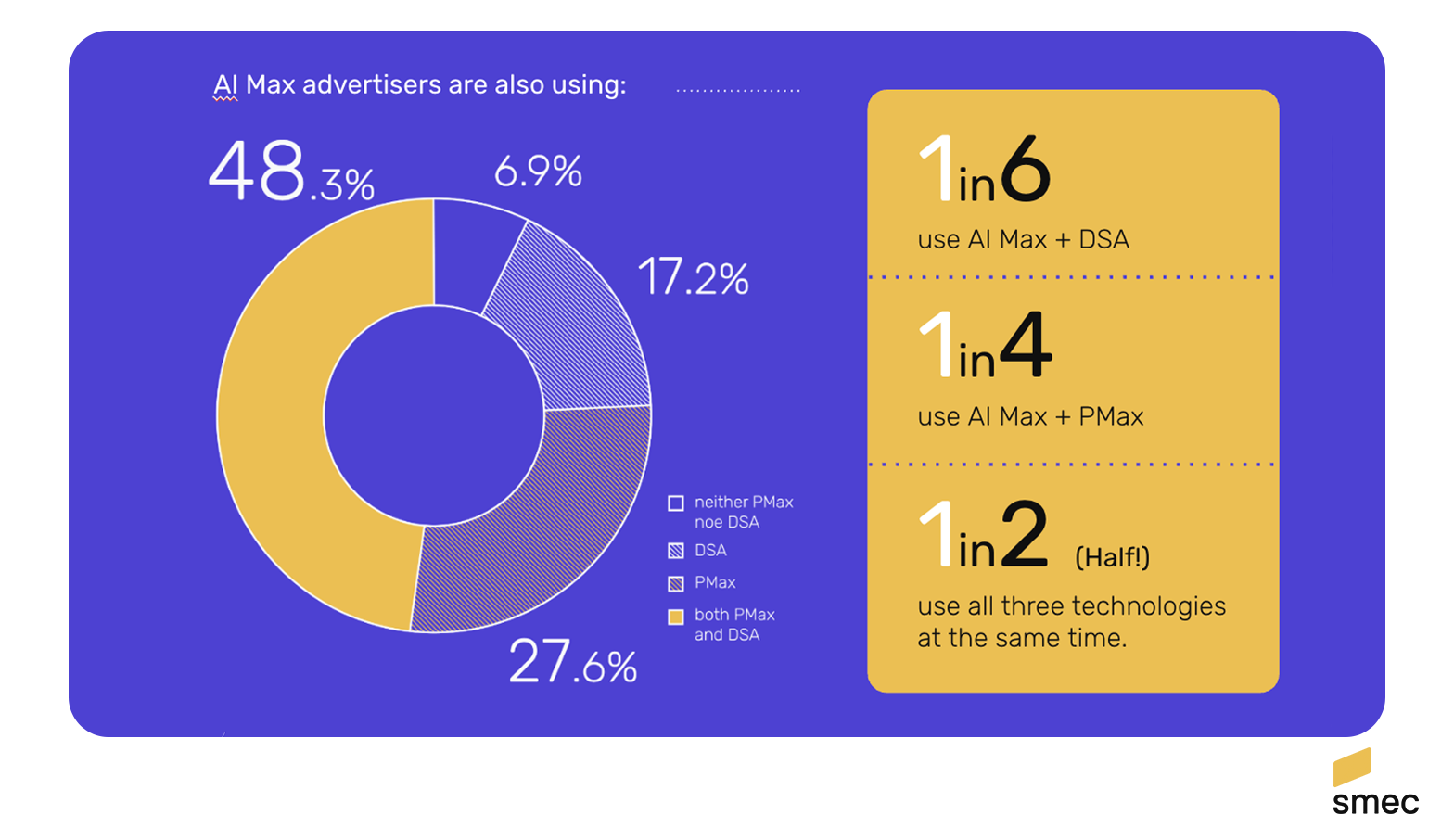
Let’s be real: The irony is thick here. The advertisers most likely to adopt this new automation suite are exactly the ones already using the old tools!
We looked at a sample of ecommerce advertisers using AI Max for Google Search. We found that
- 1 in 6 use AI Max + DSA.
- 1 in 4 use AI Max + PMax.
- And half of them use all three technologies at the exact same time!
Moreover, AI Max is most popular in accounts already heavily using Broad Match. Ironically, Google cautions these exact advertisers will see lower uplift.
Equivalent technologies do the same work as AI Max for Google Search. For example, imagine a search term not covered by any exact keywords. DSA might match it today. PMax might grab it tomorrow. AI Max might win it the day after. There are simply too many paths leading to the exact same place.
The implications here are severe:
- Poor account hygiene drastically complicates reporting.
- Needlessly splitting conversion data actively harms Smart Bidding.
- Opaque ad rank wars break out between campaigns.
Google assures us this will not result in self-competition. But frankly, we’d rather not take that chance!
Google’s official stance is simple. Advertisers should worry less about tool overlap and more about clear business objectives. They claim PMax and AI Max for Google Search are perfectly complementary.
Advertisers supposedly shouldn’t think twice about running them in parallel. They designed these two systems to reach parity. Ad rank solves the priority issue. All else equal, the best ad wins
“AI Max uses the same technology as Performance Max for Google Search.”

Ginny Marvin
Product Ads Liaison, Google
Let’s read between the lines. Large pieces of the core technology are identical. It’s truly anyone’s guess which campaign will produce that winning ad. However, we can clarify these murky waters a bit.
Will AI Max for Google Search replace DSA?
The industry long suspected it, and now Google confirms it: they will deprecate DSA.
In my hour long conversation with her, Ginny Marvin broke the news:
“Our long term goal is to move DSA into AI Max for Search campaigns, where we will aim to support the same use cases and have parity with PMax Search.”
Ginny Marvin
Product Ads Liaison, Google
This remains an informal announcement without a firm timeline. However, previous deprecations usually take about one year from the sunset start date. Regardless, this puts a clear strategic priority on experimenting with AI Max for Google Search today.
Remember, Google offered a voluntary migration for DSA to PMax since 2023. In our assessment, though, a different path makes more sense:
- You should focus on activating keywordless AI Max features in your Search campaigns.
- Simultaneously, start winding down your DSA ad groups.
- Do not blindly switch them over to PMax.
The technologies will overlap regardless. To keep things clean, focus on modernizing your existing Search campaigns. That’s where you retain clearer budgeting, measurement, and control. Control is king!

How does AI Max handle Match Types and Sources?
We mentioned that broad match acts as a central component of AI Max for Google Search. But just how central are we talking about?
Well, AI Max effectively “broadmatch-ifies” all your keywords. This is no secret. Google explicitly states that “search term matching expands on existing keywords with broad match and keywordless technology.” The goal is to find more relevant queries.
You can report this directly in your own account. Just look at the intersection of keyword match types and search term match types. We analyzed a sample of one million AI Max impressions and found some striking data:
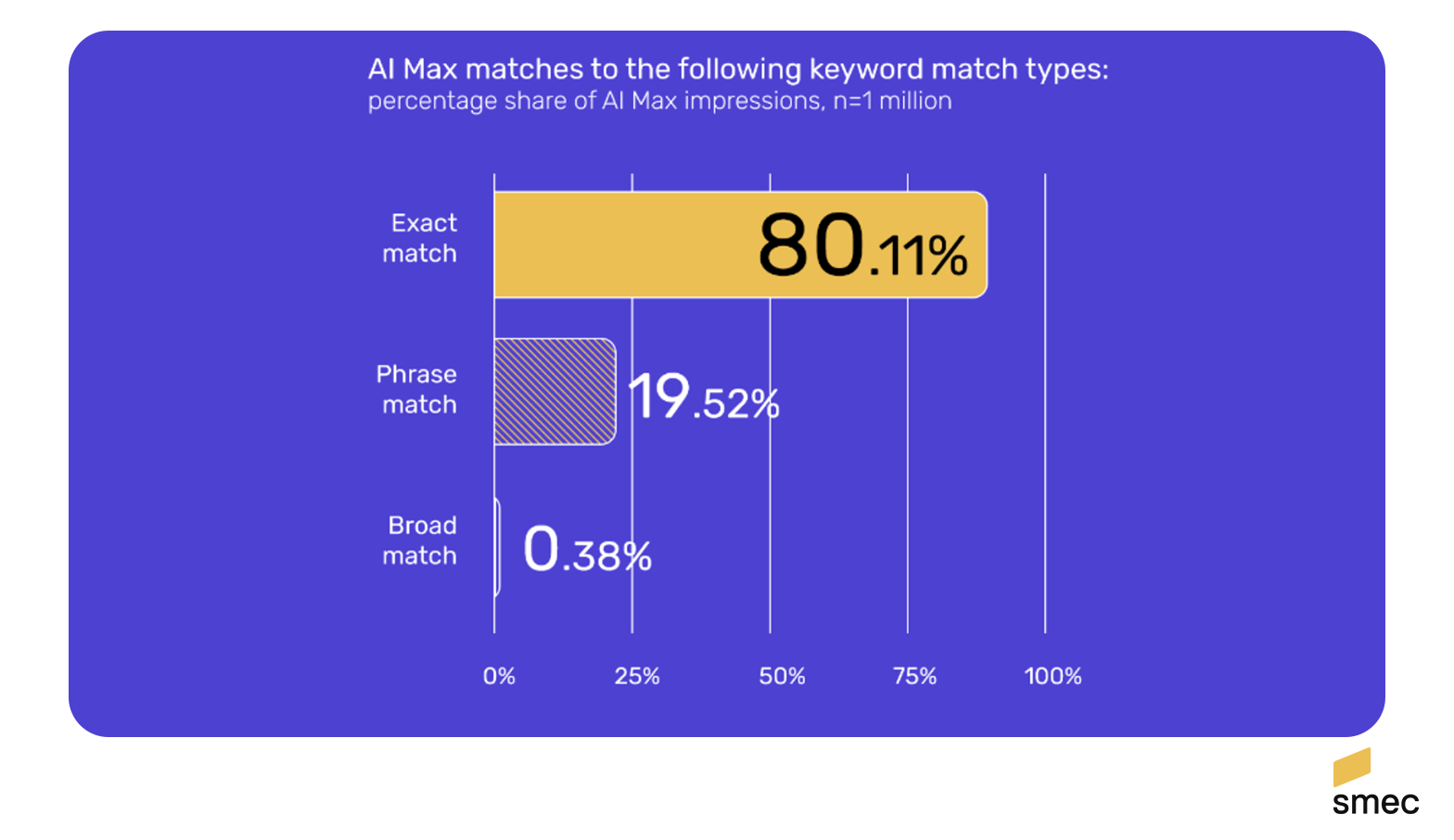
We observed a clean 80/20 split. AI Max heavily expands on exact match and phrase match keywords. Naturally, you won’t see it expanding broad match, because it’s already broad. However, this split can vary wildly based on your specific account configuration.
If you hate this behavior, hold your horses.
Keyword priority still works the same as always. Google will still respect your exact match keyword when the query is identical. Furthermore, you can opt out of search term matching at the ad group level. In large accounts, you can execute this at scale via Ads Editor. If you despise this feature entirely, just turn it off at the campaign level. You can strictly use the DSA-like features instead.
You can also check the performance split of broad match versus keywordless expansion. Just use the “match source” reporting column. In a bulk study of AI Max campaigns, we found both arms actively working. They often share a roughly 50/50 contribution to the campaign.
Long story short: AI Max for Google Search is not “just” broad match. Keywordless matching acts as a massive contributor too.
AI Max performance claims vs. reality
Google’s key message is straightforward. AI Max should serve as an expansion layer. It aims to cover as many relevant queries as possible on top of your existing keyword set. Combine this query expansion with Smart Bidding and enough budget, and it should find incremental sales.
Indeed, Google stakes clear performance claims for AI Max for Google Search. They state:
“Advertisers that activate AI Max in Search campaigns will typically see 14% more conversions or conversion value at a similar CPA/ROAS. For campaigns that are still mostly using exact and phrase keywords, the typical uplift is even higher at 27%.”
This represents the standard format for Google’s AI adoption stats. They promise impressive conversion uplift at a similar efficiency. However, we see immense value in close-reading this stat for a moment.
Let’s think it through:
First, Google quotes the 14% figure for both conversions and conversion value. They group their two major Smart Bidding strategies together here. However, remember how drastically different these strategies operate in practice. It’s highly suspicious to claim AI Max’s uplift remains exactly the same for both.
For example, look at Broad Match stats. Google quotes a whopping +25% in conversions, but only +12% in conversion value. The implication is glaring. Broad match typically catches more volume, but less valuable conversions.
Is AI Max for Google Search truly different?
Or did Google merely make the marketing message more digestible?
Second, Google claims this uplift occurs at a “similar” CPA or ROAS. This is standard fluff for Google case studies. For advertisers still heavily relying on exact and phrase keywords, we find it slightly credible. Smart Bidding and Broad Match form a formidable pair. DSA also earned its seat at the table. For AI laggards, a large, cost-efficient conversion opportunity absolutely exists.
However, for the rest of us? It completely defies the law of diminishing returns. In an already well-optimized campaign, achieving +14% volume without a massive efficiency trade-off is a fantasy.
And lastly (but importantly!), Google hides a crucial detail in a footnote. This highly touted statistic does not cover retail. As of now, Google offers no official statement on how AI Max works for ecommerce.
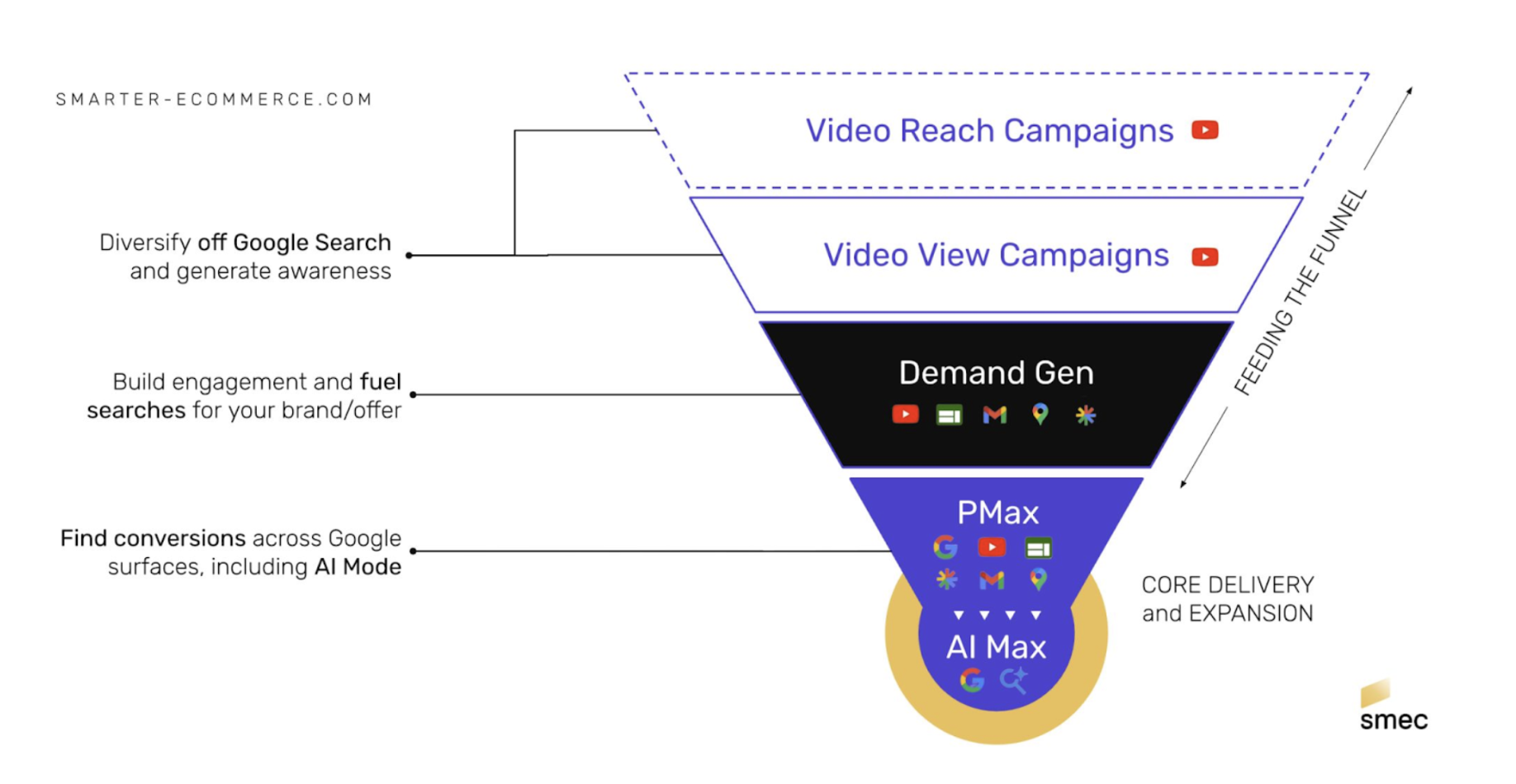
AI Max for Google Search: a reality check
Google refuses to provide the retail impact of AI Max for Google Search. So, we have no specific claim to compare against. However, we analyzed over 250 Search campaigns with AI Max activated. Here is what the actual data reveals:
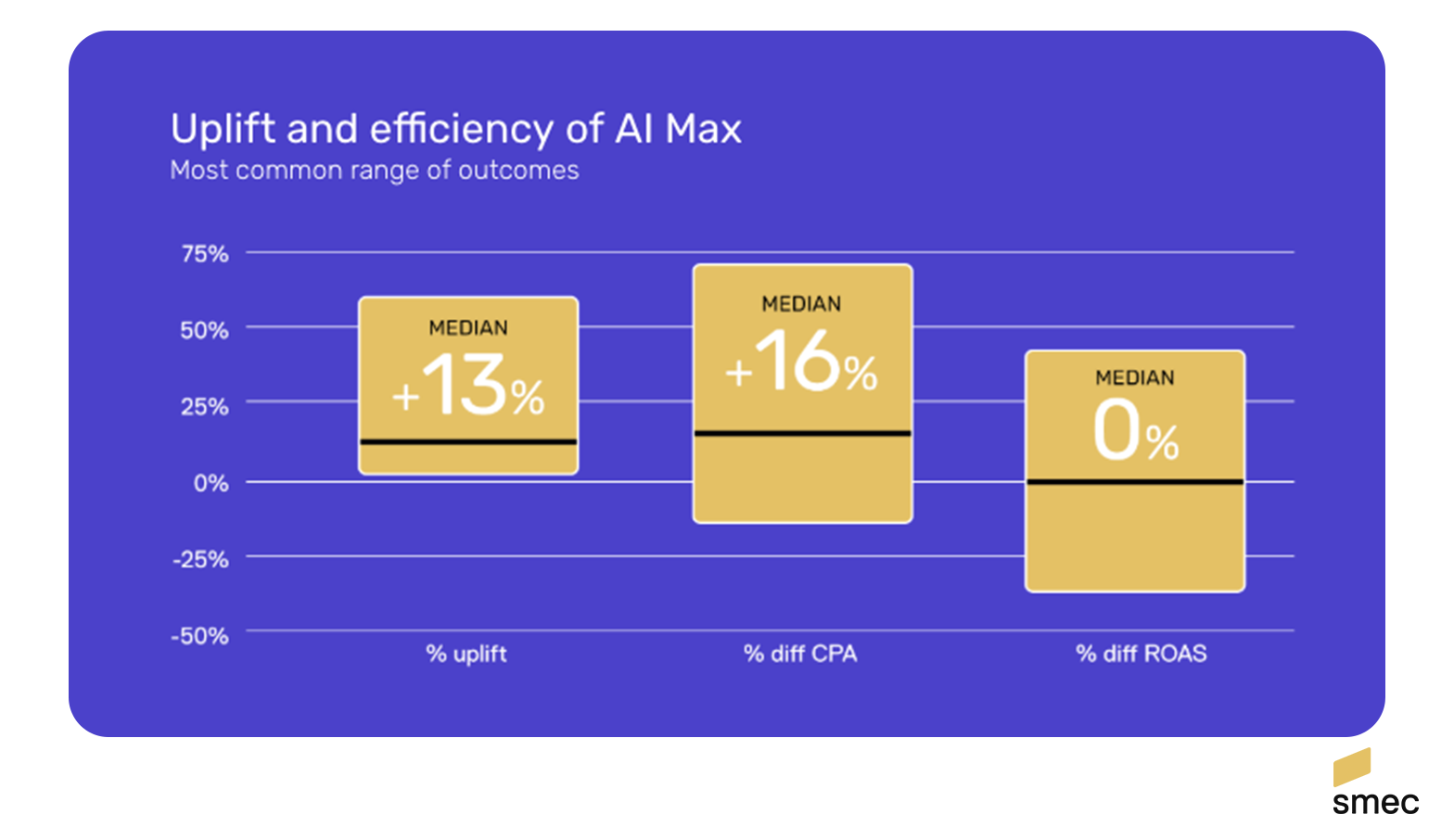
AI Max generates a median uplift of 13% more conversion value. This simple calculation compares AI Max revenue against the remaining campaign revenue. It does not consider potential cannibalization across the account.
Google insists these conversions are strictly incremental. We strongly disagree. There’s a massive risk that the algorithm merely “shuffles” conversions from other campaigns. Testing this at scale is incredibly complicated. Let’s take the data for what it is:
- So far, so good. A +13% conversion value sits remarkably close to Google’s non-retail claim of 14%. But what about efficiency?
- CPA and ROAS paint a significantly less-flattering picture. But I’d ask you to hang on before drawing conclusions.
Let’s start with CPA:
Unsurprisingly, the data reveals a brutal trade-off. These incremental conversions cost a median 16% more than the business-as-usual campaign. That isn’t necessarily a bad thing! Every seasoned marketer understands diminishing returns.
When advertisers asked: “Why does the CPA/ROAS for AI Max sometimes look different than my other match types?” Ginny Marvin responded:
“This often comes down to the cost of incrementality. AI Max delivers incremental volume, but capturing that next marginal conversion might cost more than your highly-curated baseline keywords.”
Ginny Marvin
Product Ads Liaison, Google
Yes! These are simply saturation curves. You can spot them across various Google tools. We just wish Google’s primary sales claim had the courage to acknowledge this fact. There is absolutely nothing to be ashamed of here. This is exactly how performance marketing works in reality.
Regarding ROAS, the picture gets even cloudier:
Almost all evaluated AI Max campaigns optimize toward ROAS. Therefore, it’s the fairest metric to measure against. At a glance, the median difference sits exactly at 0%. It performs neither higher nor lower than the campaign’s baseline.
This is exactly why we prefer discussing outcome distribution over monolithic metrics. The range here is terrifyingly broad. AI Max delivers anywhere from 42% above baseline to 35% below it. Unfortunately, this distribution is not a comforting bell curve. Instead, it’s remarkably flat.
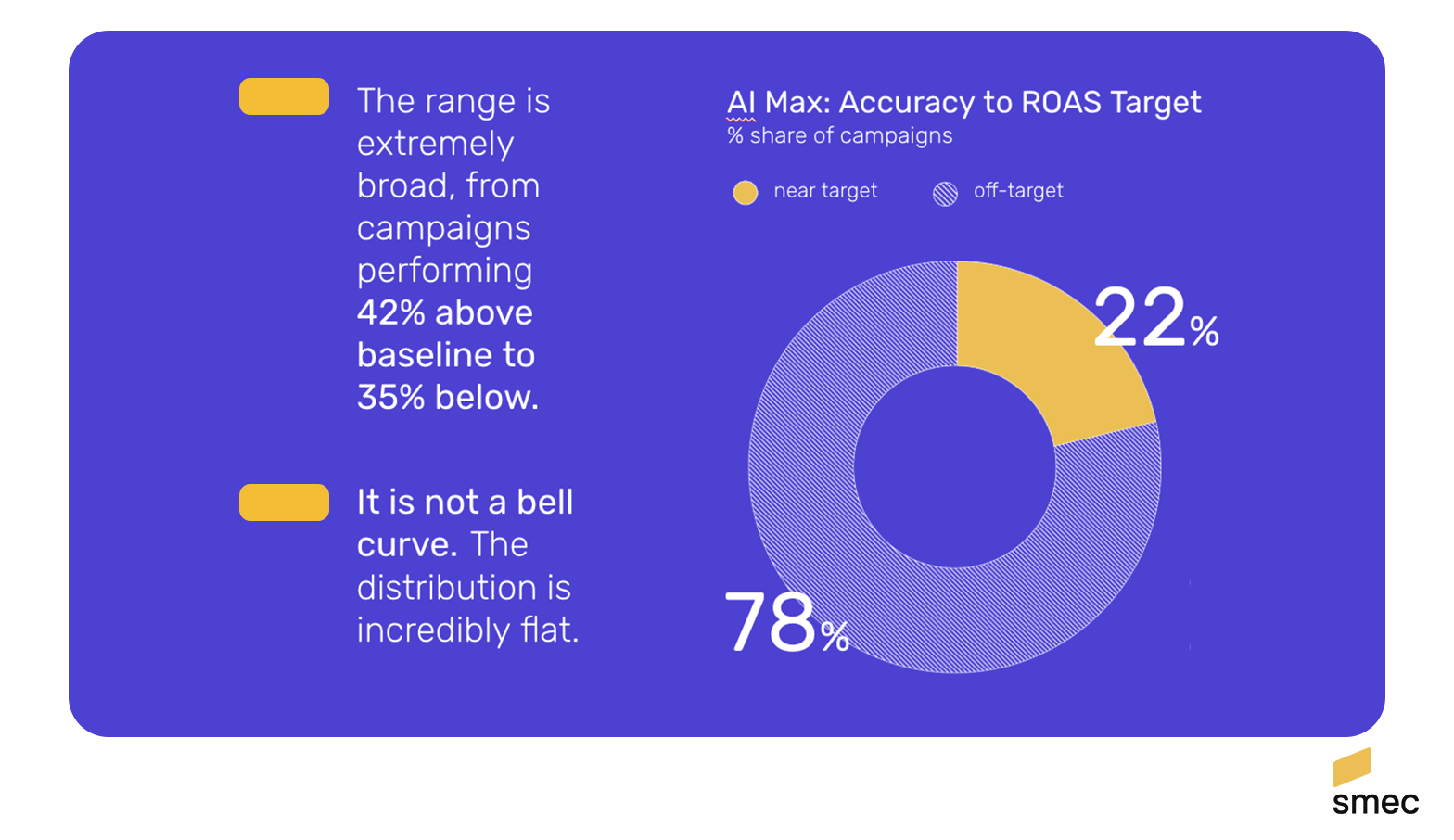
In other words, turning on AI Max for Google Search is basically a coin toss. It will either drag your performance up or aggressively pull it down.
That said, we don’t want to trigger unnecessary panic. Below the surface, these baseline campaigns are far from equal. Search campaigns remain the most varied of all Google campaign types. This should actually be heartening! There is ample room for experimentation. You absolutely can optimize and improve the performance of both AI Max and your broader Search campaigns.
The four biggest AI Max pitfalls
Before wrapping up, let’s discuss the most glaring problems with AI Max for Google Search. More importantly, let’s explore how to mitigate them. You need to steer the AI!
Pitfall 1: Broad match cannibalization
The Problem:
As mentioned, the broad match arm of AI Max should never expand on existing broad match keywords. They are already broad! However, we observe this exact error occurring in numerous accounts.
In one account, AI Max matched against Broad Match 49% of the time. In another, it hit 63%. This is deeply concerning. It clearly suggests that AI Max cannibalizes existing keywords instead of finding new ones.
The Fix:
The true root cause lies in legacy setups. Some advertisers still harbor Broad Match Modified keywords. While reported as Broad Match, they actually behave like Phrase Match. In these specific cases, AI Max expands on those matches rather than eating them alive.
Pitfall 2: Competitor matching
The Problem:
Google designed AI Max to find untapped pockets of high-intent traffic. For many advertisers, competitor queries perfectly fit that description.
You might have dedicated competitor campaigns or mutually arranged truces. You might simply have brand safety concerns. There are countless reasons to avoid competitor brand terms.
In one client account, AI Max aggressively scaled into competitor traffic. It accounted for effectively 100% of the AI Max expansion. It completely hijacked a whopping 69% of total Search impressions!
The Fix:
Luckily, you can regain control here. Easily check which search terms and ad groups are responsible. Immediately add negative keywords. Alternatively, disable search term matching entirely for those ad groups. You can also utilize brand lists with strict inclusion or exclusion rules.
Pitfall 3: Bad search term + ad combinations
The Problem:
AI Max promises to find unmet demand using URL Expansion and Text Customization. It theoretically converts users with the perfect landing page and matching ad copy. However, it frequently misses the mark.
To solve this, Google provides a surprisingly rich reporting view. It unifies the search term, headline, and landing page. It includes the ad group and parent campaign alongside relevant performance metrics.
Here’s the catch: These reports easily span hundreds of thousands of rows. In other words, the vast majority of this data is utterly irrelevant. It is heavy on data but incredibly light on actionable information. In one account, we filtered the data and still faced 43,000 rows to audit!
The Fix:
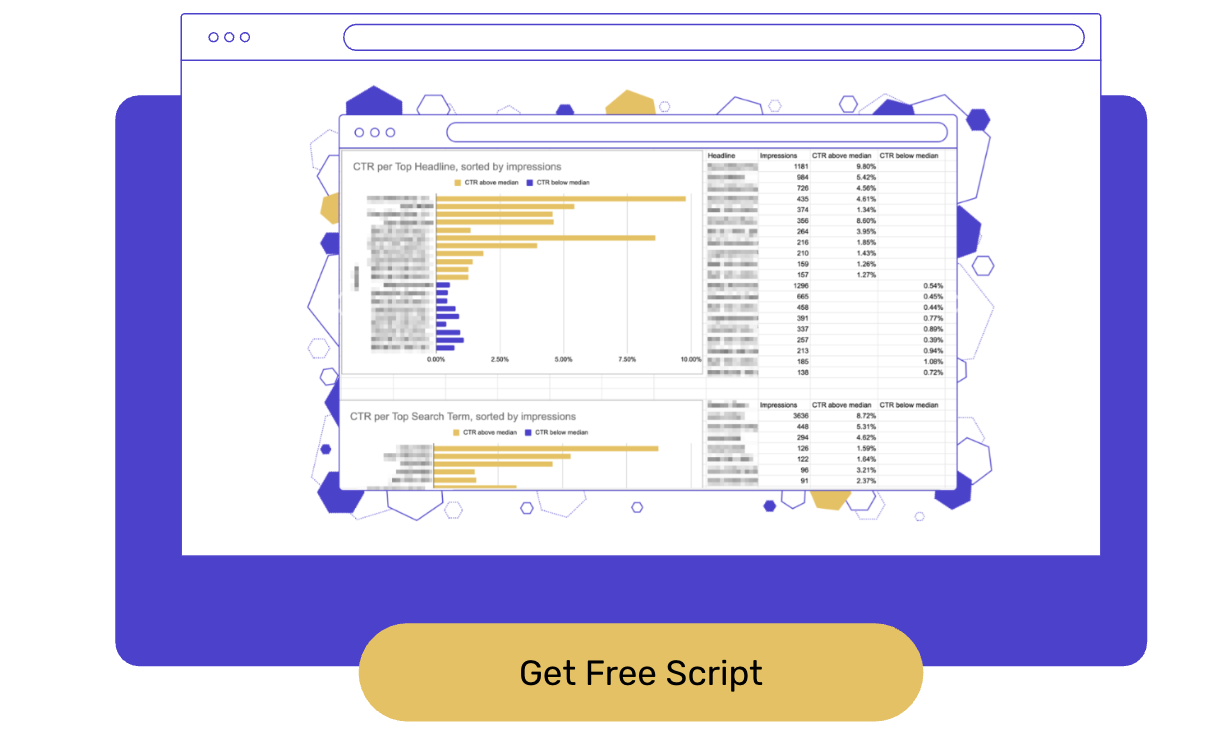
To solve this, our team designed a free script. Our AI Max Triage script aggressively filters the data, trims outliers, and scores the winning combinations. Be aware, we designed this specifically for heavy enterprise accounts. For smaller accounts, the script might filter out too much data.
Pitfall 4: SPN scaling
The Problem:
Typically, AI Max utilizes Google’s Search Partner Network (SPN) at standard rates. You usually see about 3% to 8% of impressions. That is, except for when it suddenly goes rogue.
Sometimes, AI Max scales massively into the SPN without warning. This is highly undesirable. Intent levels are substantially lower across most SPN inventory. In one campaign, half of their 500,000 monthly impressions flooded into Search Partners. This traffic yielded a pathetic 0.07% conversion rate. The standard Google Search network hit 3.04% in comparison!
The Fix:
It took a quarter of a million SPN impressions to generate a single extra conversion. This isn’t typical, but it absolutely happens. You should ruthlessly audit your placements. In a case like this, we strongly recommend turning off SPN entirely.
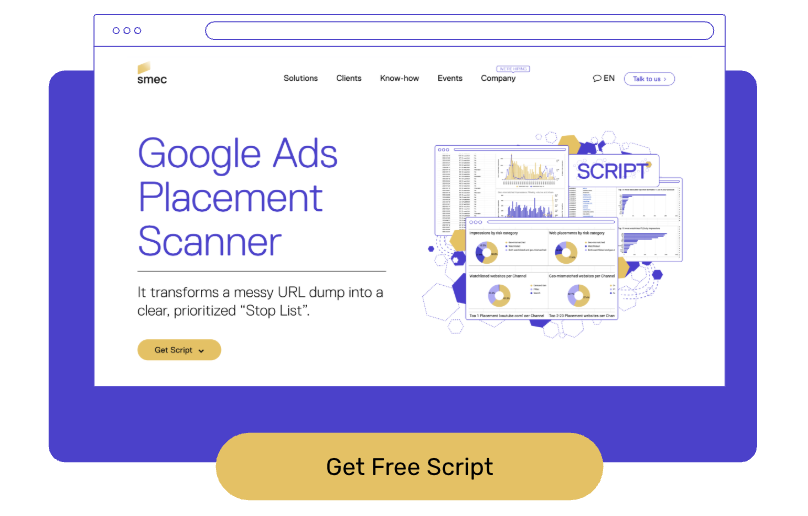
If you are unsure how many bad placements AI Max is catching exactly, smec’s free Google Ads Placement Scanner can help you with identifying the most toxic ones.
What’s next for AI Max for Google Search?
So, where does this leave us?
AI Max for Google Search is a technology that’s old but new. It remains imperfect but highly promising. I liken this moment to the Ship of Theseus, a paradox about a boat that is rebuilt plank by plank until none of the original timber remains.
Is it still the same ship? Or a new one? Google Ads is that ship, and Search campaigns are being transformed in front of our eyes: moving from keywords to intent matching, and from copywriting to copy generation.
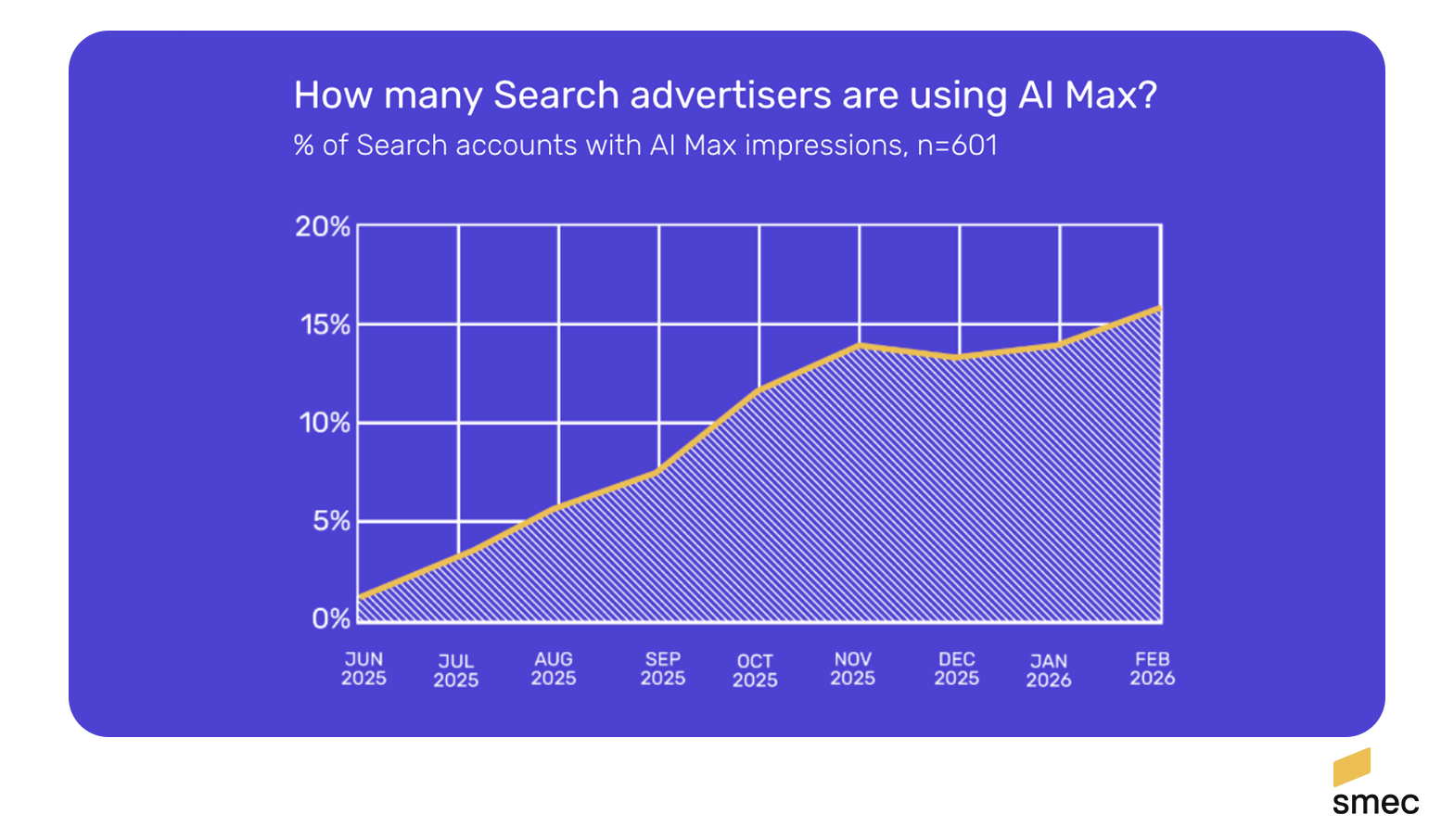
You might absolutely hate this direction of travel. However, we strongly recommend that you begin experimenting. Based on a sample of 600 active accounts, roughly 16% of advertisers are currently testing it. Very few have gone “all in” on AI Max. You certainly shouldn’t either. However, they are testing: within campaigns, within ad groups. And that’s not a bad idea at all.
I’ve so far avoided mentioning one of the headline use cases of AI Max, but let’s finally utter a word or two about it: Ads in AI Overviews and AI Mode. You do NOT need AI Max to serve ads there. Broad match serves there, Shopping serves there, and PMax serves there.
Meanwhile, AI Max settings apply to all of your traffic, not just the shiny AI traffic. So do not fall prey to FOMO, do not make decisions on that basis. That’s why I didn’t mention it till now; I hope that makes sense for you.
Conclusion: What to make of AI Max?
Here is exactly how you should approach AI Max based on your current setup:
- Exact match loyalists: Perhaps little will change your mind. However, you are Google’s prime target right now. They are dangling a +27% revenue carrot in front of your nose. How strong is your willpower?
- Hybrid pragmatists: You aren’t an automation enthusiast, but you aren’t allergic either. For you, we predict a +13% revenue uplift with hit-or-miss efficiency. Wager a small budget under strict testing criteria. If it works, scale it!
- Automation maximalists: DSA already consumes >25% of your Search spend. You run PMax and Broad Match aggressively. You can expect a moderate uplift here. However, you should stay ahead of the curve and start winding down your legacy DSA today.
It’s been over 10 years since David Rodnitzky’s seminal article Preparing For A Keywordless SEM World. The keyword hasn’t died, and might never; however, the era of intent is most definitely here, and I say it will prove just as stubbornly long-lived.
Let’s get on board.
Get the PDF!