Subscribe to join thousands of other ecommerce experts
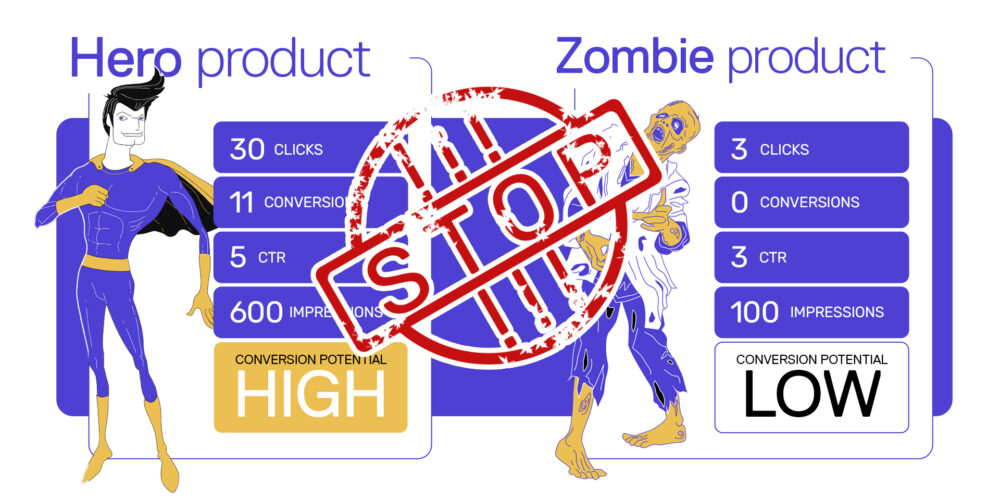
The ecommerce industry too often focuses on rigid Hero/Zombie segmentation for Google Performance Max campaigns. This is a problem. Data suggests that multi-dimensional product segmentation is the true driver of profitable growth. This article introduces the Dynamic Segments & SmartScoreAI framework to solve the common issue of products not getting enough data. By moving beyond simple performance metrics, online retailers can prevent wasted budget. Additionally, they can also align campaigns with real business goals and regain control over ad platforms.
When Google Performance Max took over the traditional ecommerce funnel, advertisers lost the ability to rely on manual keyword bidding. Complex, data-hungry AI algorithms suddenly controlled product visibility.
To regain a sense of control, the industry adopted a seemingly logical fix: Hero/Zombie segmentation.
The idea was simple. Feed the algorithm your proven winners (Heroes) and cut off the dead weight (Zombies).
But what started as a survival tactic has quietly become a massive liability.

Table of Contents
What is Hero/Zombie Segmentation?
Hero/Zombie segmentation divides an ecommerce product catalog into two main categories. It separates high-performing items (Heroes) from low-performing or non-converting items (Zombies).
Advertisers using this approach end up with a rigid, 2-dimensional campaign structure. These structures force advertising platforms to overspend ads budgets on products with proven track records. Meanwhile, they limit spend on products that rarely sell.
How does Hero/Zombie segmentation work?
Hero/Zombie segmentation uses past conversion data, specifically Return on Ad Spend (ROAS), to sort inventory. It places products into strict buckets of winners and losers.
Instead of looking at the real-time details, the system sorts inventory into two strict buckets:
- The Hero Bucket: Products that pass a specific past Return on Ad Spend (ROAS) target. These get dedicated, high-budget campaigns.
- The Zombie Bucket: Products that fall below the target or get clicks without sales. Marketers either pause these items entirely or place them into restricted, low-budget campaigns.
The goal is to get the most out of every dollar spent by starving the losers and feeding the winners. It sounds logical at first glance, but in practice, it creates huge blind spots.
What are the problems with Hero/Zombie segmentation?
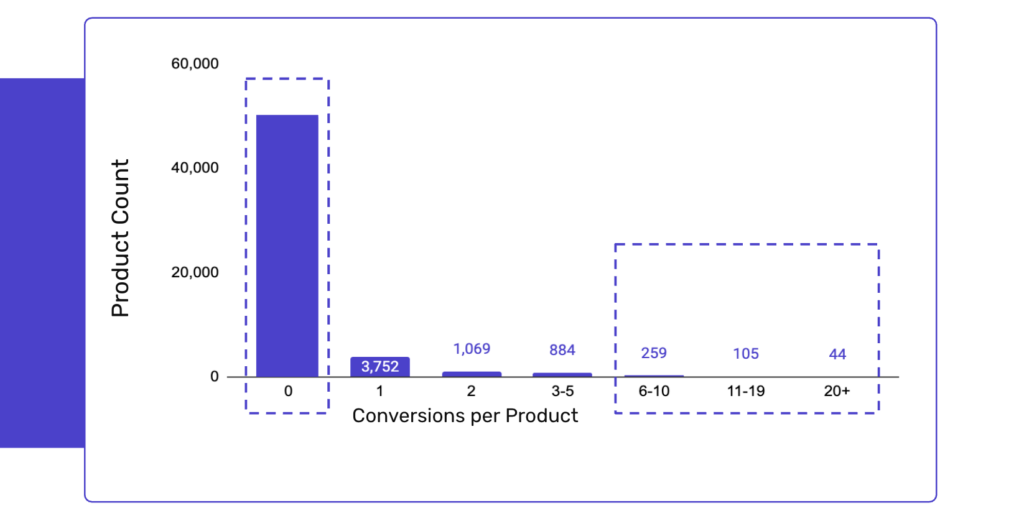
The main problem with Hero/Zombie segmentation is that rigid rules actively stop machine learning models from getting the data they need. By optimizing for vanity metrics instead of true business health, this setup creates several severe business traps.
1. The algorithm’s risk-aversion (Data Starvation)
Machine learning models require a constant stream of conversion data to optimize. When products are segmented into a low-priority “Zombie” bucket, they are denied the budget needed to hit critical data thresholds.
- The result: Because the algorithm is designed to chase “guaranteed” conversions, it views low-history products as a risk. It effectively “blinds” itself to your high-margin diamonds, leaving them in a state of permanent stagnation. And leaving you without
2. The Profitability & Return Trap
Focusing solely on past revenue (the “Hero” status) ignores the live business context of margin and overhead.
- The flaw: Heroes are often high-volume but low-margin. By forcing budget into these exhausted winners, you may scale products that actually lose money after factoring in shipping and high return rates.
- The opportunity cost: Meanwhile, high-potential items are trapped in the long-tail without the visibility needed to find the right buyer, even when a competitor’s stockout creates a perfect market opening.
3. Diminishing Returns vs. The Exhaustion Point
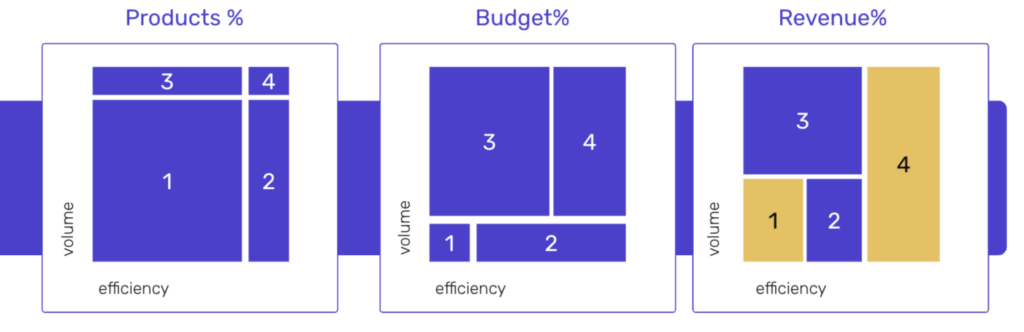
Concentrating spend on a small fraction of your catalog inevitably leads to audience exhaustion.
- The ceiling: As you over-spend on “Heroes,” your Customer Acquisition Cost (CAC) rises while your ROAS plateaus.
- The waste: You end up paying a premium for the same limited audience. Meanwhile, the vast majority of your profitable inventory remains “invisible” to the algorithm. These products starve for the traction they need to scale.
Key Takeaway: The Permanent Long-Tail Trap
The Hero/Zombie model doesn’t just manage spend—it creates a permanent long-tail trap. It forces the algorithm to over-optimize for a few exhausted products. Meanwhile, it leaves the “hidden diamonds” of your catalog to hit a wall of data starvation.
Without sufficient data, “zombie products” stuck in the long-tail will remain zombies.
The core failure of the Hero/Zombie framework is its reliance on reactive, historical data to manage a real-time market. By the time you manually label a “Hero,” the opportunity has often peaked. By labeling a “Zombie,” you effectively kill its future potential.
To move beyond this, retailers need a system that shifts from manual, one-dimensional buckets to a predictive, automated infrastructure. This solution requires a predictive “brain” to solve the data gap and a dynamic “body” to execute strategy at scale.
What is the best alternative to Hero/Zombie Segmentation?
The best alternative to the rigid Hero/Zombie model is to utilize a multi-dimensional, dynamic product segmentation setup built on a retailer’s unique business goals. In this approach, retailers need to make sure the AI is trained on tier unique business data to understand the hidden potential of every product in a retailer’s library.
To do so, retailers need to feed the algorithm a multitude of critical item-level and business data points, including, but not limited to:
- real-time stock levels
- profit margins,
- competitive pricing,
- Seasonality
- etc.
Step 1: Scoring & segmenting your products
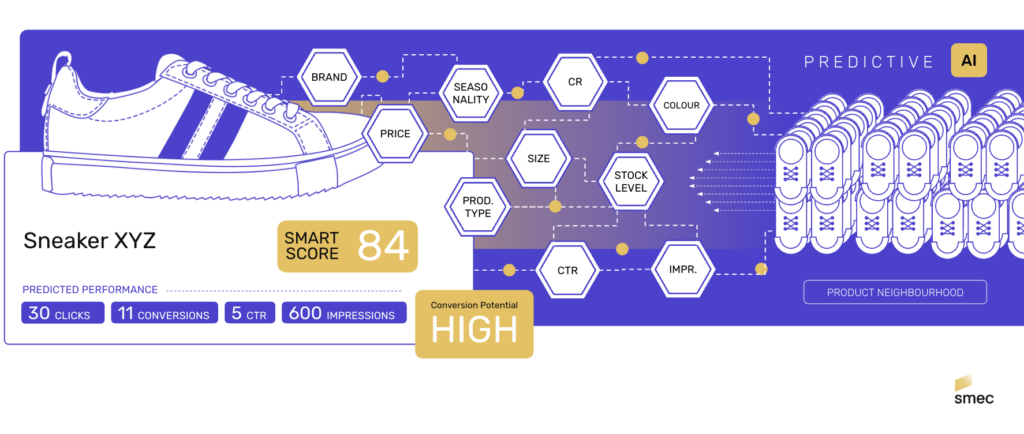
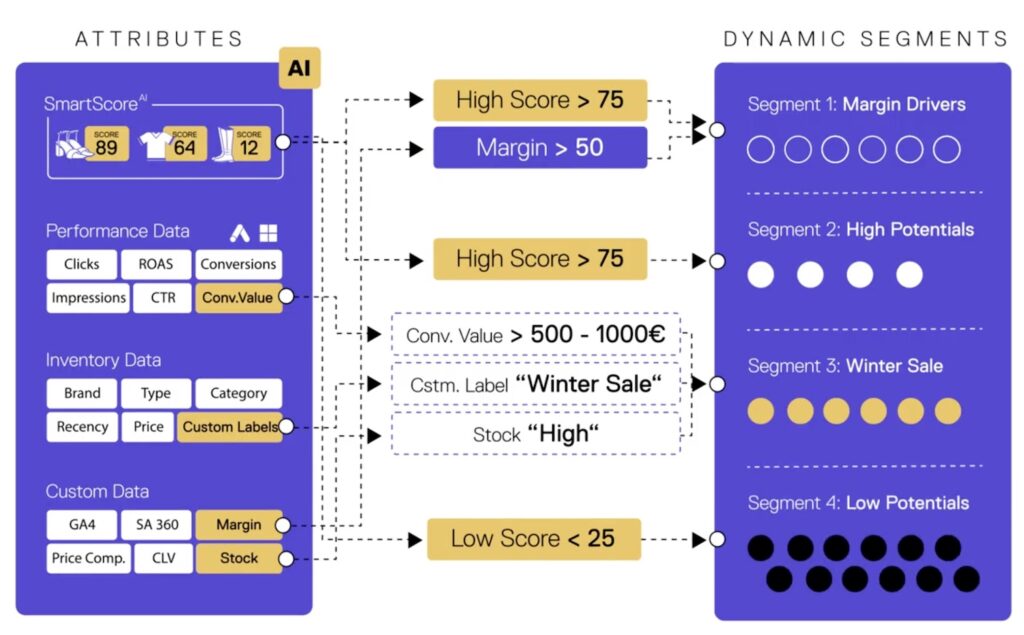
These data points build the foundation of a scoring system. The data points are used in conjunction with each and every product’s shared attributes with other products in a retailer’s catalog to calculate a score that ranks each and every product on their highest chance to convert.
However, the score alone isn’t enough. These scores are then used to dynamically assign products into distinct product segments that cover various strategic dimensions. Such as specific product types, price points, niche customer appeals, or seasonal goals (like pushing swimming gear late in the summer).
Step 2: A multi-dimensional campaign structure
These granular segments then build the foundation for a new, highly effective campaign structure. Marketers can group and assign different segments to specific campaigns based on the overarching business goals they want to achieve. For example, your mapped campaign structure might look like this:
- High-Margin/Low-Visibility Campaigns: Geared toward pushing segments of highly profitable products that are currently starved of data and need a boost in algorithmic learning.
- Clearance/Overstock Campaigns: Designed with aggressive Return on Ad Spend (ROAS) targets to quickly clear out segments with excess inventory and free up warehouse space.
- New Arrivals Campaigns: Dedicated to forcing immediate visibility and building data history for segments containing fresh stock.
- Volume Drivers/Loss Leaders Campaigns: Isolated to strict Return on Ad Spend (ROAS) limits to protect profitability on segments containing high-selling but low-margin items.
- Consistent Performers Campaigns: Focused on maximizing scale and revenue for segments with stable, proven conversion histories.
What is the catch with multi-dimensional Product Segmentation?
The core problem with multi-dimensional product segmentation is that the market is not static. Seasonal events come and go, and the swimming trunks that sold amazingly during summer might end up collecting dust during peak holiday season.
This means that a new score for each and every product would need to be calculated on a daily basis. Furthermore, each of those products would need to get re-assigned to a different segment based on their updated score and changing market variables, and those segments would constantly need to be routed to the correct campaigns.
This is intensive, manual labor that’s simply not feasible for any human marketer. It also eats severely into time that could better be invested in strategising.
For that matter, to execute this effectively and at scale, it’s smart to utilize PPC campaign optimization software that automates this process at scale.
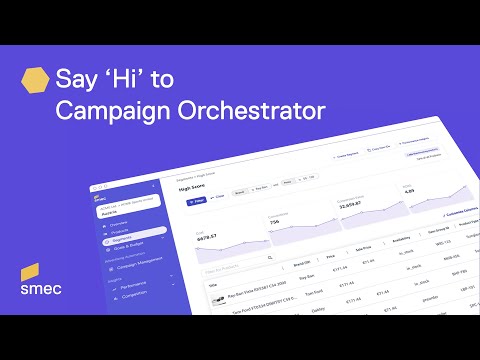
For example, smec’s Campaign Orchestrator accomplishes this through its SmartScoreAI and Dynamic Segments tools.
How does smec’s SmartScoreAI and Dynamic Segmentation work?
The SmartScoreAI and Dynamic Segments are features baked right into smec’s Campaign Orchestrator PPC optimization & automation software.
SmartScoreAI — The Predictive “Brain”
Traditional segmentation fails because it judges products solely on past Return on Ad Spend (ROAS). SmartScoreAI replaces this hindsight with foresight.
- Killing the “Born-Zombie” Trap: Through the “Neighborhood Effect,” the AI analyzes similar peers (category, brand, or price) to fill data gaps for new products. This ensures new launches get immediate visibility instead of being “born” into a dead segment.
- Uncovering Hidden “Diamonds”: The model is multi-dimensional, synthesizing profit margins, stock levels, and price competitiveness into a single “Smart Score”.
- Goal-Driven Logic: Retailers can weight specific attributes to prioritize net profit or customer lifetime value over simple gross revenue.
Dynamic Segments — The Automated “Body”
While the score provides intelligence, Dynamic Segments act as the structural vehicle to automate execution.
- Eliminating Stagnation: Products are no longer “locked” in a long-tail bucket. They automatically shift between campaigns the moment their Smart Score, stock, or competitor pricing changes.
- Algorithmic Control: Instead of Google Performance Max (PMax) operating as a “black box,” you use these segments to feed the AI specific business signals. This allows you to orchestrate budget toward high-impact goals like New Customer Acquisition (NCA).
- Holistic Budget Allocation: The system optimizes the entire account, proactively shifting budget from stagnant areas to segments with the highest predictive growth
What are the Benefits of Dynamic Segmentation vs. Hero/Zombie Segmentation?
The primary benefit of Dynamic Segments over Hero/Zombie segmentation is the ability to break free from the permanent long-tail trap while optimizing for actual net profits.
Here is a direct comparison of the pros and cons:
| Hero/Zombie Segmentation (Legacy) | Dynamic Segments (Multi-Dimensional) |
| 🛑 Creates a permanent trap: Products without past sales are starved of budget forever and can never escape the long-tail. | ✅ Escapes the long-tail trap: Uses predictive scoring to identify the hidden potential in your long-tail products, giving “Zombies” a path back to profitability. |
| 🛑 The profitability trap: Blindly pushes high-revenue “Heroes” even if margins are poor. | ✅ Profit-First Optimization: Steers the algorithm toward items with high net profits, ensuring your ad spend supports a healthy bottom line. |
| 🛑 Rigid and slow: Relies on manual spreadsheet updates that miss live market opportunities. | ✅ Real-time Business Agility: Automatically moves products between segments as stock, prices, or market trends change. |
| 🛑 Diminishing returns: Over-concentrates budget on a few items, driving up acquisition costs. | ✅ Strategic Control over Google Performance Max: By feeding the algorithm more than just conversion data, you take back control from the “black box.” |
What is the outlook for ecommerce in 2026?
We predict that by 2026, older segmentation like the Hero/Zombie model will be entirely outdated as automated bidding platforms become completely dependent on structured, rich data.
Organizations that adopt multi-dimensional product segmentation through SmartScoreAI-driven Dynamic Segments will gain a clear edge over the competition.
By structuring data that guides platform AI and translating true business goals into algorithmic signals, these brands will achieve sustainable profitability while their competitors remain trapped managing a growing catalog of data-starved products.
Need help adjusting your strategy beyond Heroes & Zombies?